Hire a growth hacker who runs experiments you can trust
A growth hacker is useful when the experiments run each week produce learning the team can act on: a cheaper acquisition channel, a better activation step, a win-back message that brings customers back. Stories of one viral spike are easy to tell and hard to repeat, so the way to compare candidates is to see how each one reads funnel data and designs the next test before any interview.
What the hiring manager needs from a growth hacker
Founders usually hire a growth hacker when the product works for the customers it has and nobody owns finding the next ones. The founder needs a person who moves fast across acquisition, activation and retention, but keeps each test clean enough that the result means something.
Customers who stopped ordering
A segment of retailers on the platform went quiet and a win-back campaign did not bring them back. The growth hacker looks at who received it and who did not, decides whether the offer or the audience was wrong, and proposes a smaller test that answers that question.
A channel that looks cheap on clicks
One paid channel delivers sign-ups at a low cost, but those users never activate. The growth hacker follows cohorts past the sign-up, finds where they drop, and either fixes activation or moves the budget, with the evidence written down.
Too many ideas, one engineer
Referral loops, onboarding emails, a pricing page test and a partner integration all sound promising. The growth hacker ranks them by expected impact and effort, runs the few that fit the sprint, and kills a test early when the data says so.
An experiment that looked like a win
Conversion jumped the week a test launched, which was also the week of a sale. A good growth hacker checks for the overlap before announcing a result and reruns the test if needed.
Where hiring a growth hacker usually goes wrong
- Buying the viral story
- Many candidates have one campaign that spread widely. The interview hears the story, not whether the candidate could explain why it worked or repeat it in a different market.
- Mistaking tool fluency for method
- Knowing Mixpanel, Amplitude, Zapier and every no-code tool helps. It says nothing about whether the candidate sets up a test with a clear hypothesis and a fair comparison group.
- Rewarding volume of experiments
- A long list of tests can mean a team that ran many changes without measuring any of them properly. The question is how many produced a decision the business acted on.
- Never looking at retention
- Growth interviews focus on acquisition because it is easy to talk about. A growth hacker who brings in users who leave in a week makes the funnel more expensive, and few interviews test for it.
Real tasks from a Gateway assessment
These come from a Gateway assessment for a marketing specialist, with the employer’s name taken out. Gateway writes every assessment from your own job description, so the tasks your candidates get are built around your role.
A spreadsheet, then a written diagnosis
Diagnose a reactivation campaign that didn’t work
A campaign to win back lapsed retailers on a B2B ordering platform has underperformed. The data and the campaign brief are available.
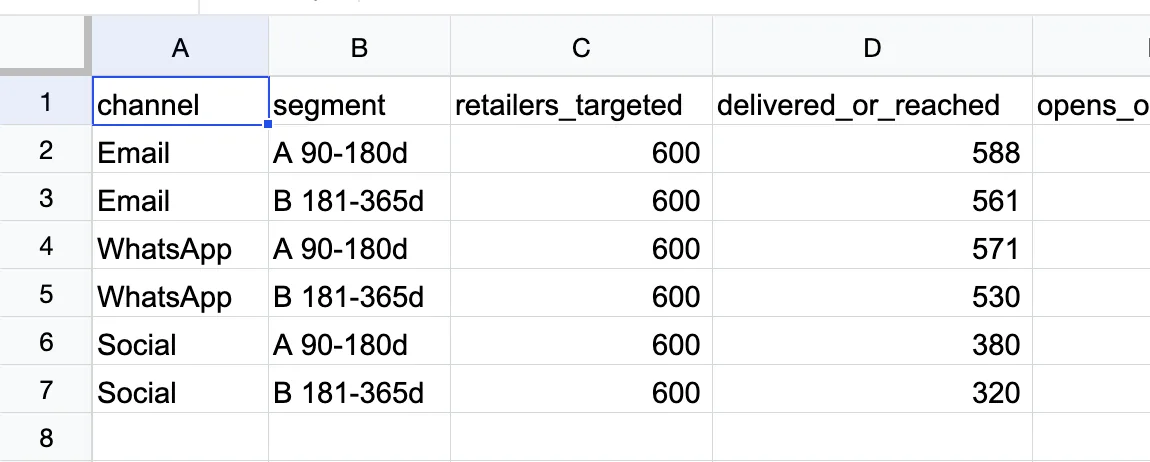
What a strong candidate did: Showed which retailers the campaign reached and which it missed, separated a targeting problem from a message problem, and proposed the next test.
A tracking design, then a short note
Fix the tracking so ads still learn
An ad platform has restricted how a health brand can optimise for leads, and all tracking runs in the browser. A server container is set up but unused.
What a strong candidate did: Moved the right events to the server, kept health details out of what is sent, and explained what the ads can still optimise for.
A spreadsheet, then a short report
Weekly paid social read: kill, scale and report
It is Friday and the growth lead wants the weekly read on Facebook and Instagram ads. The export joins ad spend with booked consultations, and the growth lead has set kill and scale rules.
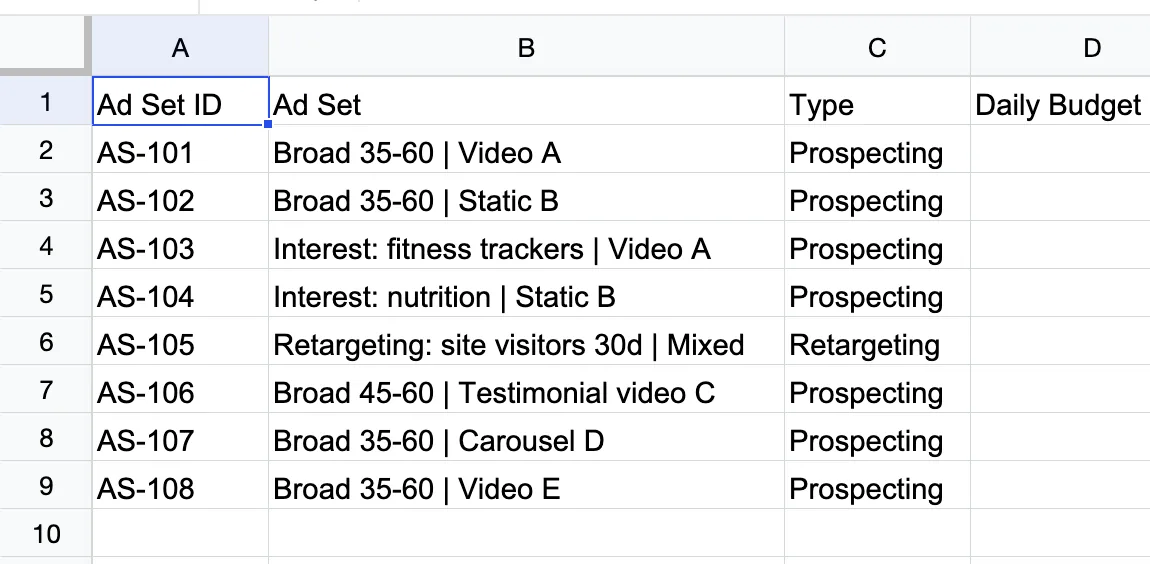
What a strong candidate did: Applied the rules to every ad set, caught the one that looked good on clicks but booked nothing, and reported spend moved and why in a few lines.
How the decision gets made
With Gateway, growth hacker candidates work on situations from your job description: diagnosing why a win-back campaign missed using its data and brief, reading weekly paid results against kill and scale rules, and fixing tracking so the ads keep learning. Each works in a spreadsheet and writes a short diagnosis or report. The founder sees a score and written feedback per skill, opens the analysis read-only, and spends calls only with candidates who separated a real effect from noise and proposed a next test worth running.
See your next growth hacker at work before you meet them
Paste your job description and Gateway writes the assessment in about 5 to 10 minutes. Your team can edit every question before it goes out.
Questions
We are an early-stage startup. Can the tasks fit a small product?
Yes. The situations come from your job description, so they follow your product, your funnel stage and the channels you use. Your team can edit any of it before sending.
Can we see how a candidate designs an experiment, not only the result?
The written diagnosis asks the candidate to propose the next test, and the score for each skill comes with the reason. You can open the candidate's spreadsheet and see every step.
Can candidates use AI while working?
If you want them to. AI-assisted assessments let candidates use an assistant, and your team sees how each one worked with it. A standard assessment keeps the work to the candidate alone.
What does a candidate need to take part?
A laptop or desktop and the link. Each step explains what it involves before the candidate accepts it.
Related