Hire an account executive who finds the buyer's problem before pitching
An account executive earns the seat by turning first meetings into qualified opportunities and qualified opportunities into signed contracts, without discounting to get there. Quota attainment on a resume depends on the territory and the product, so the clearest way to compare candidates is to put each one in a first meeting with a demanding buyer and read the pipeline each one would build.
What the hiring manager needs from an account executive
The sales leader hiring an account executive needs a person who can own a deal from the first call to the signature: someone who qualifies hard, brings the right people into the room on the buyer's side, and keeps the CRM truthful enough that the manager's forecast does not depend on guesswork.
A first meeting with a sceptical buyer
The buyer agreed to a short call and has a budget meeting coming up. An account executive who opens with the deck loses the room. A good one asks what the buyer is trying to fix, what it costs today and who else decides, then earns a second meeting with those people in it.
Price comes up too early
Before the value is clear, the buyer asks for the price and says a cheaper option exists. The account executive has to answer with facts, keep the discussion on what the buyer said matters, and avoid offering a discount nobody asked for.
A deal that depends on one champion
The contact loves the product but cannot sign. If that person goes quiet or leaves, the deal dies. The account executive has to reach the economic buyer and the people who will object, while the deal is still warm.
End of quarter with a crowded pipeline
A long list of open opportunities, only some of them real. The account executive decides where to spend the last weeks, updates stages to match what buyers have actually agreed, and tells the manager honestly which deals will slip.
Where hiring an account executive usually goes wrong
- Reading quota percentages at face value
- A candidate at a large percentage of quota may have inherited a strong territory or sold a product that sold itself. Without seeing how the candidate runs a conversation, a high number and a lucky year look identical.
- Role-plays with a friendly interviewer
- When a colleague plays the buyer, the colleague tends to be polite and easy to convince. Real buyers interrupt, change the subject to price and stay vague about who signs, which is where account executives separate.
- Hiring the charming talker
- Rapport is useful, but an account executive who talks well and asks few questions fills the pipeline with deals that never close. Interviews built on conversation favour exactly that profile.
- Ignoring how the candidate reads a pipeline
- Closers who cannot prioritise spend the last weeks of a quarter on deals that were never going to land. A short look at how the candidate ranks a CRM export shows this far earlier than a quarter of results.
Real tasks from a Gateway assessment
These come from a Gateway assessment for a sales manager, with the employer’s name taken out. Gateway writes every assessment from your own job description, so the tasks your candidates get are built around your role.
A live conversation with an AI buyer
First meeting with a buyer on a live call
A treasurer at a 220-flat housing society has agreed to a short first conversation about gate and visitor management before her accounts meeting. An AI plays her.
What a strong candidate did: Asked about the society’s real problems before pitching, handled the price concern with facts, and left with a clear next step and who else needs to be in it.
A spreadsheet, then a short forecast note
Calling the quarter: a forecast from a CRM export
In their second week, a new enterprise sales manager is asked for the quarter’s forecast. The CRM export has deals at every stage, and some are more hopeful than real.
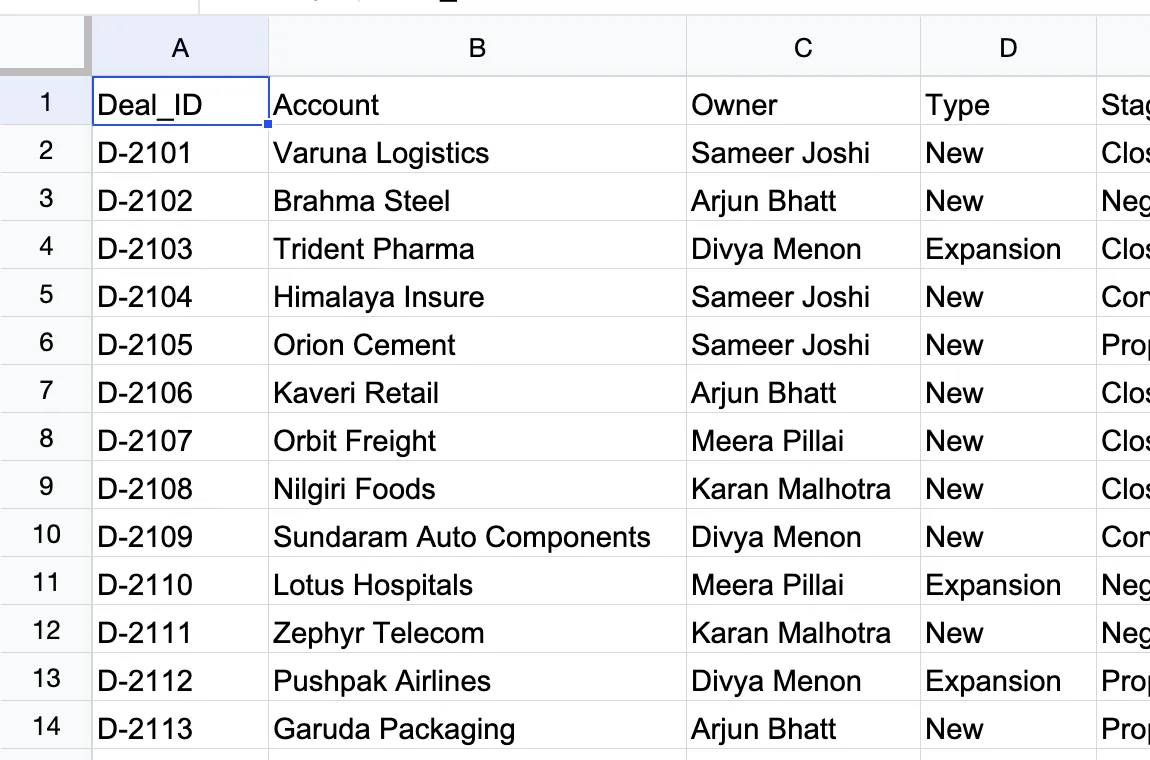
What a strong candidate did: Called a number with a range, showed which deals were inflated and why, and named the three deals that decide the quarter and what each needs this week.
How the decision gets made
In Gateway, each account executive candidate runs a live first meeting with an AI buyer who pushes back on price, timing and authority, then works a CRM export in a spreadsheet to call which deals will close and what each needs this week. The sales leader sees each skill scored with written feedback, reads the full conversation, and invites to the final round only the candidates who found the buyer's real problem and left with a clear next step. A voice interview of up to 15 minutes can sit in front of it when applications are many, covering deal sizes, sales cycle and the last lost deal.
See your next account executive at work before you meet them
Paste your job description and Gateway writes the assessment in about 5 to 10 minutes. Your team can edit every question before it goes out.
Questions
Can the AI buyer match the kind of buyer our account executives meet?
Yes. The situation is written from your job description, so the buyer's role, industry and objections follow what you sell. Your team reads and can change the scenario before any candidate sees it.
What does the hiring manager get after the buyer call?
The conversation in full, a score and written feedback for each skill such as discovery, objection handling and next steps, a tier from 1 to 5, and whether the candidate meets your line. Anyone on the team can change a score.
We get many account executive applicants. What should come first?
A voice interview works well as the first step. An AI interviewer, which says it is an AI, runs up to 15 minutes in the browser or as a call, follows up where answers are vague, and scores each topic on content against answers your manager approved.
Does the voice interview judge accent or confidence of voice?
No. Scoring is on what was said, topic by topic. The recording and transcript are there for your team to check any score.
Do candidates know what each step involves?
Yes. Each step explains what it involves before the candidate accepts it, and all a candidate needs is one link and a laptop or desktop.
Related