Hire a marketing manager who can explain why the pipeline moved
A marketing manager is worth hiring when the budget in the manager's hands turns into pipeline the sales team accepts, and when a campaign that fails gets diagnosed and fixed rather than defended. Portfolios show finished work with the failures removed, so the way to compare candidates is to hand each one real campaign data and read what the candidate concludes before any interview.
What the hiring manager needs from a marketing manager
The person hiring a marketing manager owns a revenue number and a budget that keeps getting questioned. What the hiring manager needs is someone who sets the plan across channels, decides what gets cut, reports results in terms sales and finance accept, and does not need the founder to check every decision.
A campaign that missed and a meeting on Monday
A win-back campaign to lapsed customers underperformed and leadership wants to know why. The marketing manager has to separate a targeting problem from a message problem, show which segment the campaign never reached, and propose the next test with a reason.
Budget across channels that do not report the same way
Paid search, paid social, events and email each claim credit for the same deals. A good marketing manager agrees one definition of a qualified lead with sales and moves budget based on it, instead of on each platform's own reporting.
Sales says the leads are poor
The sales head complains in the weekly meeting. The marketing manager looks at what happened to the leads after handover, finds where they stall, and fixes either the targeting or the follow-up process with sales, without starting a blame argument.
A small team and a long wish list
Content, a website refresh, a product launch and a trade show all compete for the same few people. The marketing manager picks what moves revenue this quarter, says no to the rest in writing, and keeps the team from spreading thin.
Where hiring a marketing manager usually goes wrong
- Judging the portfolio
- Award-ready creative and a clean case study show what a team produced, not what this candidate decided. A marketing manager is hired for judgement about budget and priorities, and a portfolio rarely shows either.
- Counting channels on the resume
- Lists of SEO, paid media, email and events look complete. They do not show whether the candidate can tell which of those channels is actually producing revenue for your business and which is producing reports.
- A strategy presentation as the main test
- A first-quarter plan built at home is mostly frameworks. It rarely shows how the candidate reacts when numbers disagree with the plan, which is where a marketing manager either saves budget or wastes it.
- Hiring a specialist into a manager seat
- An excellent performance marketer can struggle when the role needs prioritisation across channels and a working relationship with sales. Interviews that stay inside the candidate's specialty never surface that gap.
Real tasks from a Gateway assessment
These come from a Gateway assessment for a marketing specialist, with the employer’s name taken out. Gateway writes every assessment from your own job description, so the tasks your candidates get are built around your role.
A spreadsheet, then a written diagnosis
Diagnose a reactivation campaign that didn’t work
A campaign to win back lapsed retailers on a B2B ordering platform has underperformed. The data and the campaign brief are available.
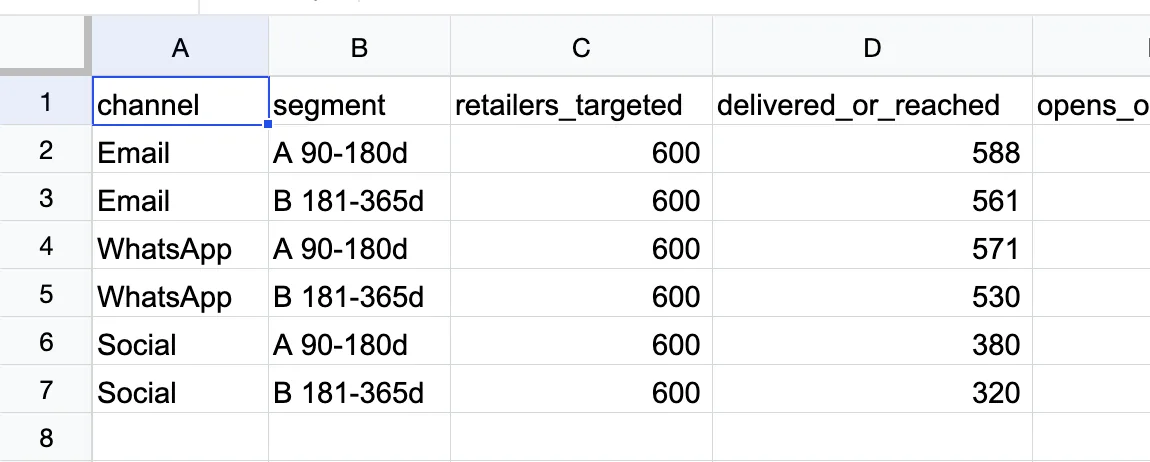
What a strong candidate did: Showed which retailers the campaign reached and which it missed, separated a targeting problem from a message problem, and proposed the next test.
A spreadsheet, then a short report
Weekly paid social read: kill, scale and report
It is Friday and the growth lead wants the weekly read on Facebook and Instagram ads. The export joins ad spend with booked consultations, and the growth lead has set kill and scale rules.
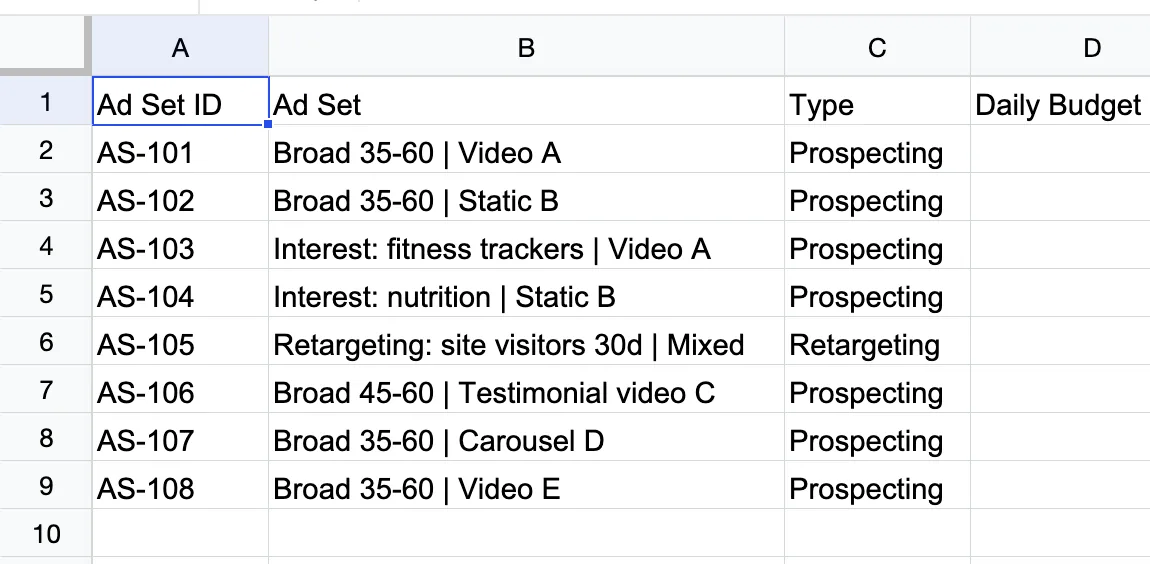
What a strong candidate did: Applied the rules to every ad set, caught the one that looked good on clicks but booked nothing, and reported spend moved and why in a few lines.
A tracking design, then a short note
Fix the tracking so ads still learn
An ad platform has restricted how a health brand can optimise for leads, and all tracking runs in the browser. A server container is set up but unused.
What a strong candidate did: Moved the right events to the server, kept health details out of what is sent, and explained what the ads can still optimise for.
How the decision gets made
In Gateway, every marketing manager candidate works on situations written from your job description, such as diagnosing a reactivation campaign from its data and brief, reading a week of paid results against kill and scale rules, and deciding what tracking the ads can still learn from. The work happens in a spreadsheet and a short written diagnosis. The founder or CMO sees each skill scored with written feedback, opens the candidate's sheet and memo read-only, and spends interview time only on the candidates whose diagnosis held up against the data.
See your next marketing manager at work before you meet them
Paste your job description and Gateway writes the assessment in about 5 to 10 minutes. Your team can edit every question before it goes out.
Questions
Can the campaign data look like ours, B2B or consumer?
The assessment is written from your job description, so the channels, audience and campaign types follow your market. Your team can edit any data, brief or question before sending.
Does it test strategy or only execution?
Both, through situations. A candidate diagnosing a failed campaign has to decide what went wrong and what to test next, and the written diagnosis shows the reasoning alongside the numbers.
Can candidates use AI tools for the written parts?
You decide. A standard assessment keeps the work to the candidate. An AI-assisted one allows an assistant and shows your team how the candidate worked with it, which can matter for a team that writes with AI every day.
How do we share results with the founder or sales head?
Share a candidate's results with a note. The person you share with sees the scores, the written feedback and the candidate's own work in the tool it was done in.
Related