Hire a digital marketing specialist who moves spend on evidence
A digital marketing specialist is hired to run paid and owned channels day to day: launch campaigns, read results every week, move spend to what books customers, and keep tracking intact so the platforms keep learning. Certifications and platform names repeat across applicants, so the way to tell them apart is to watch each candidate work a real ad export and a tracking problem before anyone books an interview.
What the hiring manager needs from a digital marketing specialist
The growth lead or marketing manager hiring this role is usually tired of reading platform dashboards alone. The need is a hands-on operator who follows the rules the team set for spend, notices when a number on a dashboard is not what it seems, and reports in a few lines what changed and why.
The Friday read on paid social
Spend sits across many ad sets on Meta and the growth lead has set rules for when to pause and when to scale. The specialist applies the rules to every ad set, including the one with a cheap click rate that never books a consultation, and writes up what moved.
Tracking that stopped feeding the ads
A browser change or a platform restriction cut the conversion signal, and the campaigns started optimising for the wrong thing. A strong digital marketing specialist works out which events should move to server-side tracking, what personal data must stay out, and what the ads can still optimise for.
Platform numbers that do not match the CRM
Google Ads reports more conversions than sales can find. The specialist checks the conversion setup, duplicate tags and attribution windows before quoting either number to the manager.
A landing page that drags the campaign down
Click costs are fine and the form converts poorly. The specialist proposes one change to test, sets up the comparison so it can be read cleanly, and does not redesign the whole page on instinct.
Where hiring a digital marketing specialist usually goes wrong
- Treating platform certificates as proof
- Google and Meta certificates show that a candidate passed a quiz about the interface. They do not show whether the candidate notices an ad set spending well on clicks while booking nothing.
- Asking about past ROAS
- Return on ad spend quoted in an interview depends on the product, the margin and how the previous company counted it. The figure cannot be checked and often rewards the candidate with the most generous attribution.
- Skipping measurement entirely
- Many teams hire for creative and campaign launching, then discover the new specialist cannot set up conversion tracking or consent handling. By then the platforms have been learning from bad data for weeks.
Real tasks from a Gateway assessment
These come from a Gateway assessment for a marketing specialist, with the employer’s name taken out. Gateway writes every assessment from your own job description, so the tasks your candidates get are built around your role.
A spreadsheet, then a short report
Weekly paid social read: kill, scale and report
It is Friday and the growth lead wants the weekly read on Facebook and Instagram ads. The export joins ad spend with booked consultations, and the growth lead has set kill and scale rules.
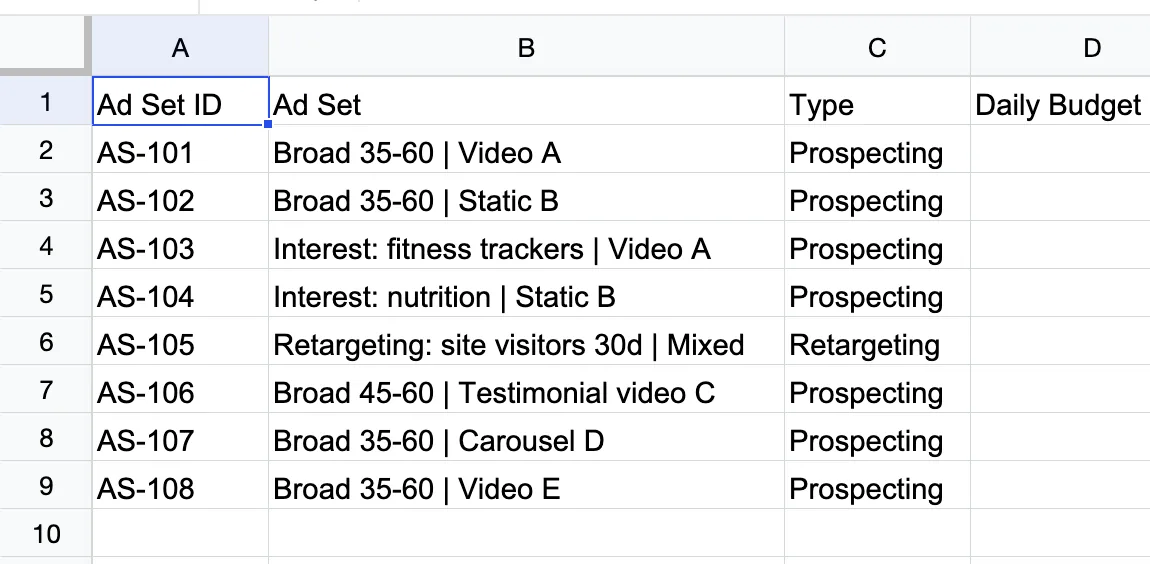
What a strong candidate did: Applied the rules to every ad set, caught the one that looked good on clicks but booked nothing, and reported spend moved and why in a few lines.
A tracking design, then a short note
Fix the tracking so ads still learn
An ad platform has restricted how a health brand can optimise for leads, and all tracking runs in the browser. A server container is set up but unused.
What a strong candidate did: Moved the right events to the server, kept health details out of what is sent, and explained what the ads can still optimise for.
How the decision gets made
With Gateway, each digital marketing specialist candidate works from your job description through a weekly paid social read with your kill and scale rules in a spreadsheet, followed by a short report, and a tracking problem where the candidate designs which events move to the server and writes a note on what the ads can still learn. The growth lead sees each skill scored with the reason, opens the sheet and the tracking design read-only, and meets only candidates who caught the misleading ad set and kept personal data out of what gets sent.
See your next digital marketing specialist at work before you meet them
Paste your job description and Gateway writes the assessment in about 5 to 10 minutes. Your team can edit every question before it goes out.
Questions
Can the ad data match the platforms we use?
The tasks are written from your job description, so they use the channels you named, whether that is Meta, Google, LinkedIn or a mix. Your team can change any column, rule or question before it is sent.
We need someone hands-on, not a strategist. Does the test reflect that?
Yes. Candidates work in the spreadsheet itself and apply rules to every row, then write a short report. You see the decisions on each ad set, not a slide about approach.
How long does it take us to prepare this?
About 5 to 10 minutes from a job description. Your team reads every question and can edit it before the link goes to candidates.
Will the assessment flag candidates who copy answers from the web?
Gateway uses no question bank, so there is nothing circulating online to copy. Monitoring is off by default with four levels available, and Gateway never marks anyone as cheating on its own; your team reviews anything unusual.
Can we add candidates straight from our ATS?
Yes. Add them from an ATS export, a spreadsheet or resumes, and each candidate gets one link and a deadline.
Related