Hire an AWS engineer who keeps your account safe and your bill sane
A good AWS engineer leaves your accounts with tight IAM, networking you can reason about and a bill that only grows when usage does. Certificates and service lists look alike across resumes, so the reliable way to separate candidates is to watch each one work through a real AWS problem before your team schedules interviews.
What the hiring manager needs from an AWS engineer
The engineering manager hiring for AWS usually inherited an account that grew by hand: policies with wildcards, a VPC nobody drew, and a monthly invoice that finance keeps asking about. The person in this seat has to tidy that up while the product keeps shipping on top of it.
An IAM policy with Action set to star
A role used by a Lambda function can read every S3 bucket and write to DynamoDB tables it never touches. A strong AWS engineer narrows it using CloudTrail data on what the role actually calls, and checks nothing breaks before applying it.
A bill that jumped with no new traffic
Cost Explorer shows a spike in data transfer and NAT gateway charges. The engineer traces it to traffic leaving through the NAT instead of a VPC endpoint, or to logs shipped across regions, and fixes the cause rather than buying a savings plan to hide it.
A private service that cannot reach the database
A new ECS service times out talking to RDS. Security groups, route tables, subnet choices and network ACLs are all suspects, and the person you hire should work through them in order instead of opening port ranges until something connects.
Moving from one account to several
Production, staging and sandboxes share one AWS account today. Splitting them with AWS Organizations, service control policies and cross-account roles is a careful migration, and a careless one locks the team out of its own resources.
Where hiring an AWS engineer usually goes wrong
- Treating the certification as proof
- An AWS Solutions Architect certificate shows someone studied the service catalogue. It says little about whether the candidate can read a denied request in CloudTrail and write the least privilege policy that fixes it.
- Hiring a console clicker for an IaC account
- Some candidates have built everything through the AWS console. In a team that keeps its account in Terraform or CloudFormation, that habit creates drift that nobody notices until the next apply overwrites a hand-made change.
- Asking which service does what
- Quizzing a candidate on the difference between SQS and SNS tests recall that a search answers in seconds. The expensive gaps show up in judgement: when to use a VPC endpoint, how to scope a KMS key policy, what to alarm on.
Real tasks from a Gateway assessment
These come from a Gateway assessment for a DevOps engineer, with the employer’s name taken out. Gateway writes every assessment from your own job description, so the tasks your candidates get are built around your role.
Code, then a written summary
Audit access before a SOC 2 readiness review
Most IAM policies and security groups live in Terraform, but some were created by hand over the years. The engineering manager wants a least-privilege check that can be re-run before every review.
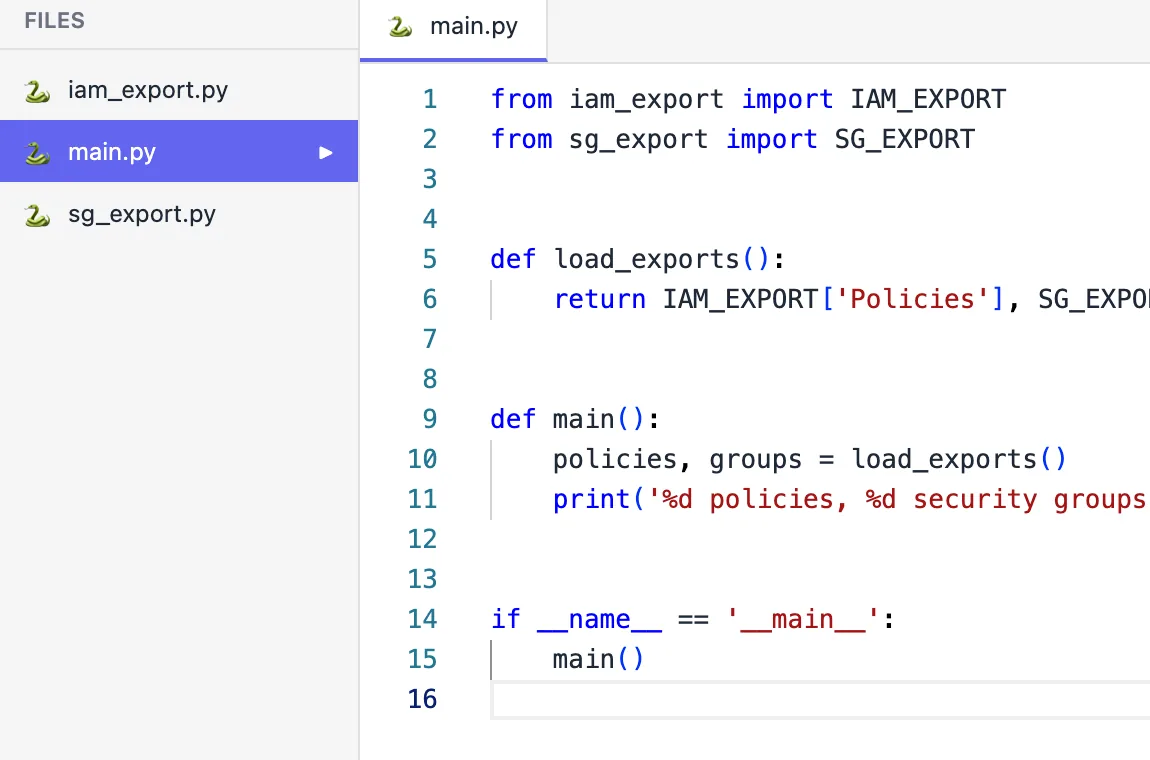
What a strong candidate did: Wrote a check that flags over-broad access and anything not managed in Terraform, ran it on the exports, and ranked what to fix first.
Logs and code, then a written incident note
Post-deploy incident: orders failing and a queue backing up
Right after a deploy, orders start failing and the confirmation queue backs up. The order service and its workers share a single Redis node with a connection limit.
What a strong candidate did: Found that the new version opened far more Redis connections, rolled back first to stop the damage, and set out the fix and the alert that would have caught it.
How the decision gets made
With Gateway, each AWS candidate gets situations written from your own job description, such as an over-broad IAM role, a cost spike or a broken route to RDS, and works in code, a whiteboard or a written note as the task calls for. The engineering manager sees a score and the reasoning for each skill, opens the candidate's actual policy or script read-only, and decides who reaches the technical round. That round then starts from the candidate's own AWS decisions.
See your next AWS engineer at work before you meet them
Paste your job description and Gateway writes the assessment in about 5 to 10 minutes. Your team can edit every question before it goes out.
Questions
Can the tasks reflect our AWS setup, for example EKS, ECS or Lambda?
Yes. The assessment is written from your job description, so if the role mentions EKS, Lambda or a multi-account setup, the situations use them. Your team reads and edits every question before any candidate sees it.
Do candidates need access to a real AWS account?
No. Candidates work from the material in the task, such as policy exports, logs or a diagram, in code or on a whiteboard. Nobody touches your account, and candidates need only a laptop or desktop and the link you send.
How do we stop candidates copying answers from the internet?
The questions come from your role, not a shared bank, so there is no answer sheet online. If you want more assurance, turn on monitoring at one of four levels and review the replay. Gateway never labels anyone a cheat; your team looks at anything unusual.
Who decides whether a candidate goes forward?
Your team does. Gateway gives each skill a score with written feedback, a tier from 1 to 5 and whether the candidate meets your line, and any of those scores can be changed by your engineers.
Related