Hire a cloud engineer who builds environments your developers can trust
A cloud engineer keeps the everyday cloud estate healthy: new environments built the same way every time, networks and access that make sense, backups that restore and alerts that mean something. Resumes from this pool look nearly identical, so the practical way to compare candidates is to watch each one handle a real cloud request before your team runs interviews.
What the hiring manager needs from a cloud engineer
A cloud engineer usually sits between the development teams and the cloud provider, picking up a steady stream of requests: a new environment, a database for a feature, a firewall change, an access request. The manager needs those done correctly and repeatably, so the estate does not slowly turn into one-off exceptions.
A new environment for a client demo
Sales wants a separate environment for an enterprise demo next week. A good cloud engineer builds it from the same code as staging, with its own data and access, and makes sure it can be torn down cleanly afterwards.
A backup that has never been restored
Database snapshots run nightly, but nobody has tried a restore. The engineer runs one, measures how long it takes, finds the missing piece such as encryption keys or parameter groups, and writes the steps down.
Access requests piling up
Developers ask for production access to debug issues and get broad permissions that never expire. The engineer sets up scoped, time-limited access and read-only log access that covers most of what developers actually need.
Moving a virtual machine workload
An old service runs on a single VM that nobody wants to touch. The engineer documents what it depends on, moves it to a managed service or a rebuilt instance, and plans a cutover that can be reversed.
Where hiring a cloud engineer usually goes wrong
- Expecting a cloud engineer to be an architect
- Interviews often ask for grand designs when the role is about doing everyday cloud work correctly. A candidate who talks well about multi-region strategy may still leave security groups open and environments built by hand.
- Counting services on the resume
- A long list of cloud services shows exposure. It does not show whether the candidate checks a restore, scopes an access grant or tags resources so the bill makes sense.
- Skipping the networking questions
- Most cloud engineering tickets end up touching subnets, routes, DNS or firewall rules. Hiring panels that focus on compute and storage miss the area where weak cloud engineers lose the most time.
Real tasks from a Gateway assessment
These come from a Gateway assessment for a DevOps engineer, with the employer’s name taken out. Gateway writes every assessment from your own job description, so the tasks your candidates get are built around your role.
Logs and code, then a written incident note
Post-deploy incident: orders failing and a queue backing up
Right after a deploy, orders start failing and the confirmation queue backs up. The order service and its workers share a single Redis node with a connection limit.
What a strong candidate did: Found that the new version opened far more Redis connections, rolled back first to stop the damage, and set out the fix and the alert that would have caught it.
A design on a whiteboard, then a written note
Design a safe delivery pipeline from GitHub to Kubernetes
Three services each copy their own deploy workflow. The CTO wants one standard pipeline from GitHub Actions to Amazon EKS that all of them use.
What a strong candidate did: Designed one pipeline with the same checks for every service, deploys that can be rolled back in one step, and secrets kept out of the repositories.
Code, then a written summary
Audit access before a SOC 2 readiness review
Most IAM policies and security groups live in Terraform, but some were created by hand over the years. The engineering manager wants a least-privilege check that can be re-run before every review.
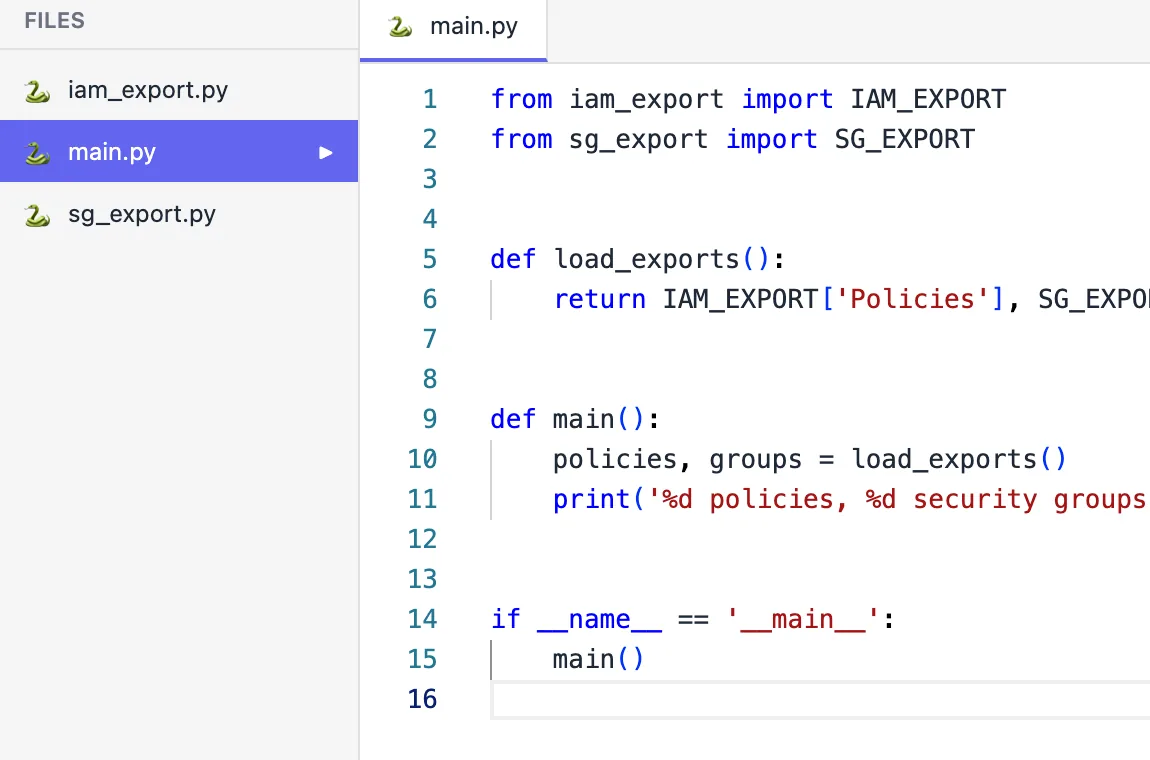
What a strong candidate did: Wrote a check that flags over-broad access and anything not managed in Terraform, ran it on the exports, and ranked what to fix first.
How the decision gets made
Gateway builds cloud engineer situations from your job description, such as a post-deploy incident, a delivery pipeline design or an access audit, and candidates work in code, on a whiteboard or in a written note. Your infrastructure lead sees each skill scored with reasons, whether the candidate meets your line, and the actual work in read-only view. Only candidates whose everyday cloud work is sound go on to meet the team.
See your next cloud engineer at work before you meet them
Paste your job description and Gateway writes the assessment in about 5 to 10 minutes. Your team can edit every question before it goes out.
Questions
Our cloud engineers work across AWS and Azure. Can the assessment cover both?
Yes. If the job description names more than one provider, the situations can draw on each. Your team reviews and edits every question before candidates receive it.
What do candidates need to take the assessment?
A laptop or desktop and the one link you send. Each step explains what it involves before the candidate accepts it, and work happens in code, a whiteboard or a document inside the browser.
Can we turn on monitoring for remote candidates?
Monitoring is off by default. You can choose one of four levels, from activity only up to camera on, and review a replay of the test. Gateway does not mark anyone as cheating on its own; your team reviews anything unusual.
How is this different from what you would test for a devops engineer?
The assessment follows your job description. A cloud engineer role that centres on environments, networking, backups and access requests gets situations about those, while a role centred on release pipelines gets delivery work instead.
What does the infrastructure lead receive?
A score and written feedback for each skill, a tier from 1 to 5, whether the candidate meets your line, and read-only access to the work itself. The lead can change any score and makes the decision.
Related