Hire a site reliability engineer who writes software to remove toil
A site reliability engineer is a software engineer who owns reliability as a product: service level objectives agreed with product teams, error budgets that decide when to slow down, and code that automates away repetitive operations work. Candidates describe this well in interviews, so the clear way to tell them apart is to see each one reason about a real production system and write the code before anyone books an interview.
What the hiring manager needs from a site reliability engineer
Organisations hiring under the full site reliability engineer title usually have a reliability function already, or are building one deliberately. The director needs someone who can negotiate targets with product managers, measure them honestly, and spend more time writing tools and reviewing designs than responding to pages.
Setting the first SLOs for a service
The payments API has uptime checks but no agreed target. A strong site reliability engineer picks indicators that reflect what users experience, such as successful requests and latency at a percentile, proposes objectives with the product owner, and builds the burn rate alerts that follow from them.
An error budget that ran out
A service has spent its budget for the quarter and the product team still wants to launch a feature. The engineer makes the case, with data, for pausing risky releases and funding reliability work, and agrees the terms with the product manager.
Toil that eats the team's week
Engineers rotate certificates, resize disks and restart stuck consumers by hand. The site reliability engineer measures that toil, then writes the automation or the controller that removes the largest piece of it.
A production readiness review
A team wants to launch a new service next month. The engineer reviews its capacity plan, dependencies, rollback path and monitoring, and lists what must change before the service carries real traffic.
Where hiring a site reliability engineer usually goes wrong
- Hiring an operator for an engineering role
- Many candidates with the title have mainly handled tickets and incidents. If the role expects someone to write Go or Python services that remove toil, a resume full of on-call duty does not show that.
- Running the standard coding round
- Algorithm questions test something other than the code a site reliability engineer writes: tooling around real APIs, log processing, controllers, careful scripts against production data. A candidate can pass one and struggle with the other.
- Taking SLO vocabulary at face value
- Everyone applying can define an SLI, an SLO and an error budget. Far fewer can choose indicators for a messy real service or explain to a product director why a launch should wait.
- Overlooking capacity and cost
- Reliability at any price is easy to propose. Interviews that never ask about capacity planning miss whether the candidate can keep a service reliable without doubling its infrastructure.
Real tasks from a Gateway assessment
These come from a Gateway assessment for a DevOps engineer, with the employer’s name taken out. Gateway writes every assessment from your own job description, so the tasks your candidates get are built around your role.
Logs and code, then a written incident note
Post-deploy incident: orders failing and a queue backing up
Right after a deploy, orders start failing and the confirmation queue backs up. The order service and its workers share a single Redis node with a connection limit.
What a strong candidate did: Found that the new version opened far more Redis connections, rolled back first to stop the damage, and set out the fix and the alert that would have caught it.
Code, then a written summary
Audit access before a SOC 2 readiness review
Most IAM policies and security groups live in Terraform, but some were created by hand over the years. The engineering manager wants a least-privilege check that can be re-run before every review.
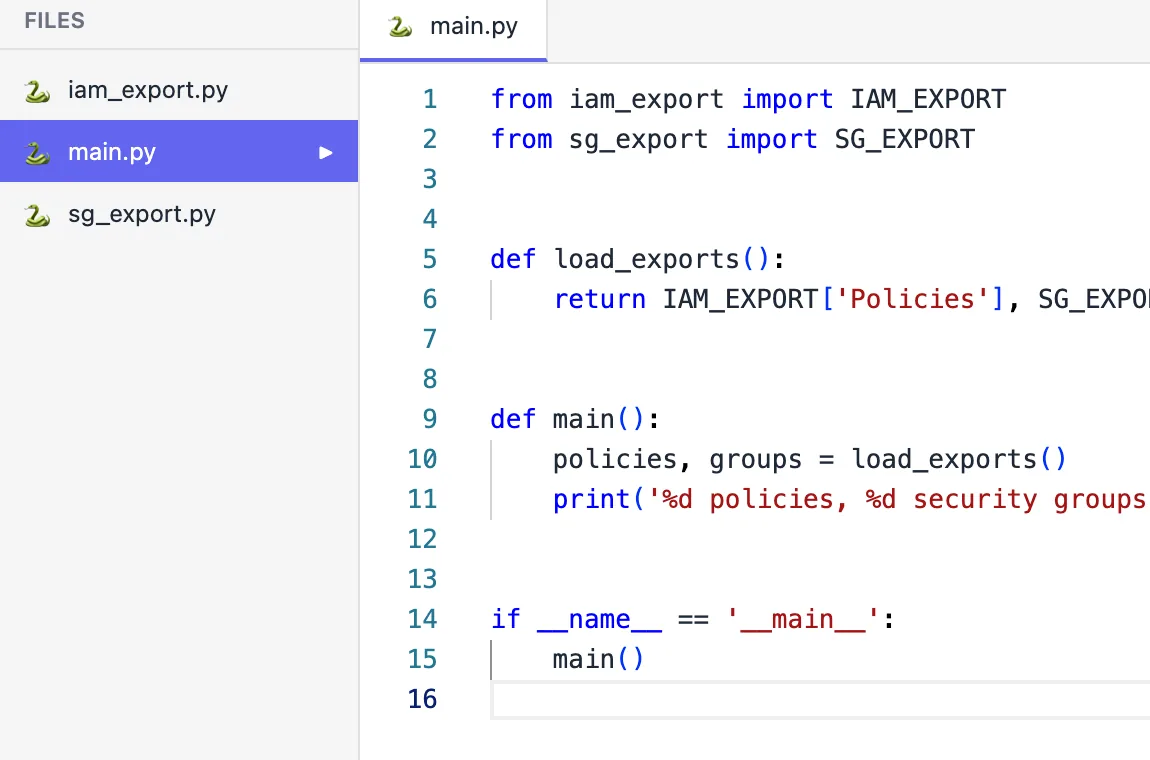
What a strong candidate did: Wrote a check that flags over-broad access and anything not managed in Terraform, ran it on the exports, and ranked what to fix first.
A design on a whiteboard, then a written note
Design a safe delivery pipeline from GitHub to Kubernetes
Three services each copy their own deploy workflow. The CTO wants one standard pipeline from GitHub Actions to Amazon EKS that all of them use.
What a strong candidate did: Designed one pipeline with the same checks for every service, deploys that can be rolled back in one step, and secrets kept out of the repositories.
How the decision gets made
For a site reliability engineer, Gateway writes situations from your job description that need both code and judgement: an incident traced through logs to a root cause and a written note, an access audit scripted against exports, a delivery pipeline designed for safe rollback. The reliability director reads a score and written feedback for every skill, checks whether each candidate clears your line, and opens the code read-only. Design interviews are then spent on candidates who already showed they engineer reliability rather than only respond to it.
See your next site reliability engineer at work before you meet them
Paste your job description and Gateway writes the assessment in about 5 to 10 minutes. Your team can edit every question before it goes out.
Questions
Can the tasks test coding as well as operations?
Yes. Candidates write real code in the browser in the language your role uses, then explain decisions in writing. The code and the reasoning are scored as separate skills.
We follow the SLO and error budget model. Can the assessment reflect that?
Yes. Put it in the job description and the situations will ask candidates to choose indicators, set objectives or argue a launch decision against a budget. Your team can sharpen any task before it is sent.
Is an assessment too much to ask of experienced site reliability engineers?
The tasks are the work the person would do in the first months, and each step states what it involves before the candidate accepts. Experienced candidates generally prefer that to repeated rounds of the same questions.
Can candidates use an AI assistant while coding?
Only if you choose an AI-assisted assessment. In that case your team also sees how each candidate used the assistant, which matters when reviewing automation that will run against production.
Related