Hire a Terraform engineer who can refactor state without breaking production
A Terraform engineer keeps your infrastructure code safe to change: modules that teams reuse, state stored and locked properly, plans that reviewers can read, and no drift between code and reality. Anyone can write a resource block, so the reliable way to separate candidates is to see each one work on real Terraform, such as an import or a refactor, before interviews.
What the hiring manager needs from a Terraform engineer
Companies hire a Terraform engineer when infrastructure code has grown faster than its structure: one huge root module, state files that several pipelines touch, copied modules with slightly different variables, and resources that were created by hand and never imported. The manager needs someone who can reorganise that while every plan stays clean.
Resources that exist outside the code
Security groups and IAM policies were created in the console over the years. A strong Terraform engineer finds them, imports them with import blocks, and writes a check that flags anything not managed in code before every compliance review.
A refactor that must not destroy anything
A single large configuration needs to be split into modules. The engineer uses moved blocks or state moves so the plan shows no destroy and recreate, and reviews the plan line by line with the team before applying.
State that two pipelines fight over
Two pipelines apply to the same state and occasionally corrupt it. The engineer sets up a remote backend with locking, splits state by environment or component, and makes sure only one path can apply to production.
A provider upgrade that changes behaviour
A major provider version upgrade changes defaults and deprecates arguments. The engineer pins versions, reads the upgrade guide, tests the plan in a lower environment, and rolls it forward module by module.
Where hiring a Terraform engineer usually goes wrong
- Counting resources written
- A resume that says the candidate wrote Terraform for a large estate tells you little. The difference shows in how the candidate structures modules and handles state, imports and refactors.
- Never asking about plan review
- The most important Terraform habit is reading a plan and spotting an unexpected replace. Interviews that only ask the candidate to write code from scratch never check that.
- Treating Terraform as a scripting language
- Candidates who reach for null resources and local exec everywhere produce configurations that are hard to reason about. Seeing real code shows whether the candidate works with the declarative model or around it.
Real tasks from a Gateway assessment
These come from a Gateway assessment for a DevOps engineer, with the employer’s name taken out. Gateway writes every assessment from your own job description, so the tasks your candidates get are built around your role.
Code, then a written summary
Audit access before a SOC 2 readiness review
Most IAM policies and security groups live in Terraform, but some were created by hand over the years. The engineering manager wants a least-privilege check that can be re-run before every review.
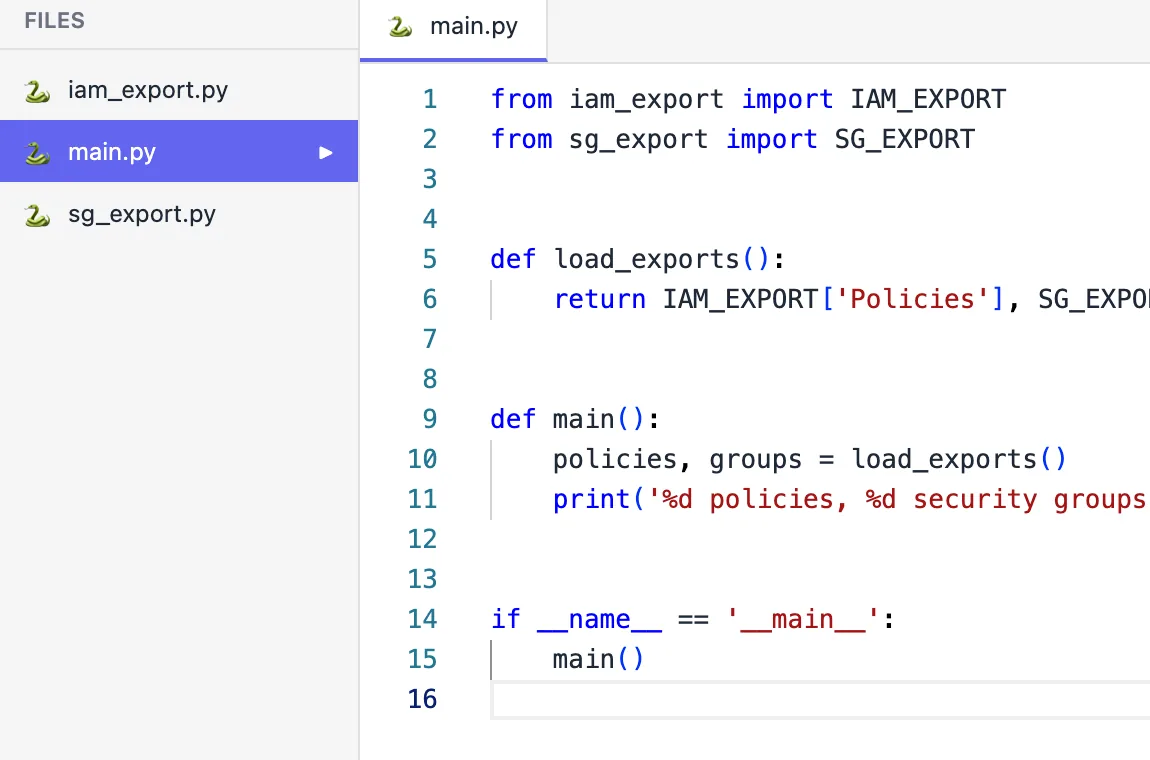
What a strong candidate did: Wrote a check that flags over-broad access and anything not managed in Terraform, ran it on the exports, and ranked what to fix first.
A design on a whiteboard, then a written note
Design a safe delivery pipeline from GitHub to Kubernetes
Three services each copy their own deploy workflow. The CTO wants one standard pipeline from GitHub Actions to Amazon EKS that all of them use.
What a strong candidate did: Designed one pipeline with the same checks for every service, deploys that can be rolled back in one step, and secrets kept out of the repositories.
How the decision gets made
Gateway turns your job description into Terraform engineer situations: auditing IAM and security groups for least privilege and anything not managed in Terraform, then designing a pipeline that plans and applies safely across services. Candidates write code and explain it in a short note. The infrastructure lead sees a score and written reasons for each skill, opens the modules read-only, and invites only candidates whose Terraform would pass your own pull request review.
See your next Terraform engineer at work before you meet them
Paste your job description and Gateway writes the assessment in about 5 to 10 minutes. Your team can edit every question before it goes out.
Questions
Can the assessment use our cloud provider and module conventions?
Yes. The tasks follow your job description, so the provider, backend and tools you name, such as Terragrunt, Atlantis or Terraform Cloud, can appear in the situations. Your team can edit every task.
We are moving to OpenTofu. Does that matter?
Put it in the job description and the tasks will say so. The underlying skills of module design, state handling and plan review carry across, and the assessment shows them either way.
Can we see the candidate's actual code, not only a score?
Yes. The code opens read-only in the same editor the candidate used, next to the score and feedback for each skill. Your team can change any score.
Can a task ask candidates to review a Terraform plan?
Yes. A task can show a plan output with an unexpected replacement hidden among routine changes and ask the candidate what to approve, what to stop and why. That review habit is scored as its own skill, with written feedback your lead can check.
What if a candidate's approach differs from ours but is valid?
The written feedback explains each score, and your reviewers have the final say. If a candidate solved the task in a different but sound way, your team can raise the score before deciding.
Related