Hire an HR business partner your directors actually consult
An HR business partner is hired to sit beside a business unit's leaders and help them make people decisions: where to hire, how to organise teams, how to handle a performance problem, how to keep the people they cannot lose. Years in HR read the same on most resumes, so the way to compare candidates is to see each one advise a director from workforce data and hold a hard conversation before any interview.
What the hiring manager needs from an HR business partner
The CHRO or HR head hiring an HR business partner is placing someone with a set of directors who will judge HR by whether this one person is useful. The person in the seat needs commercial understanding of the unit, comfort with numbers, and the confidence to tell a senior leader something unwelcome.
A director asks where hiring is stuck
The quarter is ending, and the engineering director wants to know which of the open roles are at risk and why. The HR business partner reads the funnel by stage, names the one role in trouble with the cause, and recommends where recruiting and the director's own team should spend effort.
Retaining a key person with another offer
A valued engineer the business wants to keep, or a finalist it wants to hire, holds a competing offer. The HR business partner finds out what the person values beyond pay, works within limits the leadership approved, and gets to a decision without setting an exception that unsettles the rest of the team.
A reorganisation proposed in a hurry
A director wants to merge two teams by next month. The HR business partner asks what problem the change solves, lays out the roles affected and the risks of losing people, and proposes a sequence that keeps delivery running.
A performance case with a long history
A manager has tolerated poor performance for a year and now wants an exit next week. The HR business partner reviews the record, explains what fair process still requires, and coaches the manager through the conversations that should have happened earlier.
Where hiring an HR business partner usually goes wrong
- Hiring a generalist for a partner role
- Experience across onboarding, payroll and policy is valuable, but an HR business partner is judged by the quality of advice to leaders. An interview about HR processes never shows whether the candidate can influence a director.
- No numbers in the process
- Business partners are expected to bring headcount, attrition and hiring data to leadership meetings. Many hiring processes never hand the candidate a spreadsheet, so weak analysis appears only when the first review goes badly.
- Rewarding agreement
- Candidates who say yes to every scenario interview smoothly. The partner a director needs is the one who pushes back with evidence, which only shows when someone in the interview pushes first.
Real tasks from a Gateway assessment
These come from a Gateway assessment for a talent acquisition specialist, with the employer’s name taken out. Gateway writes every assessment from your own job description, so the tasks your candidates get are built around your role.
A spreadsheet, then a short update
Diagnosing pipeline health across open roles
At quarter end, an engineering director asks which of four open roles are healthy, which are at risk, and where recruiting should put its effort.
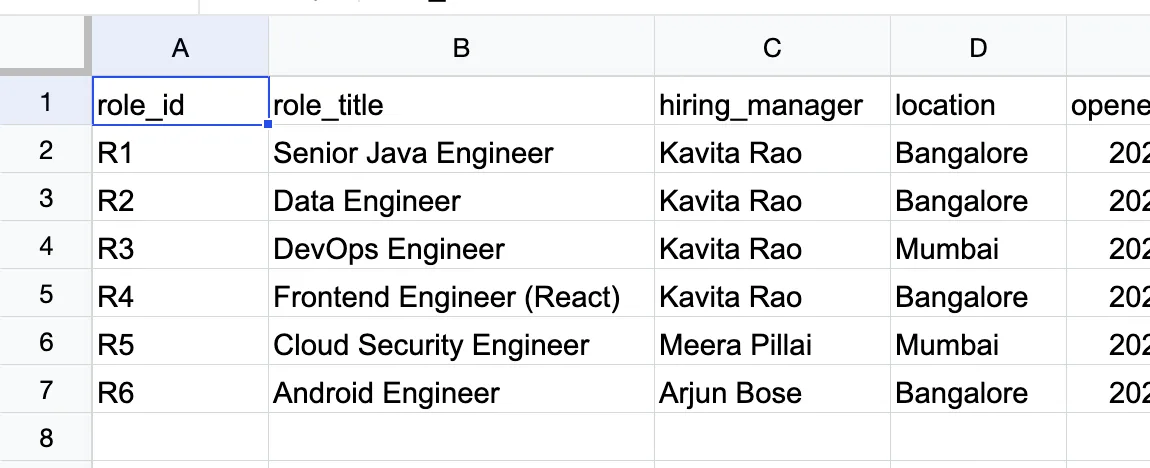
What a strong candidate did: Showed for each role where candidates drop out, named the one role at real risk and why, and proposed where to move effort next.
A live call with an AI candidate
Closing a candidate with a competing offer
After three rounds, the panel recommends a clear hire for a cloud engineering role. The candidate has a competing offer, and the hiring manager approves any exception.
What a strong candidate did: Found out what the candidate actually cared about beyond money, stayed within what was approved, and closed with a clear answer and a date.
How the decision gets made
With Gateway, each HR business partner candidate works through situations from your job description: a pipeline health review across open roles in a spreadsheet with a short update to a director, and a call with an AI candidate who holds a competing offer, handled within approved limits. The HR head sees each skill scored with written feedback, reads the call and the update, and meets only candidates whose advice was specific and backed by the numbers. A voice interview of up to 15 minutes, which says it is an AI at the start, can cover the business units and situations each candidate has partnered with before.
See your next HR business partner at work before you meet them
Paste your job description and Gateway writes the assessment in about 5 to 10 minutes. Your team can edit every question before it goes out.
Questions
Can the scenarios match the business unit the partner will support?
Yes. Gateway writes them from your job description, so a partner for sales, engineering or operations gets situations from that unit. Your team reads and edits every question.
Can we test advice to a senior leader, not just HR process?
Tasks can include a live conversation with an AI director or manager who pushes back, followed by a written recommendation. Each skill is scored with the reason, and your team can change any score.
What does the HR head see at the end?
A score and written feedback for each skill, a tier from 1 to 5, whether the candidate meets your line, and the candidate's own spreadsheet and conversation read-only.
Can candidates take the voice interview by phone?
Yes. It runs in the browser or as a call to an Indian number, for up to 15 minutes, with a recording and transcript for your team.
Related