Hire a talent acquisition specialist who can read a hiring pipeline
A talent acquisition specialist is hired to run hiring end to end for a set of roles: calibrate with hiring managers, keep each pipeline healthy, report honestly on risk and close the people the panel chooses. Titles and ATS names on resumes look alike, so the way to compare candidates is to watch each one run an intake, read a pipeline report and close an offer before any interview is booked.
What the hiring manager needs from a talent acquisition specialist
The head of talent acquisition hiring for this seat usually has more open requisitions than people, directors who want weekly answers, and an employer brand that every candidate conversation adds to or takes away from. The specialist has to plan, report and influence, beyond running interviews.
Quarter-end review across open roles
An engineering director asks which of the open roles are on track, which are at risk and where recruiting effort should move. The talent acquisition specialist uses stage-by-stage data to show where candidates drop out for each role and names the one in real trouble with a reason.
A senior requisition with a generic description
The hiring manager sends a copied job description for a senior backend engineer. The talent acquisition specialist runs an intake that turns it into the few things the person must have done, agrees trade-offs, and writes a summary the head of talent can approve.
Closing a strong candidate within policy
A cloud engineer the panel wants has a competing offer. The specialist finds what matters to the candidate, uses only exceptions the hiring manager approved, and secures an answer and a start date.
Process drift across teams
Each team interviews differently, some skip scorecards, and feedback arrives days late. The talent acquisition specialist proposes a common structure, gets managers to agree to it, and tracks whether it holds.
Where hiring a talent acquisition specialist usually goes wrong
- Treating TA as recruiting with a longer title
- A talent acquisition specialist owns reporting, process and manager relationships across many roles. Screening the candidate only on sourcing and phone screens hires someone who cannot answer a director's pipeline question.
- Trusting time-to-fill claims
- Speed figures from a previous employer depend on brand, budget and role mix, and they cannot be checked. They do not tell you whether the candidate spots a failing pipeline early.
- No test of data skills
- Modern TA work involves funnel reports from the ATS. Many interviews never hand the candidate a spreadsheet, so weak analysis shows up only when the first quarterly review goes badly.
- Ignoring influence with managers
- A specialist who cannot hold a position with a senior hiring manager ends up running searches against a moving target. That skill only shows when someone pushes back in the conversation.
Real tasks from a Gateway assessment
These come from a Gateway assessment for a talent acquisition specialist, with the employer’s name taken out. Gateway writes every assessment from your own job description, so the tasks your candidates get are built around your role.
A spreadsheet, then a short update
Diagnosing pipeline health across open roles
At quarter end, an engineering director asks which of four open roles are healthy, which are at risk, and where recruiting should put its effort.
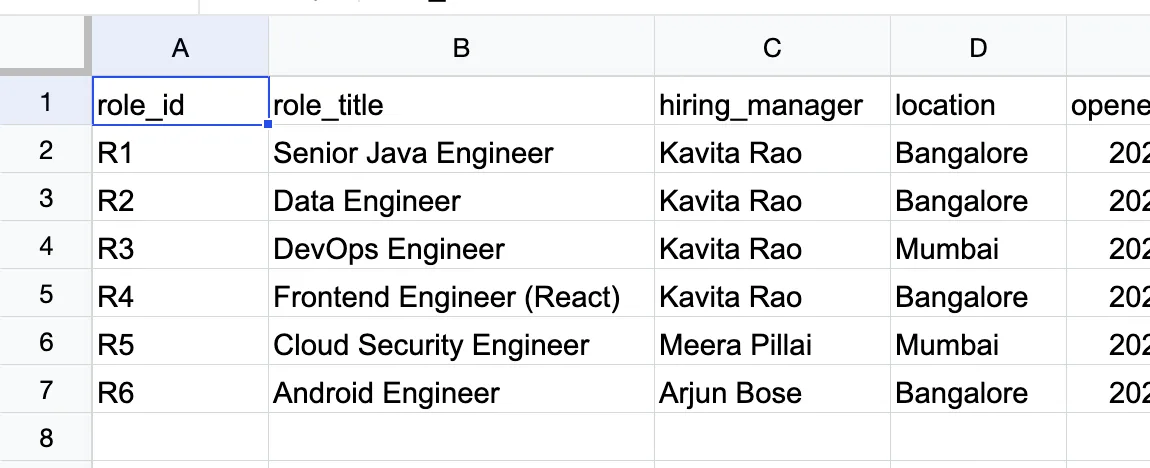
What a strong candidate did: Showed for each role where candidates drop out, named the one role at real risk and why, and proposed where to move effort next.
A live conversation with an AI hiring manager, then a written summary
Intake meeting for a senior engineering role
An engineering manager raises a requisition for a senior backend engineer and asks to “start sourcing today”. The head of talent acquisition wants a written intake summary first.
What a strong candidate did: Turned a generic requisition into the few things the person must have done, agreed what can be traded off, and wrote a summary both the manager and the head of talent could sign off.
A live call with an AI candidate
Closing a candidate with a competing offer
After three rounds, the panel recommends a clear hire for a cloud engineering role. The candidate has a competing offer, and the hiring manager approves any exception.
What a strong candidate did: Found out what the candidate actually cared about beyond money, stayed within what was approved, and closed with a clear answer and a date.
How the decision gets made
In Gateway, each talent acquisition specialist candidate works through situations from your job description: a live intake with an AI hiring manager and a written summary, a pipeline health review across open roles in a spreadsheet with a short update, and a closing call with an AI candidate holding a competing offer. The head of talent sees each skill scored with written feedback, opens the spreadsheet and conversations read-only, and spends final interviews only on candidates who were clear with managers and honest about risk. A voice interview of up to 15 minutes can screen large applicant pools first.
See your next talent acquisition specialist at work before you meet them
Paste your job description and Gateway writes the assessment in about 5 to 10 minutes. Your team can edit every question before it goes out.
Questions
Can we test pipeline reporting with our ATS stages?
Name your stages and reporting expectations in the job description and the pipeline task follows them. Your team can edit the data and every question before sending.
How is the intake conversation scored?
Against the skills the role needs, such as clarifying requirements, agreeing trade-offs and writing the summary. Each gets a score and written feedback, and your team can change any score.
Can the voice interview screen TA applicants in Hindi?
In the browser, the AI interviewer speaks English and understands answers in Hindi, English or a mix. It says it is an AI at the start and scores each topic on what was said against answers your manager approved.
Can the head of talent and the HR lead both review results?
Yes. Share results with a note, and each reviewer sees the scores, the feedback and the candidate's own work.
Related