Hire a project manager who lands the project on the date you promised
A project manager is worth hiring when a project with a fixed scope, budget and deadline finishes close to all three, and when it cannot, the sponsor hears early and gets options instead of surprises. Every resume mentions PMP, Gantt charts and stakeholder management, so the way to tell project managers apart is to watch each one re-plan a real project under pressure before the first interview.
What the hiring manager needs from a project manager
Project managers are usually hired by a delivery head or a business sponsor who has a committed date, a team borrowed from other work, and vendors who need chasing. The new project manager has to own the plan, see slippage before it is visible to the customer, and make the trade-off conversations happen at the right level.
The deadline moves and the team does not grow
The client pulls the go-live date forward. A good project manager rebuilds the schedule around the critical path, protects the work the client will judge the project on, and tells each person precisely what changed for them, instead of asking everyone to work harder.
Scope creep through informal requests
Small additions arrive through chat messages to developers. The project manager routes them into change requests with an impact on date and cost, so the sponsor approves or declines each one knowingly.
A vendor milestone at risk
A supplier reports green every week while deliverables arrive late. The project manager checks the actual output against the contract, escalates with evidence, and plans around the gap before it reaches the customer.
A status report the steering group can use
Executives have minutes, not hours. The project manager writes a report that leads with the decision needed and the real risk, rather than a page of green ticks that hides the one amber item that matters.
Where hiring a project manager usually goes wrong
- Hiring the certification
- PMP or PRINCE2 shows the candidate knows the vocabulary of a risk register and a work breakdown structure. It does not show whether the candidate will tell a sponsor bad news early, which is where projects are actually saved.
- Rewarding tool fluency
- Candidates who demo Jira dashboards or MS Project schedules can look in control. A tidy plan that nobody updates after week one is common, and only a real re-planning exercise shows who keeps the plan honest.
- Past projects told as team wins
- In interviews, project managers describe projects that went well and say "we". It is hard to tell what the candidate personally decided, which risk the candidate spotted, or whether the project was simply easy.
- Ignoring the money
- Many project manager roles approve timesheets, check vendor invoices or track spend against budget. Candidates who never handled the numbers often struggle here, and conversation-only interviews never surface it.
Real tasks from a Gateway assessment
These come from a Gateway assessment for a project and delivery manager, with the employer’s name taken out. Gateway writes every assessment from your own job description, so the tasks your candidates get are built around your role.
A plan, then a recorded brief to the team
Re-plan a bid when the deadline moves
A public-sector client has moved the deadline on a three-year service bid. The bid team is spread across other work.
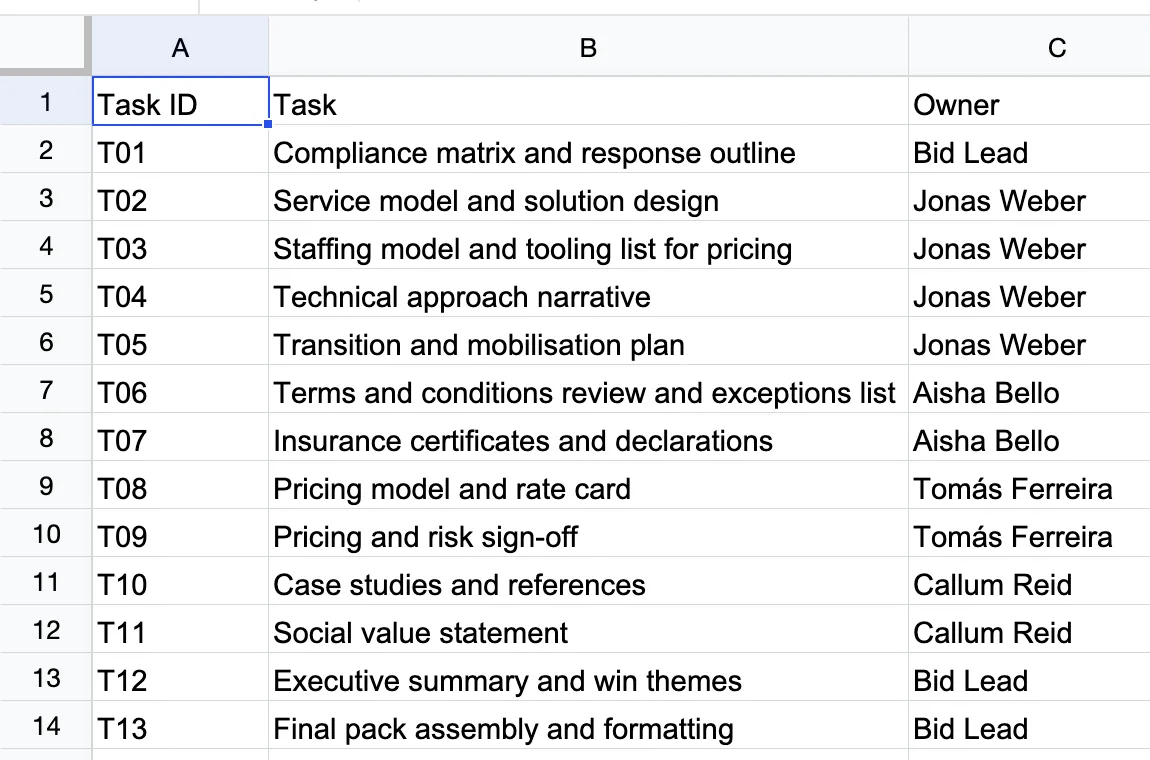
What a strong candidate did: Rebuilt the plan around the new date, protected the parts that decide the score, and briefed each person on exactly what they owe and when.
A spreadsheet, then a short note
Match available people to open project demand
The delivery head wants a proposed allocation for every open staffing request, so that only the hires that are really needed get opened. One request is urgent on a customer-committed project.
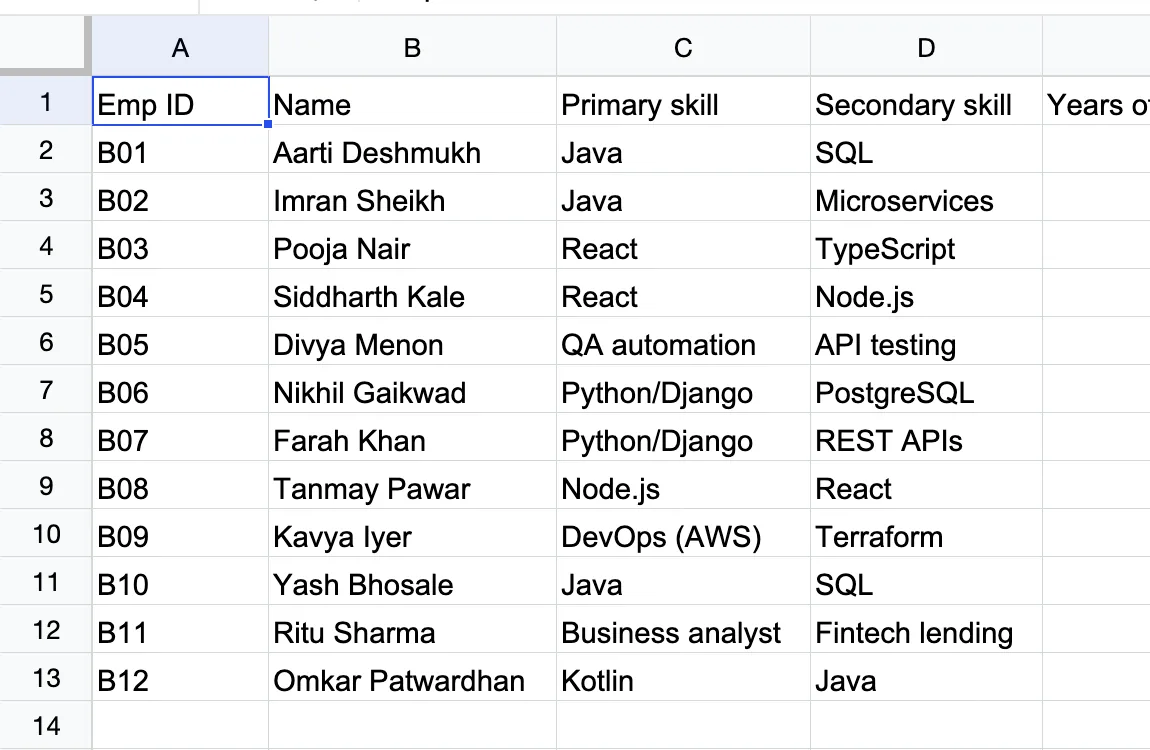
What a strong candidate did: Filled the urgent request first, matched people on the skills that matter rather than titles, and showed exactly which requests still need a hire.
How the decision gets made
In Gateway, project manager candidates work through situations written from your job description: rebuilding a plan when a deadline moves and recording a brief to the team, or matching available people to open project demand in a spreadsheet. The hiring manager sees a score and written feedback for skills like planning, risk handling and stakeholder communication, opens each candidate's plan and listens to the recorded brief, and spends interview time only with the project managers who rebuilt the plan around what the client will actually judge.
See your next project manager at work before you meet them
Paste your job description and Gateway writes the assessment in about 5 to 10 minutes. Your team can edit every question before it goes out.
Questions
Can the assessment reflect the kind of projects we run?
Yes. Gateway writes the assessment from your job description, so a construction fit-out, an IT implementation or a client services engagement each get situations from that world. Your team can edit every question first.
How do we hear how a project manager briefs a team?
A recorded walkthrough can be one of the steps. The candidate records a short brief after re-planning, and you hear whether each person would know exactly what they owe and by when.
Can it test budget and vendor control too?
If the role includes it. A spreadsheet task, such as checking a vendor invoice against a rate card and the records, shows whether the project manager can catch errors and write a clear note for finance.
Do candidates need special software?
No. Candidates need a laptop or desktop and one link. They plan, write and record inside Gateway, and each step explains what it involves before they accept it.
Related