Hire a product owner who keeps the backlog ready for the team
A product owner is worth hiring when the development team starts every sprint with stories it understands, in an order that reflects what the business needs, and gets quick answers when a story turns out to be unclear. Certifications and Scrum vocabulary are common to most applicants, so the way to tell product owners apart is to see each one split a real request into stories and order a real backlog before anyone is interviewed.
What the hiring manager needs from a product owner
Whoever hires a product owner, often a product head, a delivery lead or the business sponsor of a programme, needs one person the team can go to for a decision on scope during the sprint. The product owner sits between business stakeholders who want everything and a team that can build only so much, and has to keep both groups trusting the backlog.
Refinement with stories nobody can estimate
The team opens refinement and half the top of the backlog is a one-line title. A capable product owner arrives with stories split small enough to finish in a sprint, each with acceptance criteria, and knows which open questions still need a business answer.
A stakeholder asks for a change mid-sprint
A business lead wants a report field added today. The product owner judges whether it is urgent enough to swap with committed work, talks to the team before changing anything, and otherwise puts it in the backlog with a clear place in the order.
Sprint review and a story that is not quite right
A story meets the letter of its acceptance criteria but misses what users needed. The product owner decides on the spot whether to accept it and log a follow-up, or reject it and explain why, without blaming the developers for a gap in the story.
A backlog that has grown past usefulness
Hundreds of old items, duplicates and wishes from people who have left. The product owner prunes it, groups what remains under goals the sponsor recognises, and makes the next few sprints of work visible at a glance.
Where hiring a product owner usually goes wrong
- Treating the certificate as the skill
- A Scrum product owner certificate shows the candidate knows the events and artefacts. It says nothing about whether the person can write a story a tester can verify or tell a senior stakeholder that the request waits until next sprint.
- Hiring a product strategist for a backlog seat
- Some candidates want to set vision and talk market sizing, and lose interest in story writing and daily questions from developers. If your product owner role is mostly about feeding one team well, test for that work directly.
- Interviewing only the business side
- Loops are often run by the sponsor, who checks domain knowledge. The developers and testers who will live with the stories are rarely shown anything the candidate wrote, so a weak story writer passes on charm.
Real tasks from a Gateway assessment
These come from a Gateway assessment for a product manager, with the employer’s name taken out. Gateway writes every assessment from your own job description, so the tasks your candidates get are built around your role.
A flow on a whiteboard, then a written spec
Spec a change customers describe as “just make it work”
A payroll customer’s HR manager asks that the product “just do the right thing” when an employee moves to another state partway through a pay period.
What a strong candidate did: Turned the request into the exact cases that must work, said what the first release will not cover, and wrote acceptance criteria engineering could build and test against.
A spreadsheet of funnel data, then a written decision
Find the friction in onboarding and pick the next fix
Customers say contractors “get stuck” in a five-step onboarding. Next sprint can take one fix.
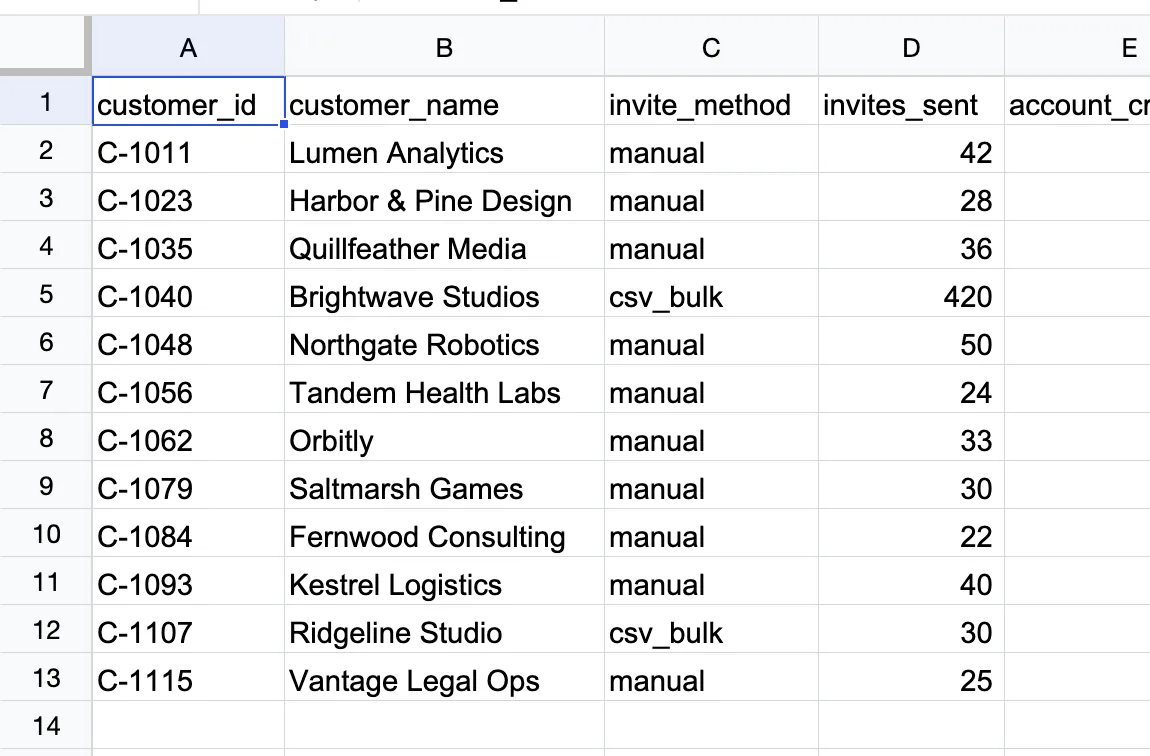
What a strong candidate did: Found the step where most contractors stop and why, picked one fix with the expected gain, and said how to know within two weeks whether it worked.
How the decision gets made
In Gateway, product owner candidates take a vague request from your domain, map the flow on a whiteboard and write it up as stories with acceptance criteria, then order a short backlog using the data you give them. The hiring manager sees a score and written feedback for skills like story splitting, acceptance criteria and backlog ordering, and can open each candidate's whiteboard and written stories read-only. Share the results with the team's tech lead with a note, so the people who will build from those stories can say whether they could have started work from them, and only meet the product owners whose stories passed that check.
See your next product owner at work before you meet them
Paste your job description and Gateway writes the assessment in about 5 to 10 minutes. Your team can edit every question before it goes out.
Questions
Can the assessment follow our way of running Scrum?
Gateway writes each assessment from your job description, so if your team uses user stories with Given-When-Then criteria, or works inside a scaled framework, the situations reflect that. Your team can edit any question before it is sent.
How is this different from what you would test for a product manager?
The product owner version leans on story writing, acceptance criteria, sprint-level trade-offs and stakeholder requests during a sprint. The job description you provide sets that focus, and you can adjust each question to match how much strategy your product owner carries.
Will candidates know what they are walking into?
Yes. Each step says what it involves, such as a whiteboard flow or a written set of stories, before the candidate accepts it. Candidates need a laptop or desktop and the one link you send.
Can our developers review the stories a candidate wrote?
Any candidate's work opens read-only in the same tool, and results can be shared with a hiring manager or lead with a note. Your team can change scores after reading the work and makes the final decision.
Related