Hire a kanban specialist who gets work flowing without adding process
A kanban specialist is worth hiring when work moves through a team's board faster and more predictably, with fewer items stuck waiting, and the team can tell a requester when something will be done. Boards and WIP limits are easy to describe, so the way to tell kanban specialists apart is to give each one a real board history and a real flow problem before you interview.
What the hiring manager needs from a kanban specialist
Kanban specialists are usually hired by a lead running continuous work: a support or operations team, a platform team taking requests, a marketing or content group. The work never fits neatly into sprints. The lead needs someone who can read the flow, find where items wait, and change policies on the board so the team finishes more of what it starts.
Too much started, too little finished
Every person has several items in progress and cycle times keep stretching. A good kanban specialist shows the team its own cumulative flow, agrees WIP limits the team will actually respect, and tracks whether cycle time falls.
Items blocked for days without anyone noticing
Cards sit in a review column while the team works on new things. The kanban specialist makes blocked work visible, sets a policy for who swarms on it, and measures how long items wait in each state.
Urgent work wrecking everything else
Expedite requests arrive daily and push planned work back. The kanban specialist introduces classes of service with clear rules on what counts as urgent, and agrees a limit with the requesters.
Requesters asking when it will be done
Stakeholders want dates, the team has no estimates. The kanban specialist uses historical throughput to give a forecast with a confidence range, which the team can stand behind.
Where hiring a kanban specialist usually goes wrong
- Hiring board decoration
- Some candidates redesign columns and colours in Jira or Trello and call it Kanban. The board looks tidier and the flow does not change, because no policies or limits changed.
- Assuming a scrum master will do
- Kanban depends on reading flow metrics and setting explicit policies, which differs from running sprint ceremonies. A candidate strong in Scrum may try to impose sprints on work that does not suit them.
- Not checking the numbers
- Cycle time, throughput and ageing work are spreadsheet work. An interview that never puts a board export in front of the candidate cannot tell a real kanban specialist from someone who knows the vocabulary.
Real tasks from a Gateway assessment
These come from a Gateway assessment for a project and delivery manager, with the employer’s name taken out. Gateway writes every assessment from your own job description, so the tasks your candidates get are built around your role.
A spreadsheet, then a note for finance
Check a vendor invoice before it goes to finance
A contract-staffing vendor’s monthly invoice has arrived. Finance will not pay until it is checked against the rate card and the deployment record.
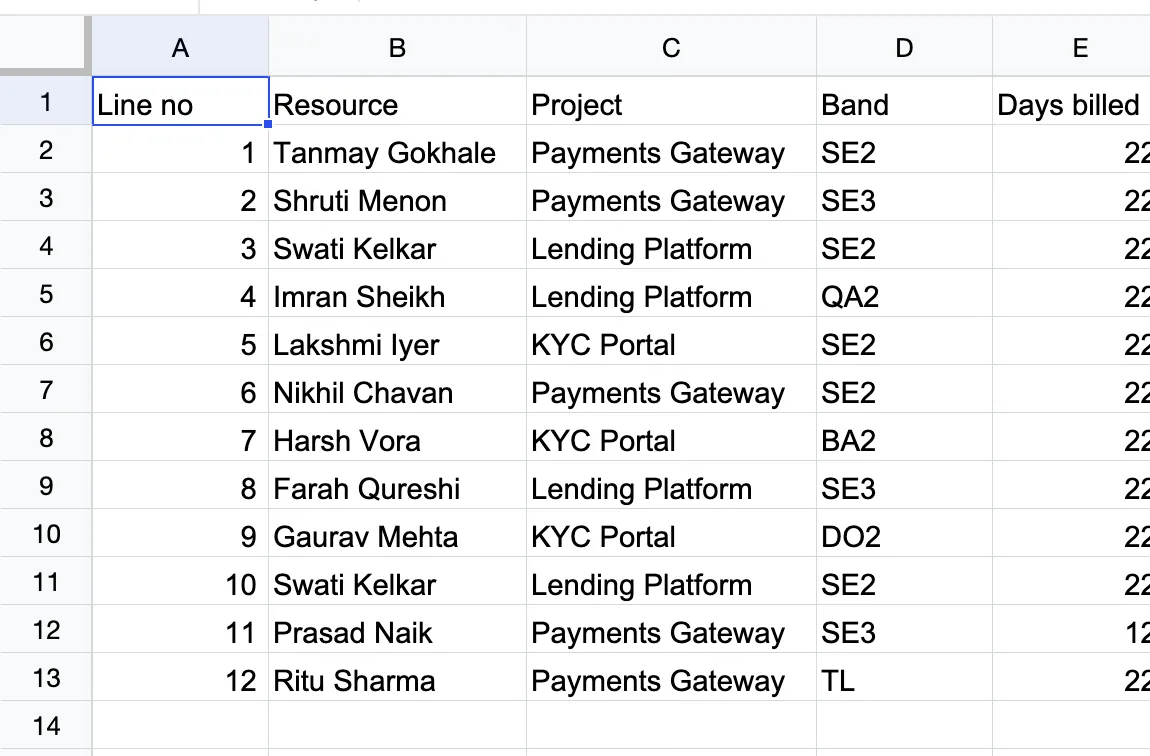
What a strong candidate did: Found the lines that did not match the rate card or the records, worked out the correct amount, and wrote a note finance could act on without a call.
A plan, then a recorded brief to the team
Re-plan a bid when the deadline moves
A public-sector client has moved the deadline on a three-year service bid. The bid team is spread across other work.
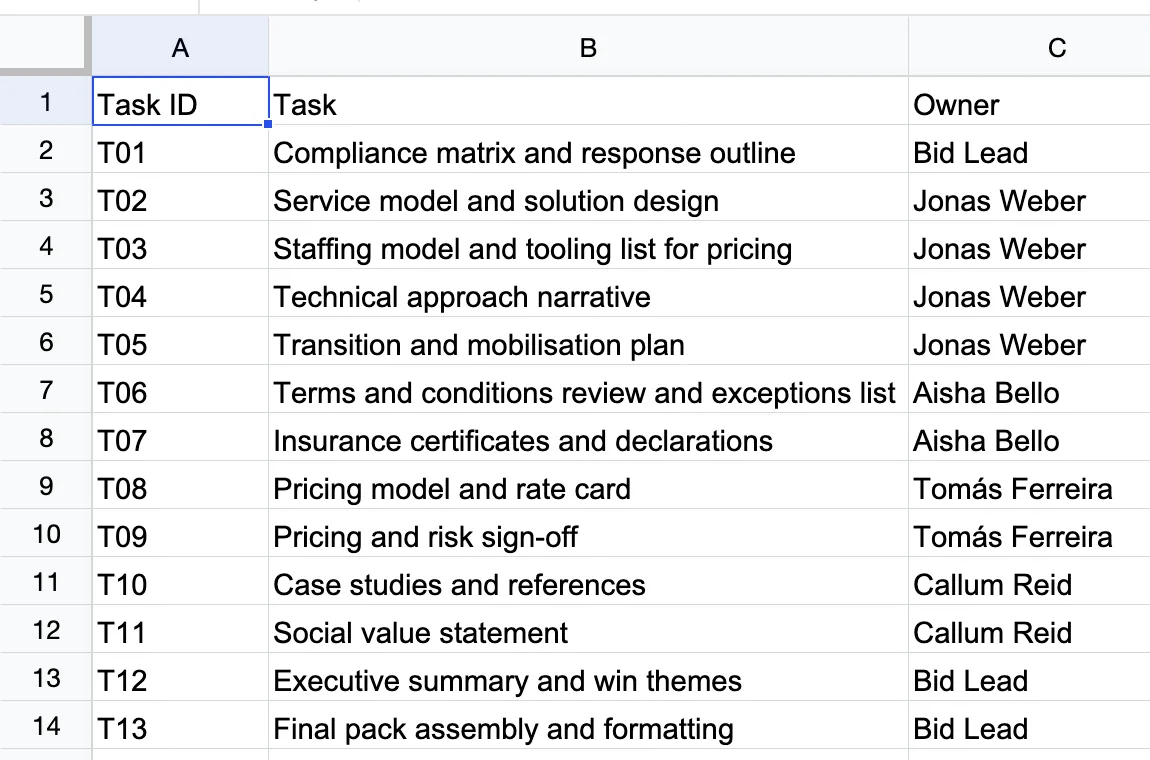
What a strong candidate did: Rebuilt the plan around the new date, protected the parts that decide the score, and briefed each person on exactly what they owe and when.
How the decision gets made
With Gateway, kanban specialist candidates get situations written from your job description: checking records against what was billed or delivered in a spreadsheet and writing a clear note, or rebuilding a plan when a deadline moves and recording a brief to the people affected. Your team can add a board export for the candidate to analyse for flow. The hiring manager sees each skill scored with written feedback, opens every spreadsheet and plan read-only, and only meets the kanban specialists who found where work actually waits and proposed a policy the team would keep.
See your next kanban specialist at work before you meet them
Paste your job description and Gateway writes the assessment in about 5 to 10 minutes. Your team can edit every question before it goes out.
Questions
Can candidates analyse our board data?
Your team can edit any question and its data before the assessment goes out, so an anonymised export of cycle times or ageing work can sit in the spreadsheet for the candidate to work through.
Is this only for software teams?
No. Gateway writes the assessment from your job description, so a kanban specialist for an operations, support or content team gets situations from that kind of work.
How do we see the reasoning behind a WIP limit or forecast?
The candidate's spreadsheet and note open read-only next to a score and written feedback for each skill, so you can check that the proposal follows from the flow data.
Can we watch for copied answers?
Monitoring is off by default and has four levels, from activity only to camera on, with a replay of the test. Gateway never marks a candidate as cheating on its own; your team reviews anything unusual.
Related