Hire a product manager who decides what not to build
A product manager earns the seat by choosing what engineering builds next and being right often enough that the roadmap moves the numbers the business watches. Roadmap decks and framework names look alike across candidates, so the way to tell product managers apart is to watch each one work a real product decision, with usage data and a vague customer request, before the interview loop starts.
What the hiring manager needs from a product manager
The head of product or founder hiring a product manager usually has an engineering team that is busy but unsure it is busy on the right things. The new product manager has to own a slice of the product, make trade-offs with incomplete information, and hand engineers specs they can build without days of back-and-forth.
Several groups want the same engineering quarter
Sales wants the feature a large prospect asked for, support wants the bug that floods the queue, and the CEO wants the new bet. The product manager ranks them on evidence, says no to two of them in writing, and keeps the people who lost the argument on side.
Usage data that contradicts what customers say
In interviews customers praise the reporting module, yet event data shows few of them open it a second time. The product manager works out which signal to trust and changes the plan when the data warrants it, instead of building more of what people say they like.
A feature shipped and nothing moved
The launch went out on time and adoption is flat. Because a good product manager set the success measure before launch, the discussion is about why it missed and what to try next, rather than an argument about whether it counted as a success.
A vague request from a paying customer
An account manager forwards a customer asking the product to "just handle it" when an edge case appears. The product manager turns that into the concrete cases that must work, states what the first release leaves out, and writes acceptance criteria engineering can test.
Where hiring a product manager usually goes wrong
- Hiring the framework vocabulary
- RICE scores, north star metrics, opportunity trees: candidates who have read the same books describe prioritisation in the same words. Very few interviews ask what the candidate actually cut when the data was thin and a senior leader had a strong opinion.
- Reading shipped features as owned outcomes
- A resume full of launches shows that a team shipped. It rarely shows whether this product manager chose those features, measured them afterwards, or argued to remove the ones that failed.
- Case questions about imaginary products
- Designing a fridge for astronauts tests improvisation in a meeting room. The person you hire will spend months inside one product with real users, a real backlog and real engineering limits, and a hypothetical puzzle never touches any of that.
- Letting the polished presenter win
- Product managers present often, so interview loops tend to reward polish. A candidate who says the onboarding data is too thin to decide and proposes a cheap test is frequently a safer hire than one with a confident answer to every question.
Real tasks from a Gateway assessment
These come from a Gateway assessment for a product manager, with the employer’s name taken out. Gateway writes every assessment from your own job description, so the tasks your candidates get are built around your role.
A spreadsheet of funnel data, then a written decision
Find the friction in onboarding and pick the next fix
Customers say contractors “get stuck” in a five-step onboarding. Next sprint can take one fix.
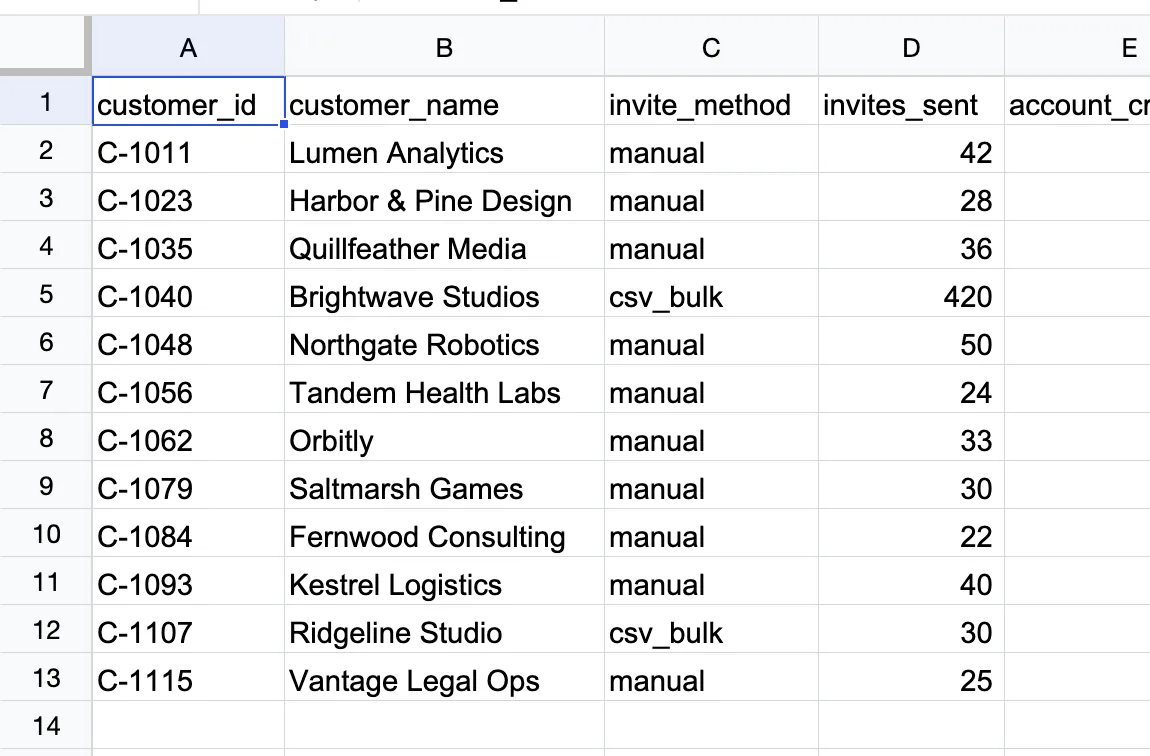
What a strong candidate did: Found the step where most contractors stop and why, picked one fix with the expected gain, and said how to know within two weeks whether it worked.
A spreadsheet, then three slides for leadership
Launch scope for an AI assistant
A pilot tested an AI assistant that answers employees’ questions about their pay stub. The ML engineer has exported the reviewed answers.
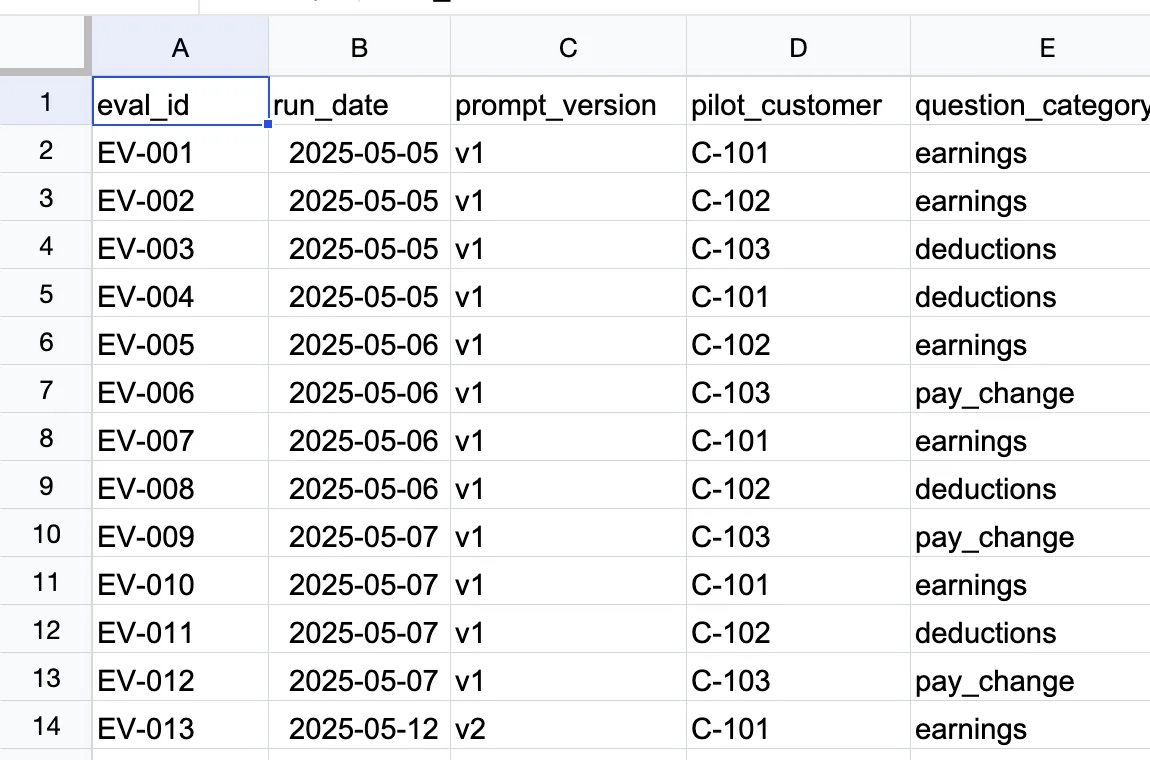
What a strong candidate did: Launched only the question types the pilot handled well, kept the risky ones with a person, and gave leadership one clear decision to make.
A flow on a whiteboard, then a written spec
Spec a change customers describe as “just make it work”
A payroll customer’s HR manager asks that the product “just do the right thing” when an employee moves to another state partway through a pay period.
What a strong candidate did: Turned the request into the exact cases that must work, said what the first release will not cover, and wrote acceptance criteria engineering could build and test against.
How the decision gets made
With Gateway, product manager candidates work through situations written from your job description and product area: a funnel export showing where users stop, a vague customer request that has to become a spec, a pilot result leadership must act on. They work in a spreadsheet, on a whiteboard, in a written spec and in a few slides, which is where product decisions actually get made. The hiring manager sees a score and written feedback for each skill, such as prioritisation, use of data and spec quality, opens every candidate's spreadsheet and spec read-only, and gives interview time only to the product managers whose calls held up. For a senior or group product role, a continuous async video round lets the head of product, an engineering lead and a designer each record questions once and vote before anyone meets in person.
See your next product manager at work before you meet them
Paste your job description and Gateway writes the assessment in about 5 to 10 minutes. Your team can edit every question before it goes out.
Questions
Can the assessment reflect our product rather than a generic one?
Yes. Gateway writes it from your job description in about 5 to 10 minutes, so the users, data and requests match your product area, whether that is B2B software, a consumer app or an internal platform. Your team reads and edits every question before it goes out.
How does it show prioritisation instead of talk about it?
Candidates get a real trade-off, such as funnel data and room for a single fix next sprint, and have to choose, justify the choice and say how they will know it worked. The written decision sits beside the spreadsheet it came from, so you can check that the reasoning follows from the numbers.
Can product managers use AI tools during the assessment?
If you want them to. In an AI-assisted assessment the candidate may use an AI assistant, and your team sees how the candidate worked with it. That is useful for product managers who will draft specs and analyses with AI on the job.
Who makes the final call on a product manager candidate?
Your team. Gateway gives each skill a score with written feedback, a tier from 1 to 5 and whether the candidate meets your line. The people who will work alongside the product manager can change any score before deciding.
Related