Hire a technical program manager engineers trust to run the launch
A technical program manager is worth hiring when a piece of engineering work that spans several teams, such as a platform migration or a launch with infrastructure, security and product pieces, ships on a plan the engineers believe and without surprises in the last week. Resumes list the same programmes and tools, so the way to tell technical program managers apart is to see each one plan real cross-team technical work before your engineers spend time interviewing.
What the hiring manager needs from a technical program manager
Engineering directors hire a technical program manager when a project has outgrown any single team lead. The technical program manager needs enough technical depth to question an estimate or spot an architectural dependency, and enough programme discipline to hold several teams, their on-call load and their roadmaps to one plan.
A migration with a hard cut-over date
The old data centre contract ends on a fixed date. A good technical program manager breaks the migration into service-by-service waves, finds the services with hidden shared databases, and plans rollback for each wave before the first one moves.
An estimate that does not add up
The platform team says the API will be ready in a sprint, yet it depends on a schema change still in design review. The technical program manager asks the questions that expose this, gets the real date, and re-sequences the dependent teams.
Launch readiness across functions
Security review, load testing, support runbooks and the status page all have different owners. The technical program manager runs a launch checklist with named owners and calls a go or no-go based on evidence, not on who argues hardest.
An incident in the middle of the programme
A production incident pulls two teams off planned work for days. The technical program manager re-plans the programme around it, tells stakeholders what moved, and makes sure the incident follow-ups are tracked alongside the planned work.
Where hiring a technical program manager usually goes wrong
- Hiring a project coordinator with a technical title
- Some candidates track tickets and run meetings but cannot follow an architecture discussion. Engineers quickly route around such a technical program manager, and the plan stops reflecting reality.
- Hiring a former engineer who wants to design
- The opposite risk is a candidate who prefers to solve the technical problem personally. A technical program manager who designs instead of coordinating leaves the cross-team work unmanaged.
- System design interviews as the whole test
- Borrowing the engineering loop checks depth, but says nothing about running a multi-team plan or calling a launch decision. The role needs both, and most loops test only one.
Real tasks from a Gateway assessment
These come from a Gateway assessment for a project and delivery manager, with the employer’s name taken out. Gateway writes every assessment from your own job description, so the tasks your candidates get are built around your role.
A plan, then a recorded brief to the team
Re-plan a bid when the deadline moves
A public-sector client has moved the deadline on a three-year service bid. The bid team is spread across other work.
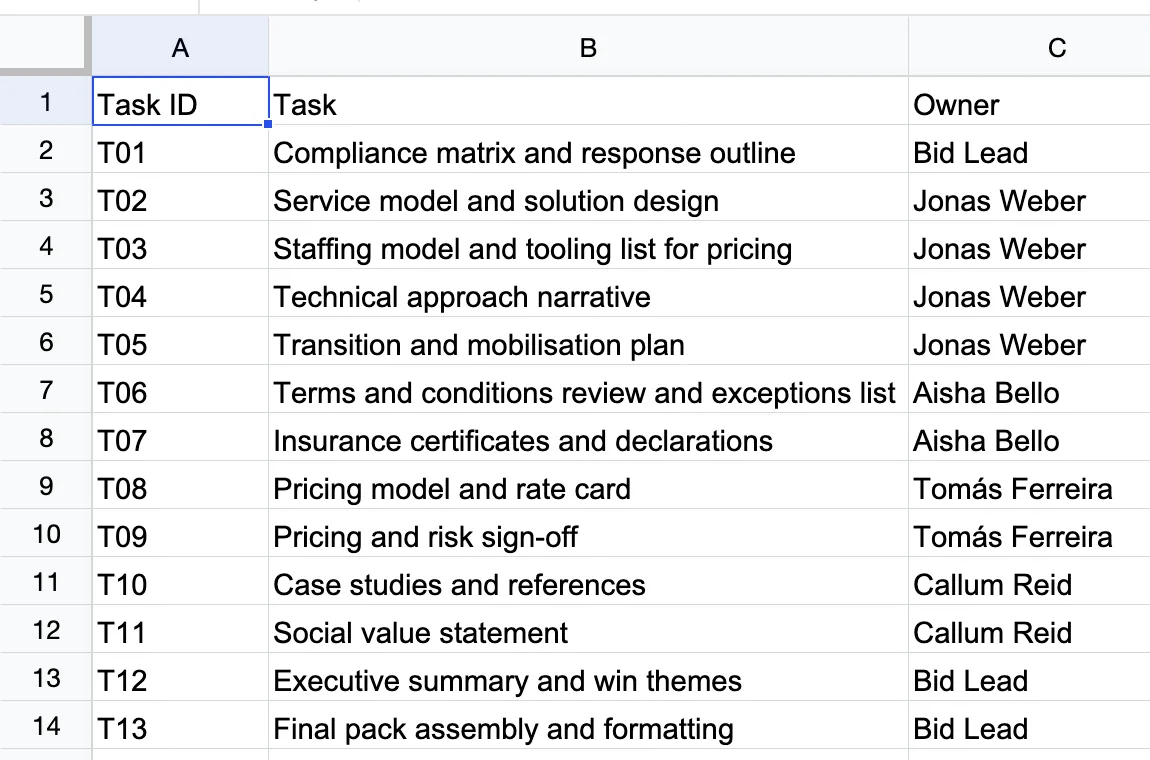
What a strong candidate did: Rebuilt the plan around the new date, protected the parts that decide the score, and briefed each person on exactly what they owe and when.
A spreadsheet, then a short note
Match available people to open project demand
The delivery head wants a proposed allocation for every open staffing request, so that only the hires that are really needed get opened. One request is urgent on a customer-committed project.
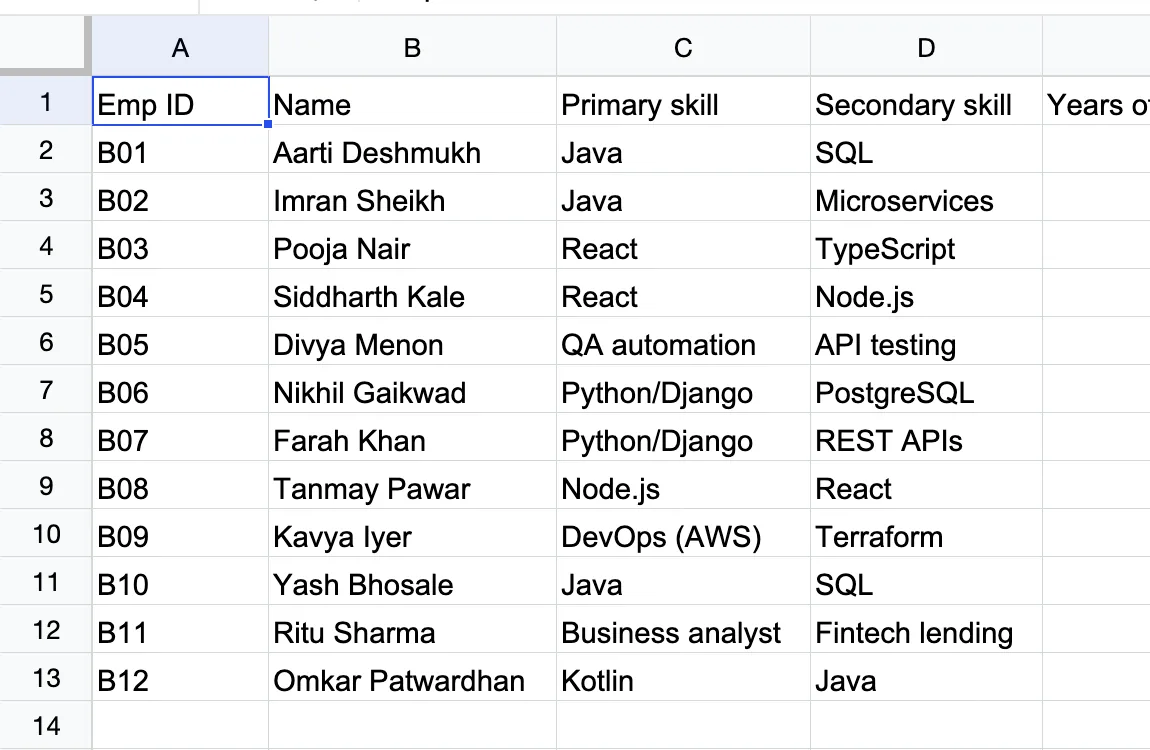
What a strong candidate did: Filled the urgent request first, matched people on the skills that matter rather than titles, and showed exactly which requests still need a hire.
A spreadsheet, then a note for finance
Check a vendor invoice before it goes to finance
A contract-staffing vendor’s monthly invoice has arrived. Finance will not pay until it is checked against the rate card and the deployment record.
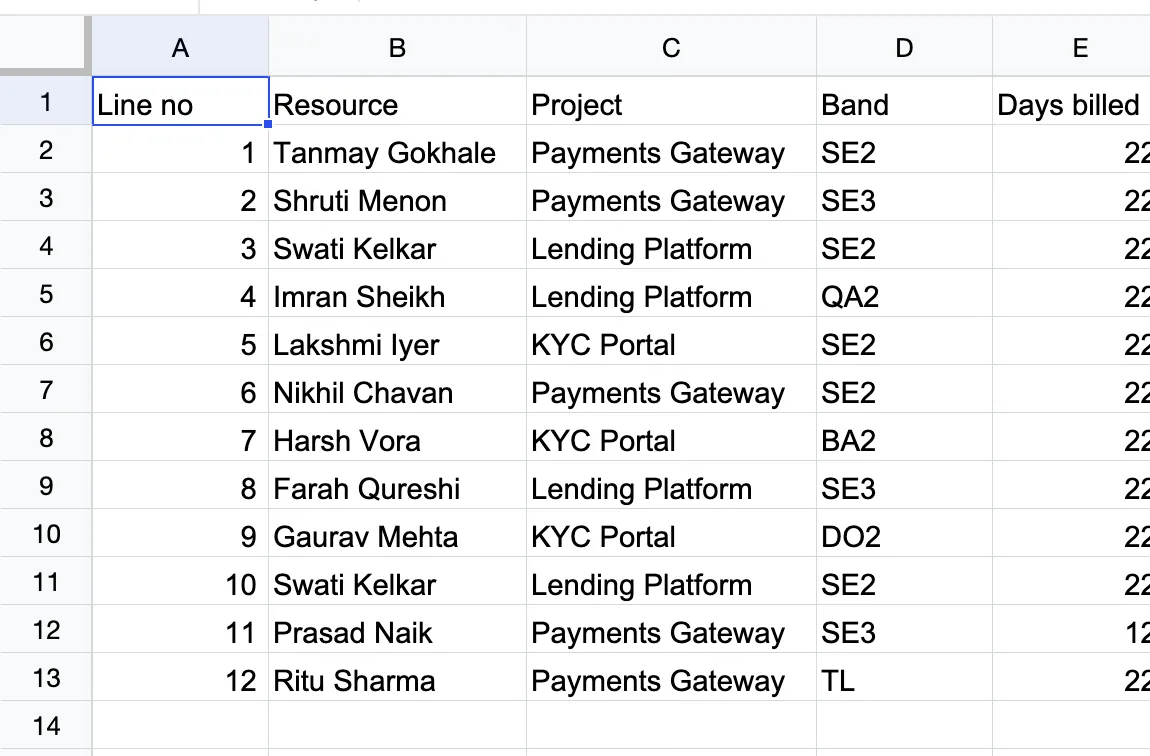
What a strong candidate did: Found the lines that did not match the rate card or the records, worked out the correct amount, and wrote a note finance could act on without a call.
How the decision gets made
In Gateway, technical program manager candidates get situations written from your job description: rebuilding a plan when a cut-over date moves and recording a brief to the engineering leads, matching scarce specialists to competing team requests in a spreadsheet, or checking a contractor's invoice against the actual records. Where the role needs it, a whiteboard step shows how the candidate maps technical dependencies between services. The engineering director sees each skill scored with written feedback, opens every plan, whiteboard and spreadsheet read-only, and puts only the technical program managers who caught the real dependencies in front of the engineers.
See your next technical program manager at work before you meet them
Paste your job description and Gateway writes the assessment in about 5 to 10 minutes. Your team can edit every question before it goes out.
Questions
Can the assessment include technical content like service dependencies?
Yes. Gateway writes it from your job description, so if the role covers migrations, platform launches or infrastructure work, the situations include that technical detail. A whiteboard is available for dependency maps.
How is a TPM assessment different from one for a project manager?
The job description sets it. For a technical program manager the situations carry engineering dependencies, technical estimates and launch readiness, and the per-skill scores include technical judgement alongside planning.
Can our engineering leads review the results?
Results can be shared with a hiring manager with a note, and every plan and diagram opens read-only. Your team can change any score before deciding whom to meet.
Can candidates use AI to draft plans, as they would at work?
If you allow it. An AI-assisted assessment lets the candidate use an AI assistant, and your team sees how the candidate worked with it.
How do we invite candidates?
Add them from an ATS export, a spreadsheet or resumes. Each candidate gets one link and a deadline, and needs a laptop or desktop.
Related