Hire an SAP consultant who makes the system fit how the business really runs
An SAP consultant earns the fee by turning how your business actually runs into configuration, data mappings and test cases that survive go-live and the first month-end close. Module lists and project counts read the same across resumes, so the way to separate candidates is to see each one work a real fit-gap or data problem before your programme lead interviews anyone.
What the hiring manager needs from a SAP consultant
Whoever owns the SAP programme, whether a project director or the head of finance systems, needs a consultant who listens to how a process really works, says where standard SAP fits and where it does not, and does not leave a trail of custom ABAP behind for every upgrade to trip over.
A fit-gap workshop with a business that wants everything
Procurement wants its old approval chain rebuilt exactly as it is. The consultant shows what standard release strategies already cover, sizes the true gaps, and pushes back where a custom build will cost more at every upgrade than it saves.
Master data that will not load cleanly
Migration files for vendors or materials arrive from a legacy system with missing tax codes, duplicate records and units nobody can explain. The consultant maps them, tests a load against real samples, and lists what the business must clean before cutover instead of forcing it through.
A month-end close that breaks after go-live
Postings land in the wrong cost centre, or a goods receipt will not clear against its invoice. The consultant traces the configuration and the document flow, fixes the cause, and tells finance which periods need correcting.
Questions from internal audit
Audit asks who can approve payments and how segregation of duties is enforced in roles. The consultant answers with what the system actually does today, including where a control is still manual and owned by a person.
Where hiring a SAP consultant usually goes wrong
- Trusting the module badge
- FICO, MM or SD on a resume says which screens someone has worked in. It does not show whether the consultant can configure a requirement from scratch, or only executed test scripts written by someone else on a large programme.
- Counting full-cycle implementations
- Several implementations can mean years of real design decisions or years of supporting one narrow area. Interviews that ask for project counts rarely find out which, and the gap shows during your first workshop with the business.
- Interviewing on transaction codes
- Asking which T-code does what tests recall. The work that costs money is judgement: when to configure, when to change the process, and when to say a requirement cannot be met without development.
- Missing how the consultant writes
- Functional specs, test scripts and cutover notes outlive the consultant on your project. A candidate who cannot write a clear spec leaves ABAP developers guessing, and that cost appears months later as rework.
Real tasks from a Gateway assessment
These come from a Gateway assessment for a solutions architect, with the employer’s name taken out. Gateway writes every assessment from your own job description, so the tasks your candidates get are built around your role.
Code, then a short handoff note
Fixing an eligibility mapper before handoff
A new employer client will send a nightly eligibility file. A prototype mapper was written from a generic template before the client produced a real file, and it decides who can enrol.
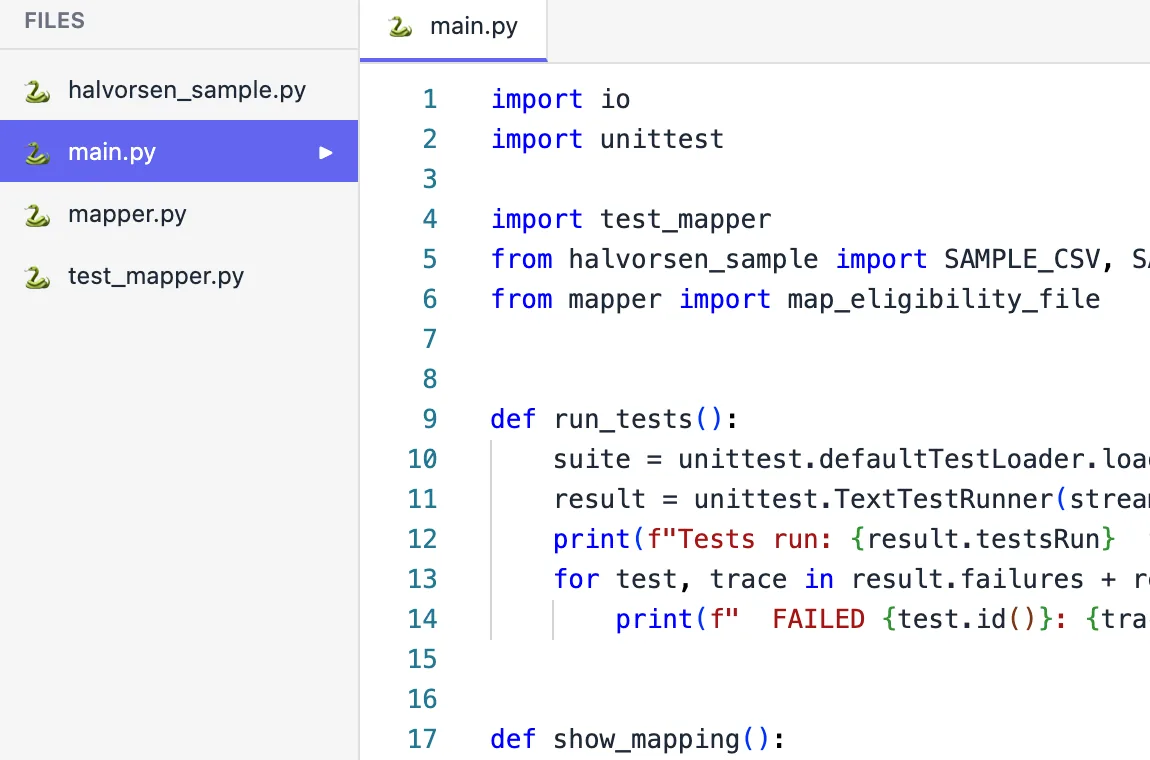
What a strong candidate did: Tested the mapper against the real file, fixed the cases where people would wrongly gain or lose access, and listed what the client must confirm.
A spreadsheet and a written response
Answering a client’s AI and security review
Before contracting, a health plan’s security and AI governance analyst sends a ten-item questionnaire with a deadline. The candidate owns the response.
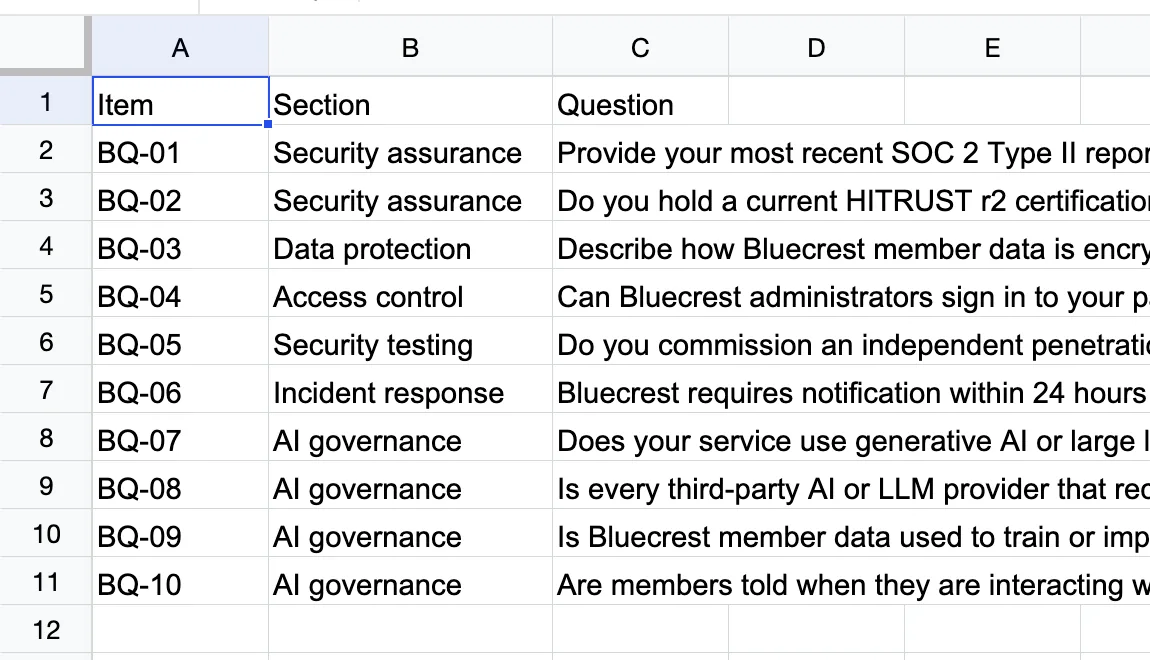
What a strong candidate did: Answered each item with what is true today, said plainly where a control is not yet in place, and kept every answer consistent with the contract.
How the decision gets made
With Gateway, SAP consultant candidates work on situations written from your job description: a data mapping that decides who gets access or gets paid, a set of control questions from an auditor, a requirement that may or may not need custom work. They answer in a spreadsheet, a written response and, where the role involves technical mapping, code. Your programme lead sees each skill scored with the reason, opens every answer read-only, and spends interview time only on consultants who showed sound judgement in the work itself.
See your next SAP consultant at work before you meet them
Paste your job description and Gateway writes the assessment in about 5 to 10 minutes. Your team can edit every question before it goes out.
Questions
Can the assessment focus on one module, such as FICO or SD?
Yes. The questions come from your job description, so a finance-heavy role gets situations about postings, closes and controls, while a sales and distribution role gets pricing and order flow. Your team can edit any question before sending.
We hire both functional and techno-functional consultants. Does one assessment fit both?
Write separate job descriptions and you get separate assessments. A techno-functional role can include a code or SQL task next to the written work; a purely functional role can stay in spreadsheets and documents.
Can contract and permanent candidates go through the same process?
Yes. Add them from a spreadsheet, resumes or your ATS export, and each person receives one link with a deadline. Results for every candidate arrive in one place for the programme lead.
Do candidates need access to an SAP system?
No. Candidates need a laptop or desktop and the link. The tasks describe the SAP situation and ask for the decision, mapping or response, which is where consultants differ from one another.
Who makes the final call on a consultant?
Your team does. Gateway gives a score and written feedback per skill and a tier from 1 to 5, and your programme lead can change any score before deciding.
Related