Hire a technical writer who makes complex products clear and accurate
A technical writer turns how a product actually works into documentation, guides and answers that developers, customers and reviewers can rely on without asking engineering. Portfolio samples are chosen carefully and often edited by others, so the dependable way to choose is to read each candidate's writing on a real, unfamiliar technical problem before interviews.
What the hiring manager needs from a technical writer
The documentation lead or product manager hiring a technical writer wants fewer support tickets that begin with "the docs say", fewer engineers pulled away to explain features, and customer answers that match what the product really does.
A security questionnaire from a customer
A customer's security team sends a list of questions with a deadline. The writer works with engineering to answer each one accurately, says plainly where something is not yet in place, and keeps the wording consistent with contracts and published documentation.
Integration guidance for a partner
A partner wants to set up single sign-on and reporting. The writer turns the integration guide and engineering's notes into steps a partner developer can follow, with the decisions the partner must make clearly marked.
A handoff note for code someone else wrote
Engineering finished a data mapper for a new client, and support needs to know what it does and what the client must confirm. The writer reads the code and tests, asks precise questions, and writes a note support can use.
Docs that drifted from the product
Screens changed over several releases and the help centre still shows the old ones. The writer finds what is out of date, works out what changed, and rewrites in an order based on what customers actually search for.
Where hiring a technical writer usually goes wrong
- Judging the portfolio alone
- Published samples passed through editors, reviewers and style guides. They show the final state, not what the candidate produces alone from a rough set of engineering notes.
- Testing grammar instead of understanding
- A proofreading test shows care with language. The harder part of the role is understanding an API, a data flow or a security control well enough to explain it correctly, and grammar tests never reach it.
- Hiring a marketing writer for technical work
- Persuasive writing and technical writing pull in different directions. A candidate used to selling features may overstate what the product does, which is costly in a security response or a setup guide.
- Never checking how the writer works with engineers
- Technical writers get much of their material by asking engineers precise questions. Candidates who cannot read code or a diagram end up waiting on engineers for every page.
Real tasks from a Gateway assessment
These come from a Gateway assessment for a solutions architect, with the employer’s name taken out. Gateway writes every assessment from your own job description, so the tasks your candidates get are built around your role.
A spreadsheet and a written response
Answering a client’s AI and security review
Before contracting, a health plan’s security and AI governance analyst sends a ten-item questionnaire with a deadline. The candidate owns the response.
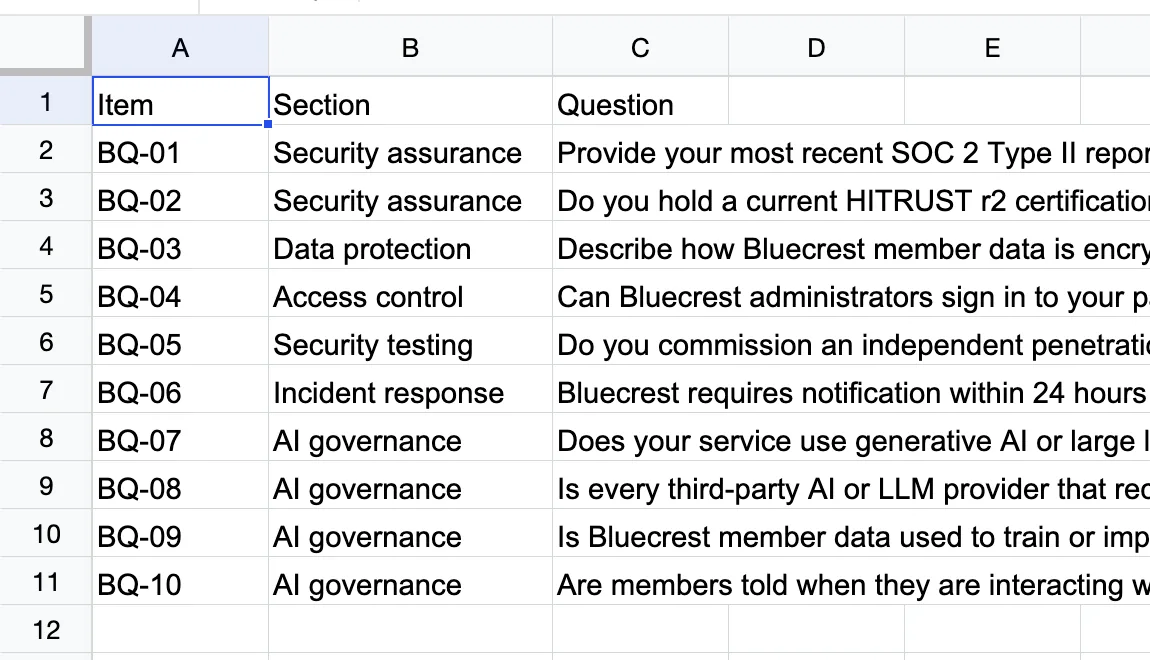
What a strong candidate did: Answered each item with what is true today, said plainly where a control is not yet in place, and kept every answer consistent with the contract.
A design on a whiteboard, then a written note
Fitting a partner’s SSO and reporting asks onto the platform
After a discovery call, a large partner wants single sign-on from its own portal and custom reporting. The candidate has the account executive’s raw notes and the platform’s integration guide.
What a strong candidate did: Separated what the platform already supports from real new work, drew how the sign-on would flow, and listed the questions to settle with the partner before any promise is made.
Code, then a short handoff note
Fixing an eligibility mapper before handoff
A new employer client will send a nightly eligibility file. A prototype mapper was written from a generic template before the client produced a real file, and it decides who can enrol.
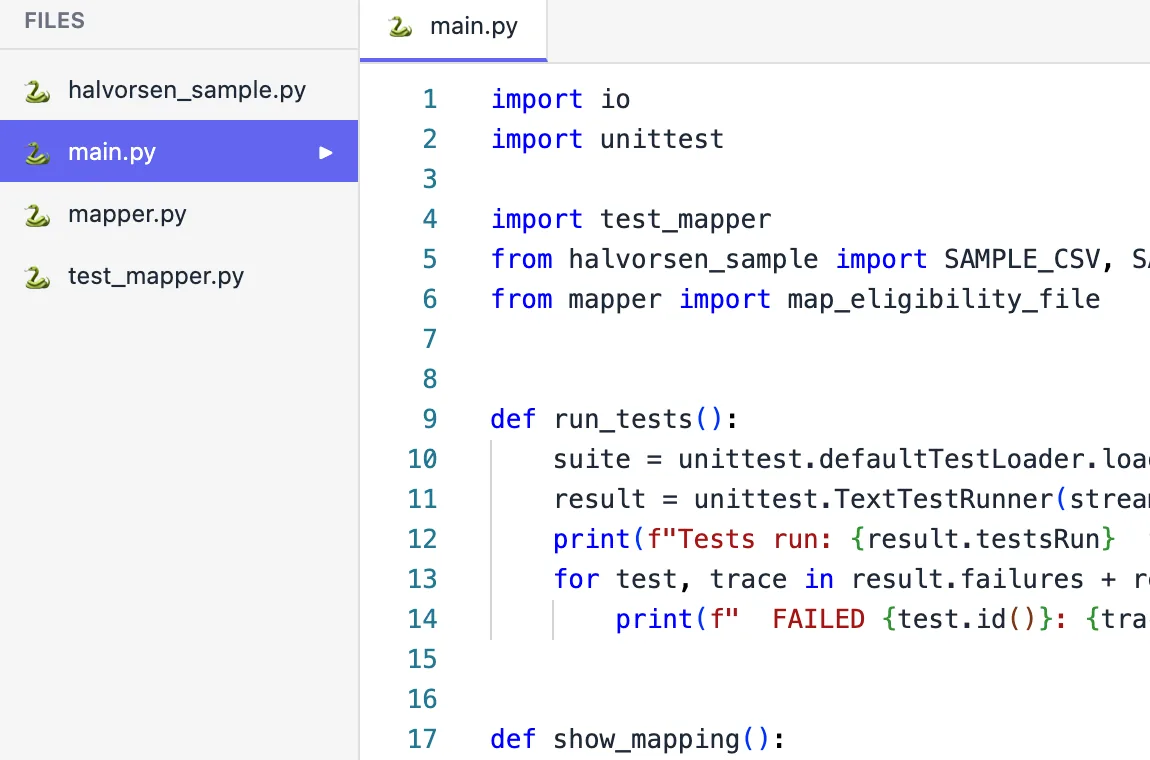
What a strong candidate did: Tested the mapper against the real file, fixed the cases where people would wrongly gain or lose access, and listed what the client must confirm.
How the decision gets made
With Gateway, technical writer candidates work through situations from your job description: answering a customer's security and AI review, turning a partner's integration request into clear guidance, and writing a handoff note from real code. Answers are written in a document and a spreadsheet, with a whiteboard where a flow needs drawing. Your documentation lead sees a score and written feedback for each skill, reads every answer read-only, and interviews only the writers whose work was accurate as well as clear.
See your next technical writer at work before you meet them
Paste your job description and Gateway writes the assessment in about 5 to 10 minutes. Your team can edit every question before it goes out.
Questions
Does the writer need to code to do well?
Only if the role needs it. Gateway writes the assessment from your job description, so an API documentation role can include reading code, while an end-user guide role stays in documents. Your team edits every question.
How is writing scored fairly?
Each skill gets a score and written feedback saying why, and your team can change any score. Reviewers read the candidate's document read-only in the same tool, so the judgement rests on the work itself.
Can candidates use AI to draft?
With an AI-assisted assessment, yes, and your team sees how each candidate worked with the assistant. A standard assessment keeps the writing to the candidate.
We hire writers for product docs and for proposals. Can one setup handle both?
Write a job description for each and you get an assessment for each, drafted in about 5 to 10 minutes. The tasks follow what each role actually produces.
What do candidates need?
A laptop or desktop and one link. Each step says what it involves before the candidate accepts it, so writers know a real task is coming.
Related