Hire a solution architect who designs what your team can actually build
A solution architect turns a client request into a design that engineering can build, sales can promise and operations can run. Architecture vocabulary sounds the same in every interview, so the way to tell candidates apart is to see each one shape a real, messy request into a design and a list of open questions before anyone books a panel.
What the hiring manager needs from a solution architect
The head of engineering or delivery hiring a solution architect wants fewer surprises: no deal signed on a feature the platform cannot support, no integration discovered halfway through a project, no design that only its author understands.
Raw notes from a discovery call
An account executive comes back with a client wish list: single sign-on, custom reporting, a data feed by next quarter. The architect separates what already works from what is new, draws how it would fit, and lists what must be agreed before anyone commits.
A client security review with a deadline
The client's security team sends a questionnaire before signing. The architect answers each point with what is true today, says plainly where a control is missing, and keeps the answers consistent with the contract and the product.
A prototype that has to become real
Someone built a quick integration against a sample file before the client sent real data. The architect tests it against the real feed, finds where it would let the wrong people in or shut the right people out, and writes a handoff the engineers can follow.
A trade-off nobody wants to make
Product wants the custom build, finance wants the cheaper option, and engineering wants neither this quarter. The architect lays out the options with cost, risk and effort, recommends one, and stands by it in the room.
Where hiring a solution architect usually goes wrong
- Hiring the most certified cloud candidate
- Cloud certificates show broad product knowledge. A solution architect is paid for fitting that knowledge to one client's constraints, and a certificate says nothing about that.
- Whiteboard rounds about famous systems
- Asking a candidate to design a well-known social network at scale tests prepared answers. Your architect will face a partner's half-specified sign-on request and a deadline, a far less glamorous and more revealing problem.
- Missing the commercial side
- A solution architect who promises everything wins the deal and loses the project. Interviews rarely test whether the candidate will say no to a client in writing, politely and with an alternative.
- Never reading a written design
- Architects are judged by documents: design notes, answers to reviews, handoffs. If you never see one, you are hiring on how well someone speaks in a meeting.
Real tasks from a Gateway assessment
These come from a Gateway assessment for a solutions architect, with the employer’s name taken out. Gateway writes every assessment from your own job description, so the tasks your candidates get are built around your role.
A design on a whiteboard, then a written note
Fitting a partner’s SSO and reporting asks onto the platform
After a discovery call, a large partner wants single sign-on from its own portal and custom reporting. The candidate has the account executive’s raw notes and the platform’s integration guide.
What a strong candidate did: Separated what the platform already supports from real new work, drew how the sign-on would flow, and listed the questions to settle with the partner before any promise is made.
A spreadsheet and a written response
Answering a client’s AI and security review
Before contracting, a health plan’s security and AI governance analyst sends a ten-item questionnaire with a deadline. The candidate owns the response.
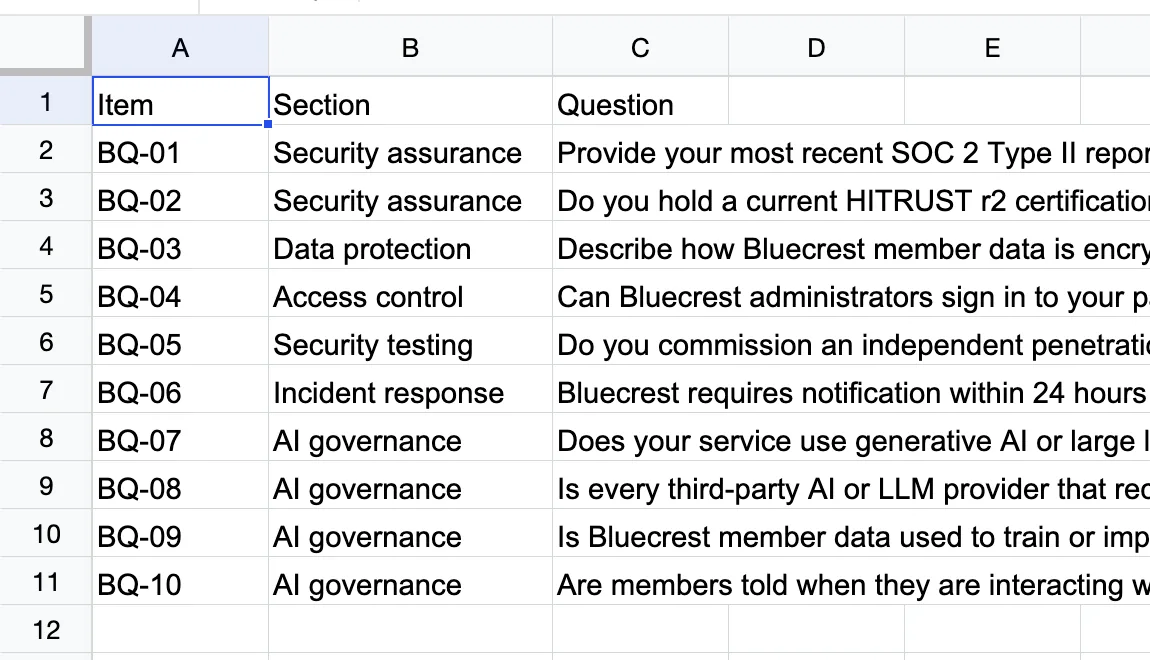
What a strong candidate did: Answered each item with what is true today, said plainly where a control is not yet in place, and kept every answer consistent with the contract.
Code, then a short handoff note
Fixing an eligibility mapper before handoff
A new employer client will send a nightly eligibility file. A prototype mapper was written from a generic template before the client produced a real file, and it decides who can enrol.
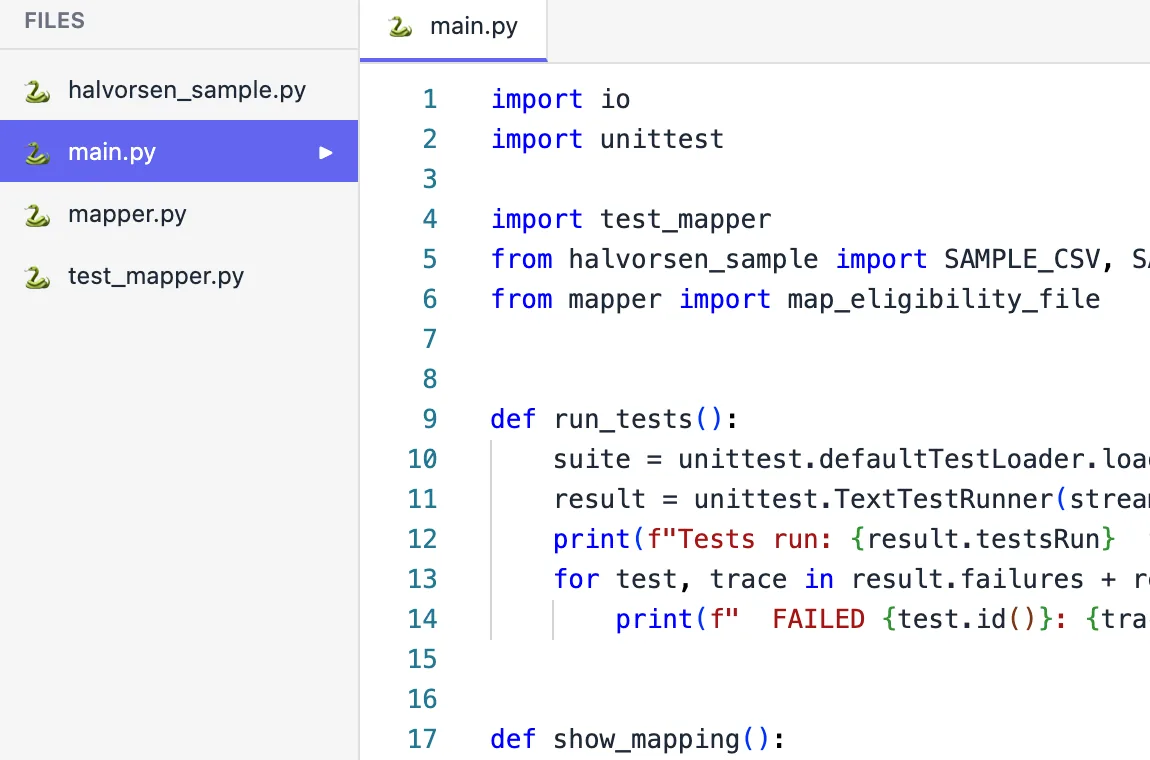
What a strong candidate did: Tested the mapper against the real file, fixed the cases where people would wrongly gain or lose access, and listed what the client must confirm.
How the decision gets made
With Gateway, solution architect candidates handle situations written from your job description: fitting a partner's sign-on and reporting asks to your platform, answering a client's security review, and fixing a prototype before it reaches engineering. They draw on a whiteboard, write responses, work in a spreadsheet and touch real code. Your head of engineering reviews each skill's score and feedback, opens every design read-only, and holds the architecture panel only with candidates whose decisions stood up.
See your next solution architect at work before you meet them
Paste your job description and Gateway writes the assessment in about 5 to 10 minutes. Your team can edit every question before it goes out.
Questions
Does this suit pre-sales architects as well as delivery architects?
Yes. Gateway writes the tasks from your job description. A pre-sales role leans toward discovery notes and client reviews; a delivery role leans toward designs and handoffs to engineers.
Can a candidate present the design out loud?
A task can include a recorded walkthrough, where the candidate talks through the design, alongside the whiteboard and the written note.
How is a design scored when there is no single right answer?
Each skill gets a score and written feedback that says why, measured against what the role needs. Your team can change any score, and the final decision stays with your team.
Does it work for senior hires where we only see a few candidates?
Yes. For a senior architect you might pair a work assessment with a continuous async video interview: your panel records its questions once, candidates answer before a deadline, and panel members vote and leave notes.
How much setup does it need?
Roughly 5 to 10 minutes to produce a draft from your job description, then as long as your engineering lead wants for review and edits.
Related