Hire a ServiceNow developer who builds workflows the service desk will use
A ServiceNow developer builds catalog items, workflows and integrations that agents use every shift, while keeping the instance upgradeable and the SLA reporting honest. Most applicants list the same ITSM modules and certificates, so the clear way to choose is to see each candidate solve a real service desk or data problem before an interview.
What the hiring manager needs from a ServiceNow developer
The platform owner hiring a ServiceNow developer usually inherited an instance full of client scripts, business rules and customised tables. The owner needs a developer who adds what the service desk asks for without turning the next family upgrade into a project of its own.
SLA reports that do not match what agents see
The head of IT asks whether the desk met its SLA targets this month, and the dashboard disagrees with the team's own count. The developer checks the SLA definitions, pause conditions and schedules, and finds whether the problem is the process or the configuration.
Access requests that never close the loop
A catalog item creates access tickets, but nothing confirms that access was removed when someone left. The developer connects the leaver process to the directory so removal is tracked and provable to an auditor.
A business rule that slows every incident form
Agents report that incident forms take seconds to load. The developer finds the synchronous business rule or GlideRecord query running on every display, rewrites it, and checks the change in a sub-production instance first.
A monitoring integration that floods the incident table
A monitoring tool sends alerts into ServiceNow, and one noisy check opens hundreds of duplicate incidents overnight. The developer adds correlation, decides which alerts should open incidents at all, and agrees the rules with the operations team.
Where hiring a ServiceNow developer usually goes wrong
- Hiring on the system administrator certificate
- The CSA and implementation specialist certificates show someone studied the platform. They do not show whether the candidate writes server-side scripts that scale, or knows why a global business rule is a problem.
- Confusing a ServiceNow admin with a developer
- Admins configure forms, lists and notifications. A developer role needs scripting, scoped applications, the integration APIs and a working grasp of update sets, and job titles in this space blur the two.
- Never checking upgrade discipline
- A developer who customises out-of-box tables freely leaves skipped records at every upgrade. That habit is invisible in conversation and obvious in the first piece of work the developer submits.
- Ignoring the ITIL side of the work
- ServiceNow work is service management process expressed in code. A candidate who cannot say what an SLA or a change approval is for will build exactly what was asked, even when it makes the desk slower.
Real tasks from a Gateway assessment
These come from a Gateway assessment for an IT manager, with the employer’s name taken out. Gateway writes every assessment from your own job description, so the tasks your candidates get are built around your role.
A spreadsheet, then a short note
Late-shift SLA breaches in the support queue
The office head asks one question: are we meeting the 95% SLA target this month, and if not, why? The support team is four people across two shifts.
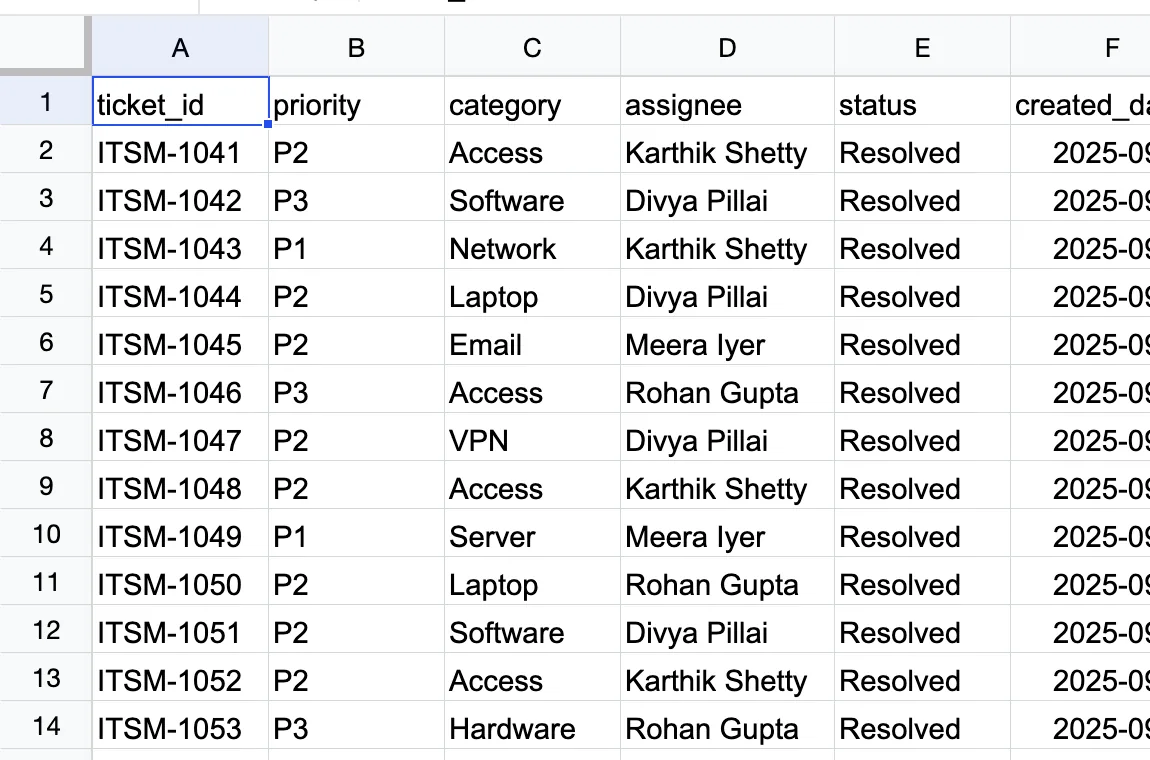
What a strong candidate did: Answered yes or no with the number, showed the misses were concentrated on one shift and one ticket type, and proposed a change that fixes it without adding a person.
Code, then a note for the auditor and HR
Leaver access reconciliation before an audit
A SOC 2 audit window is closing, and the auditor wants evidence that leavers lose access. Nobody has checked the monthly leavers list against Active Directory and Microsoft 365.
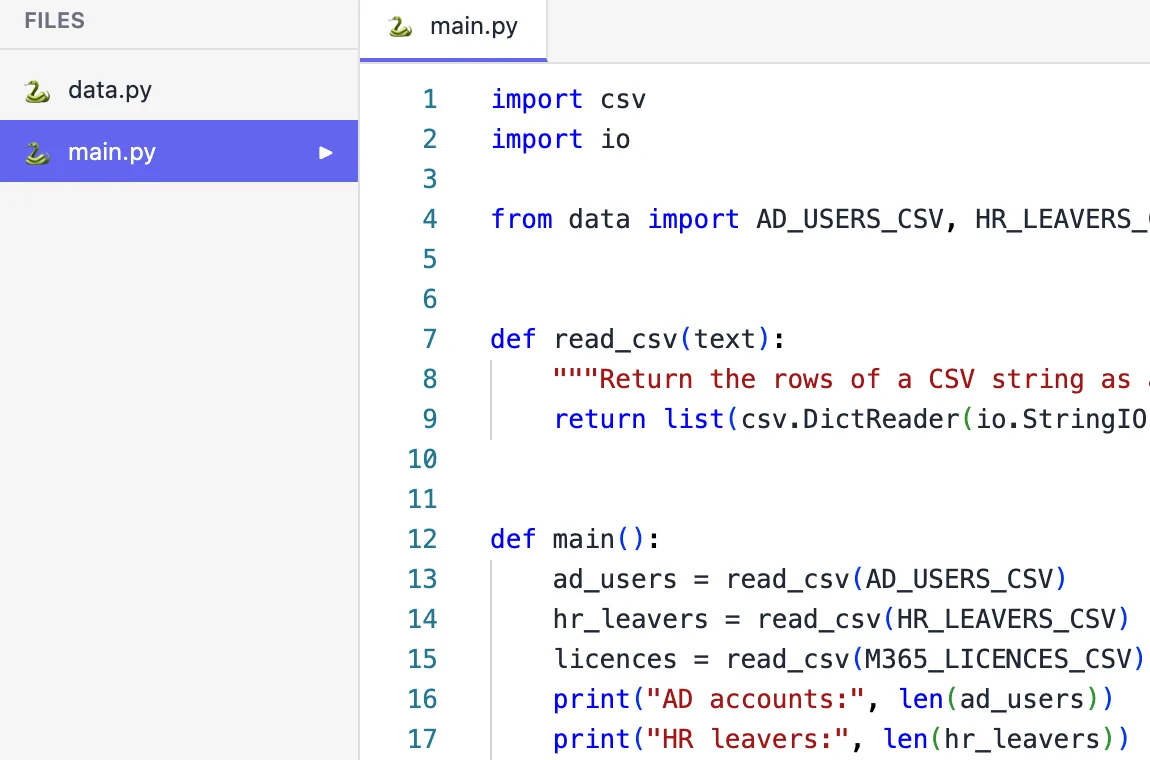
What a strong candidate did: Matched leavers to the accounts still active, separated real gaps from accounts that were fine, and wrote evidence an auditor would accept.
How the decision gets made
With Gateway, ServiceNow developer candidates work through situations from your own job description: an SLA question from the head of IT that needs a real answer from ticket data, or a leaver access check ahead of an audit. They work in spreadsheets, code and short notes for the people who asked. The platform owner sees each skill scored with written feedback, opens the work read-only, and brings to interview only the developers who reached an answer the service desk and the auditor could both rely on.
See your next ServiceNow developer at work before you meet them
Paste your job description and Gateway writes the assessment in about 5 to 10 minutes. Your team can edit every question before it goes out.
Questions
Can the assessment cover a specific module such as ITSM, HRSD or CSM?
Yes. Name the modules in the job description and the situations are written around them. Your platform owner can read and change any question before it goes to candidates.
Do candidates need a personal developer instance?
No. Candidates need a laptop or desktop and one link. The tasks set up the instance problem and ask for the script, the analysis or the note.
Can we see how a candidate wrote the script, and not only the result?
Every candidate's work opens read-only in the same tool the candidate used, next to a score and written feedback for each skill.
We need several developers for a rollout. Can we assess them all at once?
Yes. Add candidates from an ATS export, a spreadsheet or resumes. Each gets one link and a deadline, and you see who meets your line as the work comes in.
Does Gateway flag candidates who cheat?
Gateway never marks a candidate as cheating on its own. Monitoring is off by default; if you turn it on, there are four levels and a replay of the test, and your team reviews anything that looks unusual.
Related