Hire a C developer who writes firmware you can ship to the field
A C developer is worth hiring when the firmware or low-level code the developer writes runs correctly on real hardware, within tight memory and timing limits, and fails safely when a sensor or bus misbehaves. Resumes rarely show that, so the way to compare candidates is to see each one work on a real embedded or systems problem before interviews.
What the hiring manager needs from a C developer
Most employers hiring a C developer build embedded products: microcontroller firmware, device drivers, RTOS tasks, bootloaders, or kernel modules. The firmware lead needs someone who reads a data sheet as carefully as code, thinks about every byte and interrupt, and leaves code that still makes sense when someone returns to it years later.
A shared buffer between an interrupt and the main loop
A UART interrupt writes into a ring buffer while the main loop reads from it, and once in a while a frame is corrupted. A good C developer sees the missing volatile or the unprotected index update, fixes it with the smallest critical section, and proves it under stress.
Choosing a sensor and writing its driver
The hardware engineer sends data sheet extracts for several candidate parts. The developer checks power draw, interface and timing against the budget, notices the figure that does not add up, and lists what the driver must handle before any code is written.
No heap, little stack
The target has a few kilobytes of RAM and dynamic allocation is not allowed. The developer has to design with static buffers, track stack depth in nested calls and interrupts, and know exactly where every structure lives.
Code that must pass a coding standard
In automotive, medical or aerospace work, code is checked against MISRA C or a similar standard. Writing code that passes static analysis without endless deviations is part of the job, not a step someone else does later.
Where hiring a C developer usually goes wrong
- Treating C++ experience as C experience
- A C++ developer used to RAII, containers and exceptions may struggle without them. Firmware work needs the habits of manual resource management, and only a C task shows whether the candidate has them.
- Testing pointer puzzles on a whiteboard
- Classic C interview questions about pointer arithmetic and string reversal reward memory. They do not test interrupts, register access, timing or reading a data sheet, which fill most of a C developer's week.
- Ignoring the hardware side of the decision
- Many C roles involve choosing parts and agreeing interfaces with hardware engineers. A hiring loop that looks only at code misses whether the candidate can make or check those decisions.
Real tasks from a Gateway assessment
These come from a Gateway assessment for a C++ developer, with the employer’s name taken out. Gateway writes every assessment from your own job description, so the tasks your candidates get are built around your role.
C++, then a short note
Telemetry queue: fix the race and prove it
On an unmanned aircraft, a sensor thread fills a bounded queue and a link thread sends frames over the radio. Telemetry freezes now and then in the field, and nobody can reproduce it on demand.
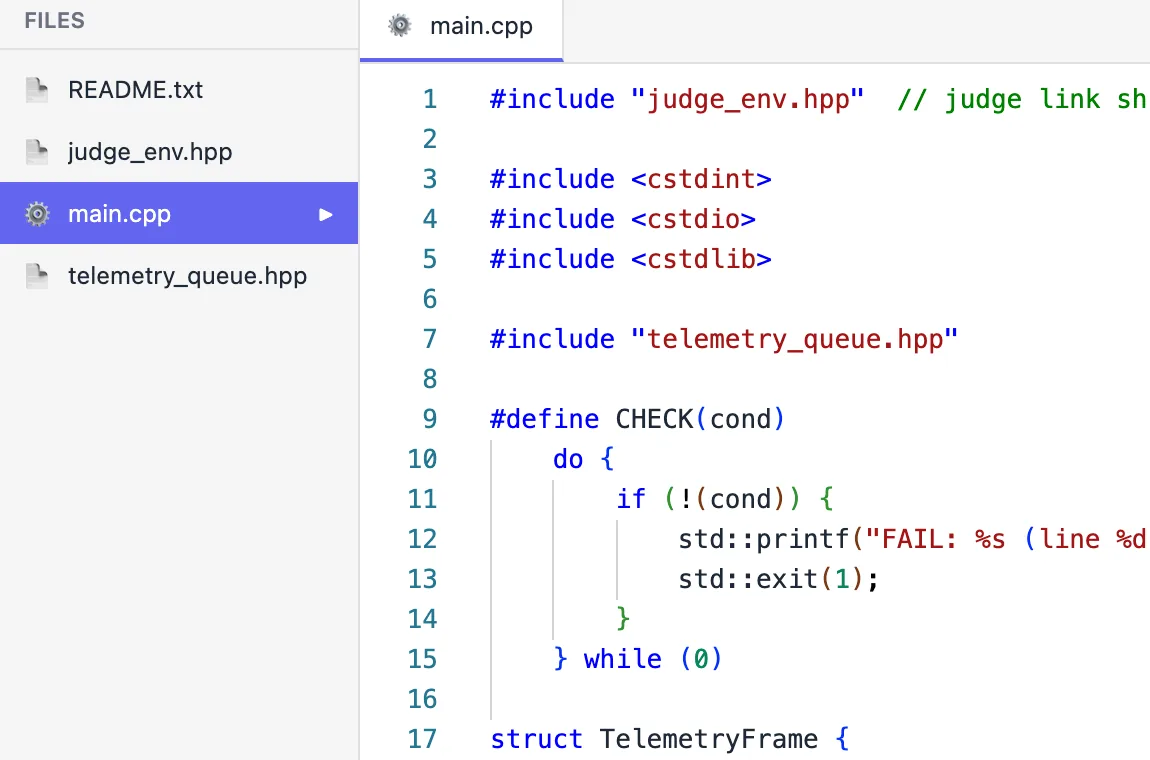
What a strong candidate did: Found the race in the queue, fixed it without adding latency, and wrote a stress test that fails reliably on the old code and passes on the new.
A spreadsheet, then a written recommendation
Payload sensor selection from a data sheet extract
A hardware engineer sends vendor data sheet extracts for candidate sensors and needs a recommendation within the payload power budget. The candidate will write the drivers for whatever is chosen.
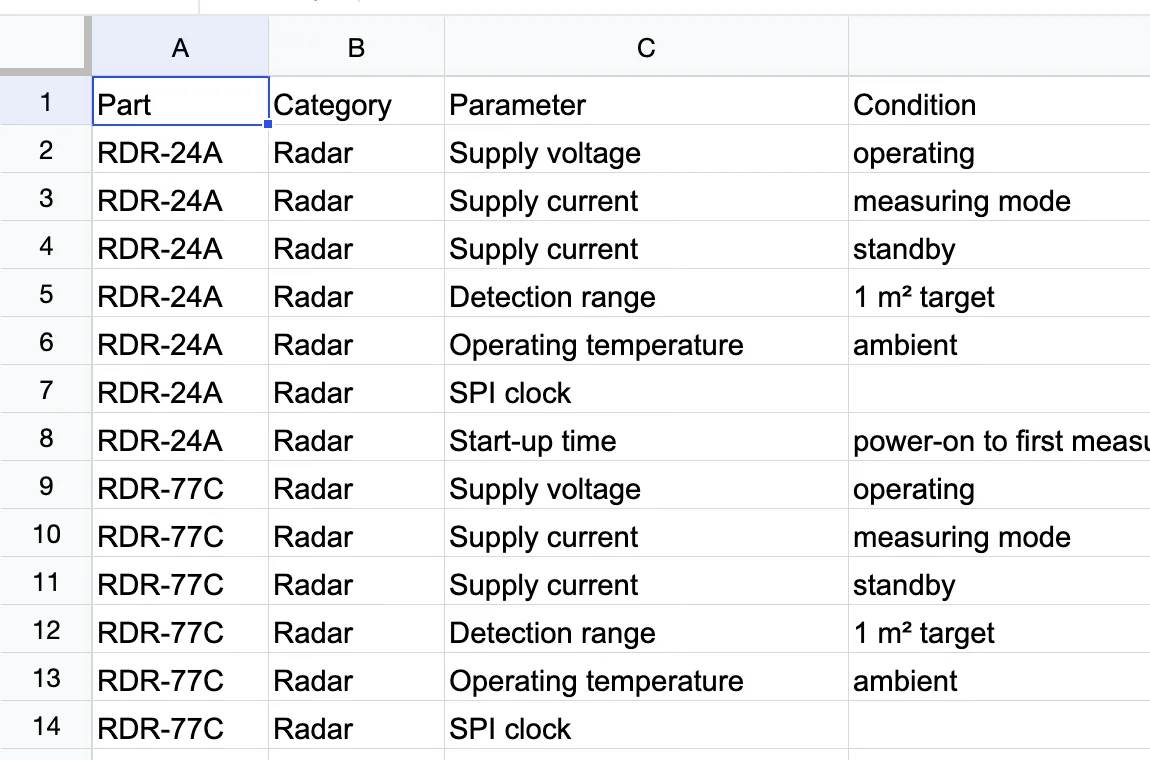
What a strong candidate did: Picked parts that fit the power budget with margin, flagged the one data sheet figure that did not add up, and listed what the drivers must handle for each part.
How the decision gets made
With Gateway, each C candidate works on situations from your job description, such as fixing a race in a bounded queue between a sensor thread and a radio link, or recommending payload sensors from data sheet extracts within a power budget. Candidates write code or work in a spreadsheet, then a short written recommendation. The firmware lead sees each skill scored with written reasons, opens the work read-only, and interviews only those whose fixes held up and whose numbers were checked.
See your next C developer at work before you meet them
Paste your job description and Gateway writes the assessment in about 5 to 10 minutes. Your team can edit every question before it goes out.
Questions
The sample tasks mention C++. Will C candidates work in C?
These are real tasks from systems assessments. Gateway writes yours from your job description, so a C firmware role gets its situations in C, and your team can edit every task.
Can we test RTOS, bare-metal or Linux kernel work?
Yes. Describe the environment in your job description and the situations will match it, whether bare-metal microcontrollers, an RTOS or kernel drivers.
Can the assessment include data sheet and hardware reasoning?
Yes. One assessment can combine code with a spreadsheet and a written recommendation, so you see how the candidate reads hardware documents as well as how the candidate writes C.
How does the firmware lead decide who to interview?
Each candidate gets a score and written feedback per skill, a tier from 1 to 5, and a mark against your line. Your team can change any score and decides who moves forward.
Related