Hire a Flask developer who makes sound decisions the framework leaves to you
A Flask developer is valuable when the small services the developer builds stay simple, secure and easy to extend, because Flask leaves the structure, the database layer and the safety checks to whoever writes the app. Resumes rarely show those choices, so the way to compare candidates is to see each one build or fix a real service before your team interviews anyone.
What the hiring manager needs from a Flask developer
Teams choose Flask for internal tools, lightweight APIs, webhook receivers and services that sit in front of a model or a data job. With so little decided for them, the hiring manager needs a developer with judgement: someone who adds only what the service needs and knows what Flask does not do on its own.
A one-file app that has outgrown itself
An internal tool started as a single app.py and now has dozens of routes, global state and settings hard-coded for one server. A good Flask developer moves it to an application factory and blueprints in steps, so the tool keeps working while it is reorganised.
Database sessions that leak between requests
With SQLAlchemy wired in by hand, a session left open after an error causes stale reads and locked connections under load. The developer needs to understand Flask's request lifecycle well enough to close and roll back sessions in the right place.
An endpoint receiving data from outside
A webhook route accepts JSON from a partner. Flask will not validate the payload, check the signature or protect against a replay unless the developer writes that, and missing any one of them becomes an incident later.
A service that behaves differently under gunicorn
Something that worked with the development server breaks with several gunicorn workers because state was kept in a module-level variable. Knowing how the app runs in production, and keeping shared state in the database or a cache, is part of the role.
Where hiring a Flask developer usually goes wrong
- Treating Flask as the easy option
- Because a hello-world Flask app fits on a screen, hiring managers sometimes assume any Python developer can own one. The difficult parts, such as structure, sessions and input checks, are exactly what the framework does not provide.
- Counting extensions on the resume
- Flask-Login, Flask-WTF, Flask-Migrate and others show what someone has installed. They do not show whether the candidate knows which extension is worth its maintenance cost and which adds risk to a small service.
- Never testing behaviour under failure
- Flask services often sit between systems. A test that only checks the happy path misses how the candidate handles a slow upstream API, partial data or a payload that does not match the expected shape.
Real tasks from a Gateway assessment
These come from a Gateway assessment for a Python developer, with the employer’s name taken out. Gateway writes every assessment from your own job description, so the tasks your candidates get are built around your role.
Web code, then a short note
Job status page for a Python worker
An operations manager checks nightly background jobs each morning by asking in chat whether anything failed. She wants a simple internal status page that reads an API the backend developer is still building.
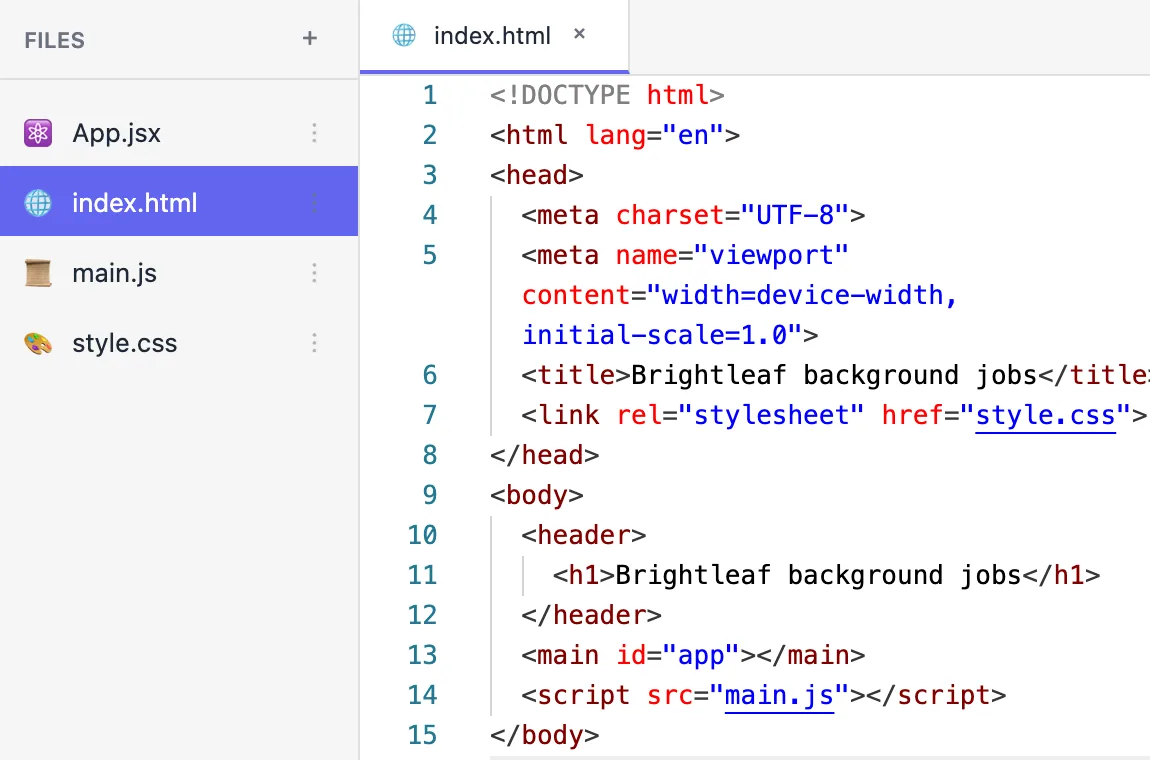
What a strong candidate did: Built a page that shows failures first, stays correct when the API is slow or returns partial data, and listed the two questions to settle with the backend developer.
Python, then a short note for finance
Validate a payment-file import
Every morning the bank sends a CSV of yesterday’s incoming payments. A person has been cleaning it by hand, and a few bad rows reached billing unnoticed. Finance wants the checks in code before anything loads.
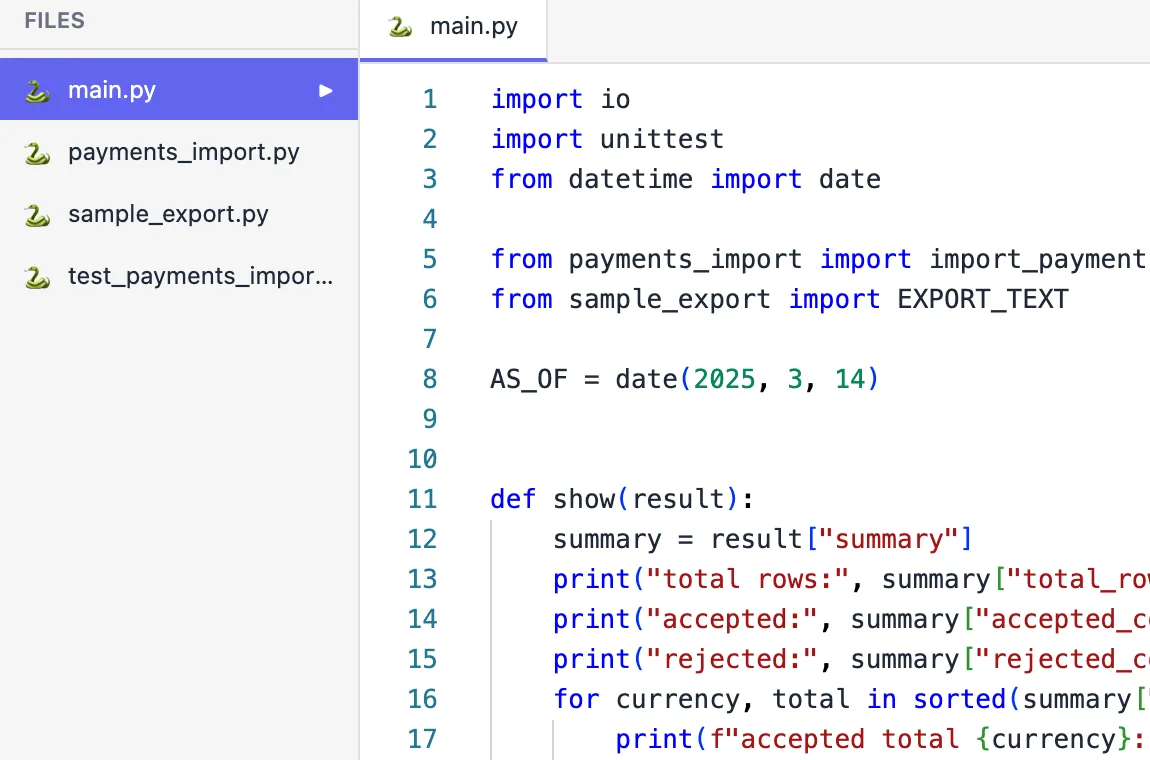
What a strong candidate did: Wrote checks for every bad-row case in the sample file, kept good rows flowing while holding bad ones with a reason finance can read, and tested each rule.
How the decision gets made
With Gateway, each Flask candidate works on situations from your job description, for example a status page that reads an API still being built and must stay correct when it is slow or returns partial data, or a validation step that stops bad rows in a payment file. Candidates write web code or Python and add a short note. The hiring manager sees each skill scored with its reasons, opens the code read-only, and meets only the developers whose services handled failure and bad input sensibly.
See your next Flask developer at work before you meet them
Paste your job description and Gateway writes the assessment in about 5 to 10 minutes. Your team can edit every question before it goes out.
Questions
Our Flask services talk to other internal APIs. Can the tasks reflect that?
Yes. The assessment is written from your job description, so if the role sits between systems, the situations involve upstream APIs, partial responses and the questions a developer must agree with other teams.
Do candidates need to set up Python locally?
No. Candidates need a laptop or desktop and the single link you send. The work runs in the browser, and each step explains what it involves before the candidate begins.
How do we tell a Flask developer from a Django developer in the results?
The tasks come from the role you describe, so a Flask role is tested on the decisions Flask leaves open, such as structure, validation and handling failures, rather than on an ORM and admin that Django provides.
Can our team change the scores Gateway gives?
Yes. Every score comes with written feedback, and anyone reviewing can change it. Gateway gives a tier from 1 to 5 and shows whether the candidate meets your line, and your team makes the decision.
Related