Hire a Spring developer who knows what the framework is doing underneath
A good Spring developer ships Spring Boot services where transactions commit when they should, queries stay few and security rules hold, because the developer understands what the annotations actually do. Every applicant can build a REST controller, so the way to tell them apart is to watch each candidate fix a real service problem before your team spends time on interviews.
What the hiring manager needs from a Spring developer
Spring makes the first version of a service quick to write and the hundredth change easy to get wrong. The hiring manager needs someone who can read through auto-configuration, proxies and lazy loading to find why the service behaves the way it does, and who changes it without adding another layer of configuration nobody understands.
A @Transactional method that does not roll back
A save fails halfway, and half the data stays written. The cause is often a call from inside the same class that skips the transaction proxy, or an exception type that does not trigger a rollback. A capable Spring developer knows to look there first.
A list endpoint that fires a query per row
One page of orders loads each customer and each line item separately through Hibernate's lazy loading. The developer has to spot the N+1 pattern in the SQL log and fix it with a fetch join or an entity graph, without loading the whole database into memory instead.
A security rule that lets the wrong user in
Spring Security filter chains and method-level rules stack up over time. When a support user can suddenly edit invoices, someone has to trace which rule matched and why, and close the gap without locking out the people who need access.
A Kafka listener that processes a message twice
After a rebalance, the same event is consumed again and a customer gets a second email. The fix sits between offset handling, retries and making the handler idempotent, which is daily work for a Spring developer on an event-driven system.
Where hiring a Spring developer usually goes wrong
- Treating Spring Boot experience as framework knowledge
- Starting a project from Spring Initializr and adding a controller is the part that rarely breaks. Candidates who have only done that can struggle the first time a bean is created twice or a property from one profile leaks into another.
- Asking for definitions of dependency injection
- Nearly every candidate can explain inversion of control in a sentence. The question that matters is whether the person can debug a circular dependency or a missing bean in a service with many modules, and definitions never show that.
- Not looking at the SQL behind JPA
- Interviews often stay at the repository interface. The production problems sit in the queries Hibernate generates, and a developer who has never read them will ship code that passes tests and slows down once real data arrives.
- Skipping the operational side
- Actuator health checks, metrics and sensible timeouts on outgoing calls decide whether the on-call engineer can see a problem. Hiring loops focused on features miss whether the candidate builds services that can be run.
Real tasks from a Gateway assessment
These come from a Gateway assessment for a backend engineer, with the employer’s name taken out. Gateway writes every assessment from your own job description, so the tasks your candidates get are built around your role.
Code, then a short written note
Payment webhook handler for invoice updates
A billing product for home-services businesses learns about each payment from a provider webhook. Some homeowners got two receipts for one payment, and some paid invoices still show as unpaid. The candidate owns the handler.
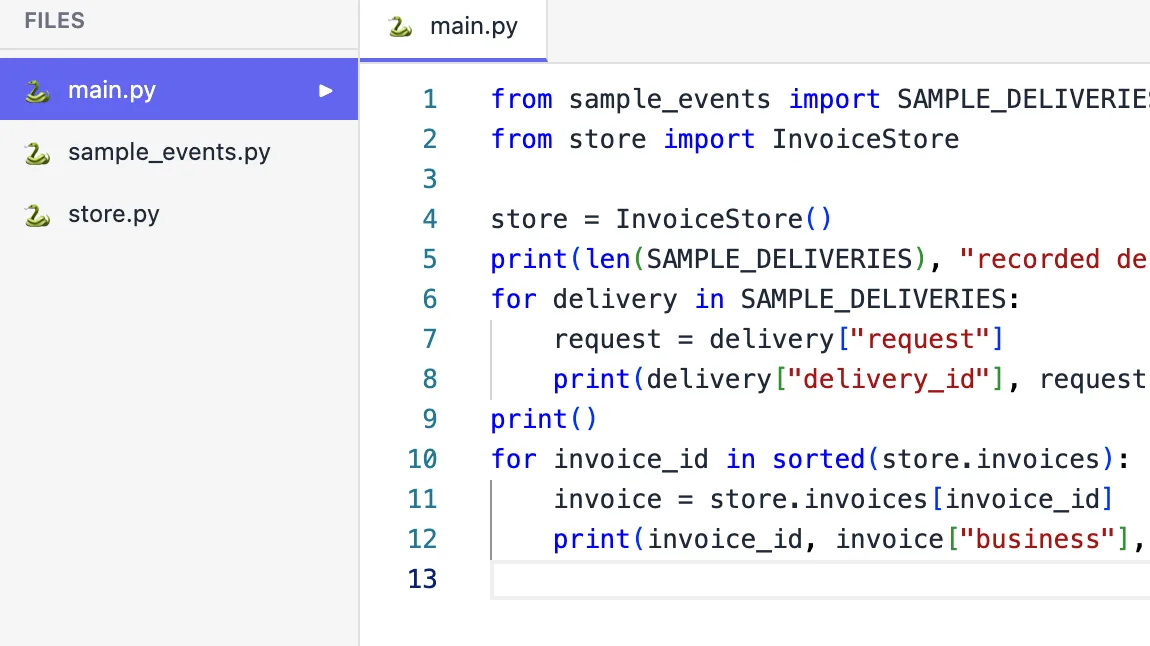
What a strong candidate did: Made the handler safe to receive the same event twice, ignored events that arrive out of order, and showed both reported bugs fixed with tests. The note told billing operations which past invoices to re-check.
SQL, then a written note
Stale answers from the support assistant’s knowledge base
An AI support assistant answers from help articles that a nightly job splits, embeds and stores. Customers are getting answers from articles that were changed or removed weeks ago.
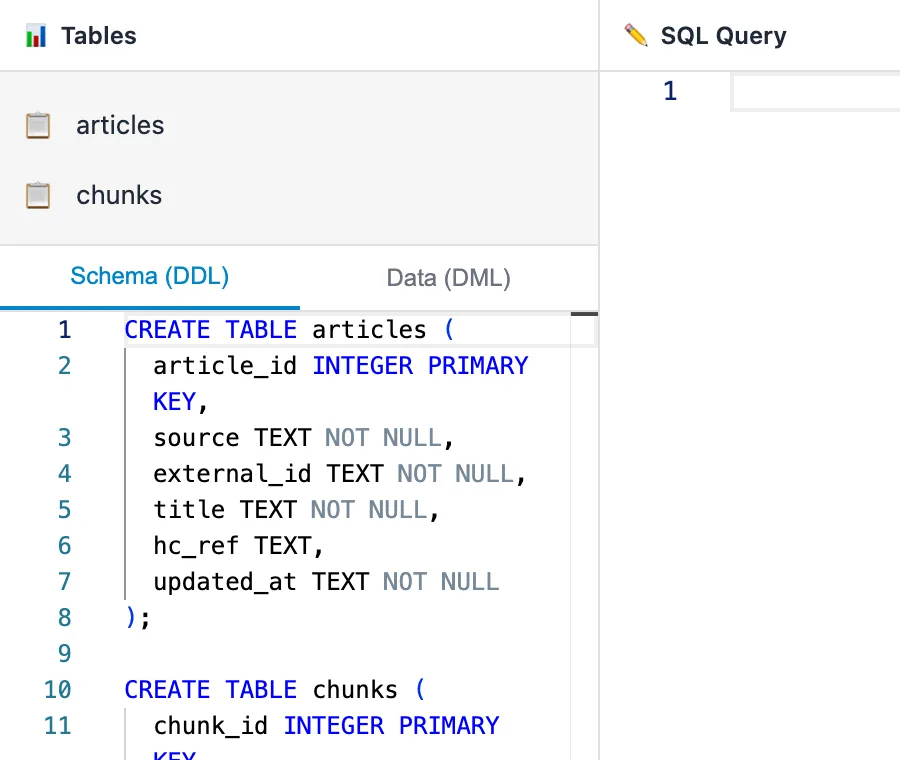
What a strong candidate did: Found in the data which articles were stale and why the refresh skipped them, sized how many answers were affected, and proposed a refresh that removes deleted articles as well as adding new ones.
A design on a whiteboard, then a written note
Nightly job ingestion from a partner scheduling API
Each night the product pulls changed jobs from a partner scheduling platform into PostgreSQL. At 06:00 a dispatch agent builds every business’s day plan from them, and dispatch teams start at 06:30. Jobs have been missing and duplicated.
What a strong candidate did: Designed an ingest that resumes from where it stopped, updates rather than duplicates, and finishes well before 06:00 with an alert if it will not. Named the one case that still needs a person to look.
How the decision gets made
With Gateway, each Spring candidate works on situations written from your job description: a webhook handler that must be safe to receive the same event twice, an ingest that must resume where it stopped, a refresh job that leaves stale data behind. Candidates write the code or sketch the design, then explain the decision in a short note. The hiring manager sees each skill scored with the reason, opens the code read-only, and meets only the developers who handled transactions, retries and data correctly.
See your next Spring developer at work before you meet them
Paste your job description and Gateway writes the assessment in about 5 to 10 minutes. Your team can edit every question before it goes out.
Questions
Can the assessment include Spring Data JPA, Spring Security or Spring Cloud?
The assessment follows your job description, so if the role mentions those modules, the situations use them. Your team reviews every task and can edit it before sending.
Is this different from the assessment for a Java developer?
It starts from your description of the role. A Spring role usually gets problems inside the framework, such as transactions, data access and security configuration, while a general Java role may lean towards concurrency and the JVM.
How does the hiring manager compare Spring candidates?
Each candidate gets a score and written feedback for every skill, a tier from 1 to 5, and a clear mark against the line you set. Anyone on your team can open the submitted code and adjust a score.
Can candidates use an AI assistant to write Spring code?
Only if you choose an AI-assisted assessment. Then your team sees how each candidate prompted the assistant and what the candidate kept or corrected, which shows whether the person understands the code that was generated.
What do candidates need to take the assessment?
A laptop or desktop and the one link you send. Each step tells the candidate what it involves before it starts, and the code editor runs in the browser.
Related