Hire a Rails developer who keeps a mature Rails app moving
A Rails developer is worth hiring when features keep shipping on a Rails app that has grown for years, without slow queries, surprise callbacks or an upgrade that stalls for months. Rails experience looks similar across resumes, so the way to see real differences is to have each candidate work on a problem from your own product before interviews.
What the hiring manager needs from a Rails developer
Most teams hiring a Rails developer have a monolith that carries the business: large models, many callbacks, Sidekiq jobs, and a Rails version a few releases behind. The product engineering lead needs someone who can work inside it productively, follow its conventions, and leave each part a little easier to change.
Callbacks that do too much
Saving an order triggers an after_save that sends an email, updates stock and calls an API. When a bulk import saves thousands of records, everything fires at once. A good Rails developer moves side effects out of callbacks into explicit steps the team can reason about.
An index page that queries once per row
A view calls associations inside partials, and each row loads more records. The developer has to find it with the log or a tool like Bullet, add includes in the right place, and check the page against realistic data rather than a fresh seed.
A Rails upgrade the team keeps postponing
The app is two major versions behind, and some gems pinned to old Rails have no maintained replacement. Moving forward means deprecation warnings fixed one by one, dual-booting where useful, and a plan that does not stop feature work.
A migration on a busy table
Adding an index or a column to a large table locks it during business hours if done carelessly. The developer is expected to know when to add an index concurrently, how to backfill in batches, and when to split one migration into several.
Where hiring a Rails developer usually goes wrong
- Trusting the scaffold demo
- Rails generators produce a working app in minutes. A candidate's demo app built that way shows little about large models, long-lived callbacks and query counts once a real customer base exists.
- Interviewing only on Ruby
- Strong Ruby does not guarantee a candidate understands ActiveRecord scopes, transactions or how Rails caches. The production problems on a Rails team usually sit in those parts.
- Missing the upgrade experience
- Many Rails teams need someone who has moved an app across versions. Without a real task, it is hard to tell a candidate who has done it from one who has only started projects on the latest version.
- Skipping how candidates handle data
- Rails developers often own data fixes too: backfills, corrections after a bug, and reports for operations. Hiring loops rarely ask the candidate to query and explain real data.
Real tasks from a Gateway assessment
These come from a Gateway assessment for a backend engineer, with the employer’s name taken out. Gateway writes every assessment from your own job description, so the tasks your candidates get are built around your role.
SQL, then a written note
Stale answers from the support assistant’s knowledge base
An AI support assistant answers from help articles that a nightly job splits, embeds and stores. Customers are getting answers from articles that were changed or removed weeks ago.
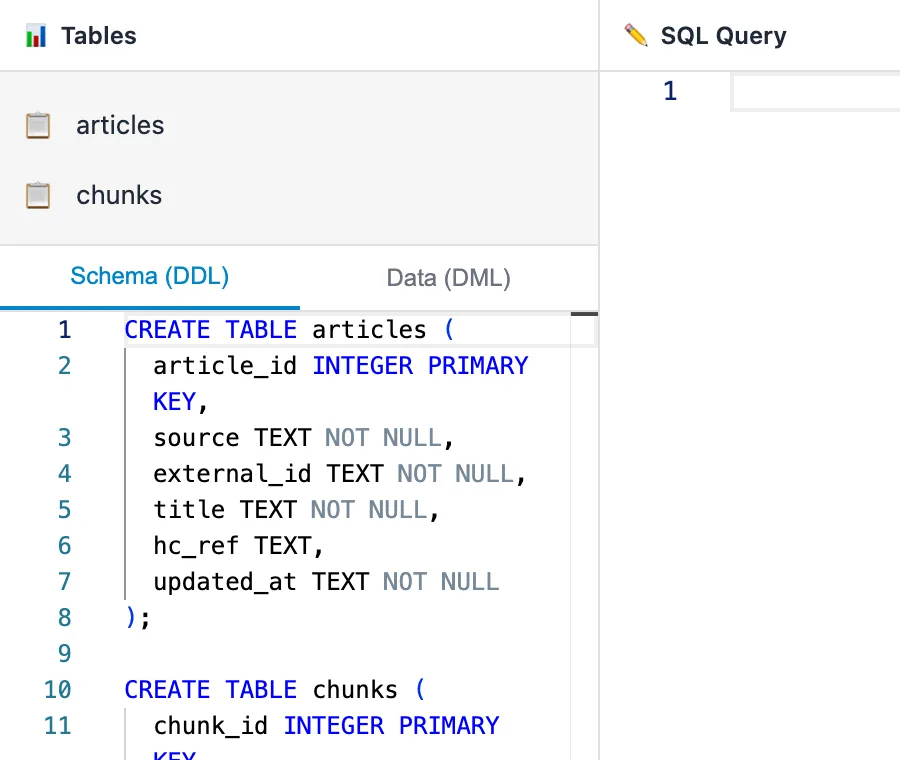
What a strong candidate did: Found in the data which articles were stale and why the refresh skipped them, sized how many answers were affected, and proposed a refresh that removes deleted articles as well as adding new ones.
A design on a whiteboard, then a written note
Nightly job ingestion from a partner scheduling API
Each night the product pulls changed jobs from a partner scheduling platform into PostgreSQL. At 06:00 a dispatch agent builds every business’s day plan from them, and dispatch teams start at 06:30. Jobs have been missing and duplicated.
What a strong candidate did: Designed an ingest that resumes from where it stopped, updates rather than duplicates, and finishes well before 06:00 with an alert if it will not. Named the one case that still needs a person to look.
How the decision gets made
With Gateway, each Rails candidate works on situations from your job description: tracing in SQL why the support assistant still serves articles that were removed weeks ago, or designing a nightly partner import that resumes and does not duplicate. Candidates write SQL or sketch a design, then a short note explaining the impact. The product engineering lead sees per-skill scores with written reasons, opens the work read-only, and invites only the developers whose answers were correct and clearly argued.
See your next Rails developer at work before you meet them
Paste your job description and Gateway writes the assessment in about 5 to 10 minutes. Your team can edit every question before it goes out.
Questions
Can the assessment include Sidekiq, Hotwire or our API setup?
Yes. Gateway writes the situations from your job description, so the parts of Rails your team uses appear in the tasks. Your team can edit each one before it is sent.
We are hiring several Rails developers. Can we assess them together?
Yes. Add candidates from an ATS export, a spreadsheet or resumes, and each gets one link and a deadline. Results can be shared with the hiring manager with a note.
Does a candidate's score decide whether the candidate goes forward?
No, your team decides. Gateway gives a score and written feedback per skill, a tier from 1 to 5, and shows whether the candidate meets your line, and any score can be changed.
Can we see how a candidate reached an answer, not just the answer?
Yes. The candidate's SQL, code or whiteboard opens read-only in the same tool, with the written note alongside, so the lead can follow each step.
Related