Hire a Redis engineer whose cache never becomes the outage
A Redis engineer is hired to make the product faster and more reliable with caching, rate limits, queues and locks, without Redis turning into a fragile single point of failure. Using Redis as a cache is common on resumes; designing for eviction, expiry, stampedes and failover is not, so the way to compare candidates is to see each one handle a real Redis problem before interviews.
What the hiring manager needs from a Redis engineer
Teams that hire a Redis engineer have usually leaned on Redis for more than caching: sessions, background queues, leaderboards, idempotency keys, rate limiting. The backend lead needs someone who knows what happens to each of those when memory fills, a node fails or a key expires at the wrong moment.
A cache stampede after a deploy
A popular key expires, a flood of requests miss at once and the primary database falls over. The Redis engineer adds request coalescing or a short lock around the rebuild, staggers expiry times, and serves slightly stale data while the value refreshes.
Memory full and the wrong keys evicted
Redis reaches its memory limit and starts evicting session keys along with cache entries. The engineer separates data that must not be lost from data that can be rebuilt, sets an eviction policy that matches, and finds the keys that were stored with no TTL.
A lock that is not really a lock
Two workers process the same job because a SETNX lock expired while the first was still running. The engineer explains the limits of a Redis lock, adds a fencing token or makes the work safe to repeat, and says when a database constraint is the better guard.
Connection limits during a traffic spike
A new service opens a connection per request and Redis refuses new clients at peak. The engineer pools connections, checks for slow commands such as KEYS or large range reads that block the single thread, and adds alerts before the next peak.
Where hiring a Redis engineer usually goes wrong
- Hiring for cache usage instead of failure thinking
- Calling GET and SET from an application is easy. The value of a Redis engineer shows when the cache is cold, full or unavailable, and candidates who have never planned for those states look identical on paper to those who have.
- Treating persistence as an afterthought
- RDB snapshots, AOF and replica promotion decide what is lost after a crash. If your queues or idempotency keys live in Redis, a candidate who cannot say what survives a restart is a risk to billing and orders.
- Not checking data structure choices
- Sorted sets, hashes, streams and HyperLogLog each fit specific problems. A candidate who stores everything as serialised JSON strings will use more memory and write more code than the problem needs.
Real tasks from a Gateway assessment
These come from a Gateway assessment for a backend engineer, with the employer’s name taken out. Gateway writes every assessment from your own job description, so the tasks your candidates get are built around your role.
Code, then a short written note
Payment webhook handler for invoice updates
A billing product for home-services businesses learns about each payment from a provider webhook. Some homeowners got two receipts for one payment, and some paid invoices still show as unpaid. The candidate owns the handler.
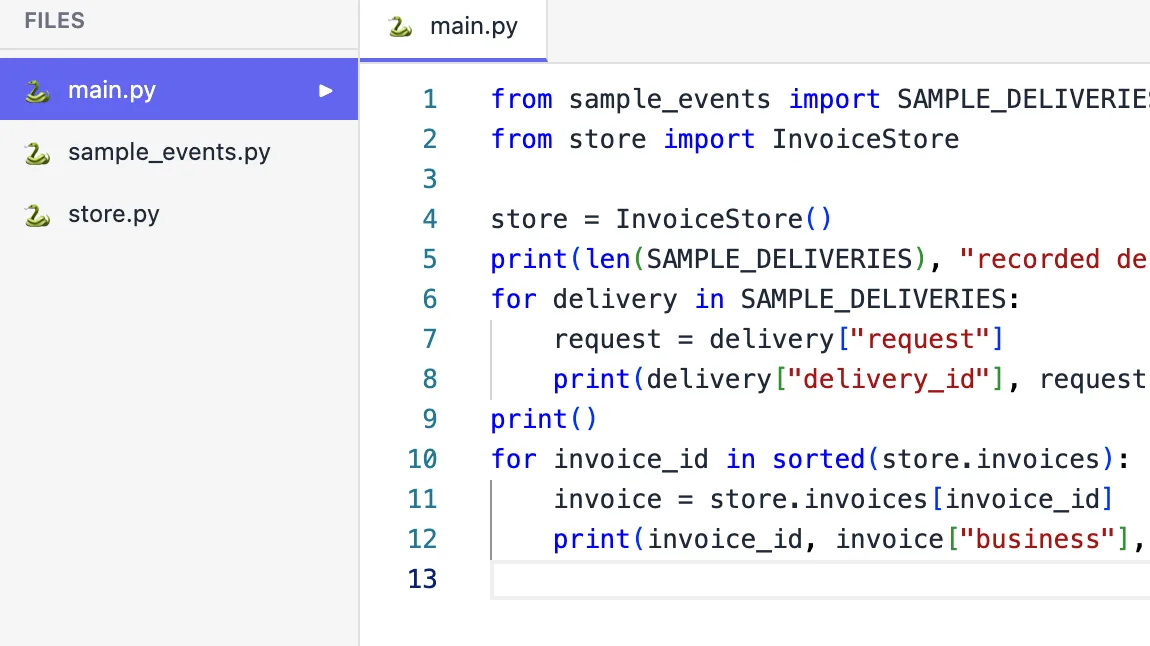
What a strong candidate did: Made the handler safe to receive the same event twice, ignored events that arrive out of order, and showed both reported bugs fixed with tests. The note told billing operations which past invoices to re-check.
A design on a whiteboard, then a written note
Nightly job ingestion from a partner scheduling API
Each night the product pulls changed jobs from a partner scheduling platform into PostgreSQL. At 06:00 a dispatch agent builds every business’s day plan from them, and dispatch teams start at 06:30. Jobs have been missing and duplicated.
What a strong candidate did: Designed an ingest that resumes from where it stopped, updates rather than duplicates, and finishes well before 06:00 with an alert if it will not. Named the one case that still needs a person to look.
How the decision gets made
With Gateway, Redis engineer candidates work on situations written from your job description, such as a webhook handler that must ignore duplicate events or a nightly ingest that has to resume where it stopped. Candidates write code, draw the design on a whiteboard and explain the failure cases in a short note. The hiring manager sees a score with written feedback for each skill, opens the code and diagrams read-only, and meets engineers who already planned for expiry, eviction and failover.
See your next Redis engineer at work before you meet them
Paste your job description and Gateway writes the assessment in about 5 to 10 minutes. Your team can edit every question before it goes out.
Questions
Can the assessment focus on our Redis use, for example queues or rate limits?
Yes. Gateway writes the situations from your job description, and your team can change any of them before sending so they match how your product uses Redis.
Do candidates write real code?
Candidates write code in the assessment and can sketch the architecture on a whiteboard. Your reviewers open both read-only with the score and feedback for each skill.
Is this only for senior Redis specialists?
It works for any level. The situations and the line you set follow the job description, and every candidate gets a tier from 1 to 5 so you can compare people at the level you are hiring.
Can our backend lead review results without logging in to a new tool?
Results can be shared with a hiring manager with a note, so the lead can read each candidate's work and scores and decide who to meet.
Related