Hire a backend developer who keeps your data correct when things fail
A backend developer is responsible for what users never see: data that stays correct when requests repeat, jobs that finish on time and queries that stay fast as tables grow. Framework names on a resume do not show any of that, so the way to tell candidates apart is to see each one fix a real data problem in code and SQL before interviews begin.
What the hiring manager needs from a backend developer
The backend lead hiring for this role is usually worried about correctness under failure. Payments recorded twice, a nightly job that half finished, a report built on rows that should have been deleted: these are the problems that reach customers, and a backend developer is hired to prevent them and to fix them quickly when they slip through.
The same event arriving more than once
A payment provider retries webhooks, and some customers now have two receipts. The backend developer makes processing safe to repeat, handles events that arrive out of order and proves the fix with tests that replay the exact sequence.
A background job that fails quietly
The nightly sync reports success while records go missing. A good backend developer adds the checkpoint that lets it resume, the upsert that stops duplicates and the alert that fires before anyone downstream notices.
A query that was fine last year
A list endpoint now takes seconds because a table has grown. The developer reads the query plan, adds the right index or rewrites the join, and confirms the results are identical before shipping.
Stale data feeding another system
Records that were edited or deleted upstream still appear downstream, in search results or an AI assistant's answers. The developer finds in the data what was skipped and why, sizes the damage and changes the refresh so deletes flow through too.
Where hiring a backend developer usually goes wrong
- Hiring on the framework list
- Django, Spring Boot and Laravel on a resume say which tools the candidate has used. They do not say whether the candidate thinks about what happens when a request is retried halfway through a transaction.
- Ignoring SQL because the ORM writes it
- Backend developers who never look under the ORM ship the slow queries and the accidental full-table scans. If the hiring process never asks a candidate to read or write SQL, the gap shows up in production.
- Testing only the happy path
- Take-home projects usually ask for a working CRUD API. Real backend work is about the unhappy paths: timeouts, retries, partial failures and duplicate messages, and a CRUD exercise never touches them.
- Confusing uptime experience with ownership
- A candidate who worked on a large system may have owned one small slice of it. Ask what the candidate personally fixed when data went wrong, or better, watch the candidate fix it.
Real tasks from a Gateway assessment
These come from a Gateway assessment for a backend engineer, with the employer’s name taken out. Gateway writes every assessment from your own job description, so the tasks your candidates get are built around your role.
SQL, then a written note
Stale answers from the support assistant’s knowledge base
An AI support assistant answers from help articles that a nightly job splits, embeds and stores. Customers are getting answers from articles that were changed or removed weeks ago.
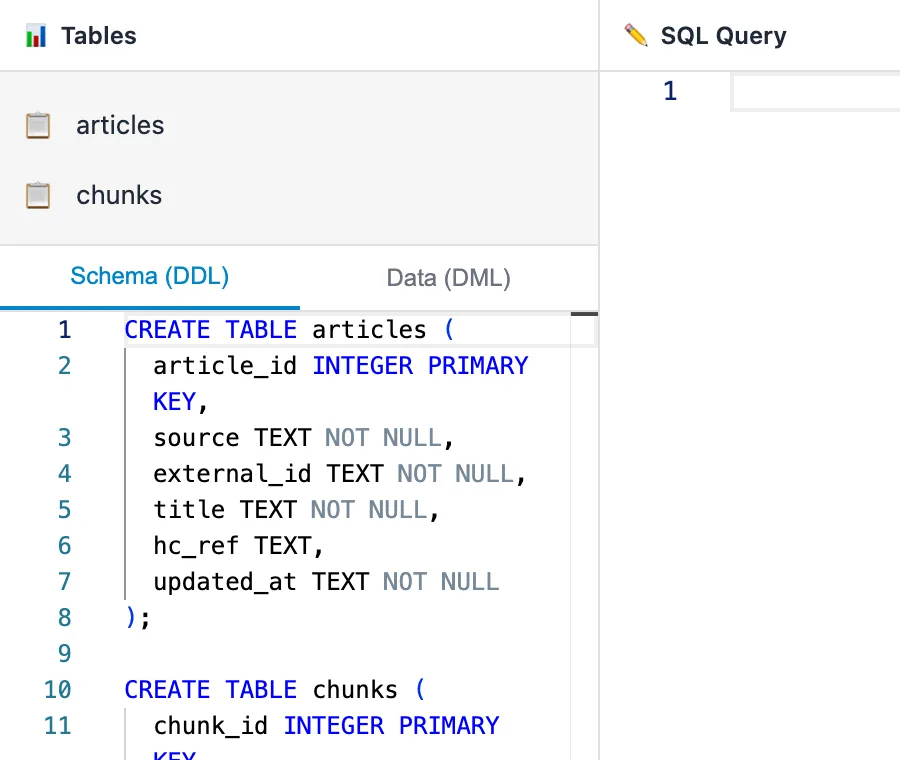
What a strong candidate did: Found in the data which articles were stale and why the refresh skipped them, sized how many answers were affected, and proposed a refresh that removes deleted articles as well as adding new ones.
Code, then a short written note
Payment webhook handler for invoice updates
A billing product for home-services businesses learns about each payment from a provider webhook. Some homeowners got two receipts for one payment, and some paid invoices still show as unpaid. The candidate owns the handler.
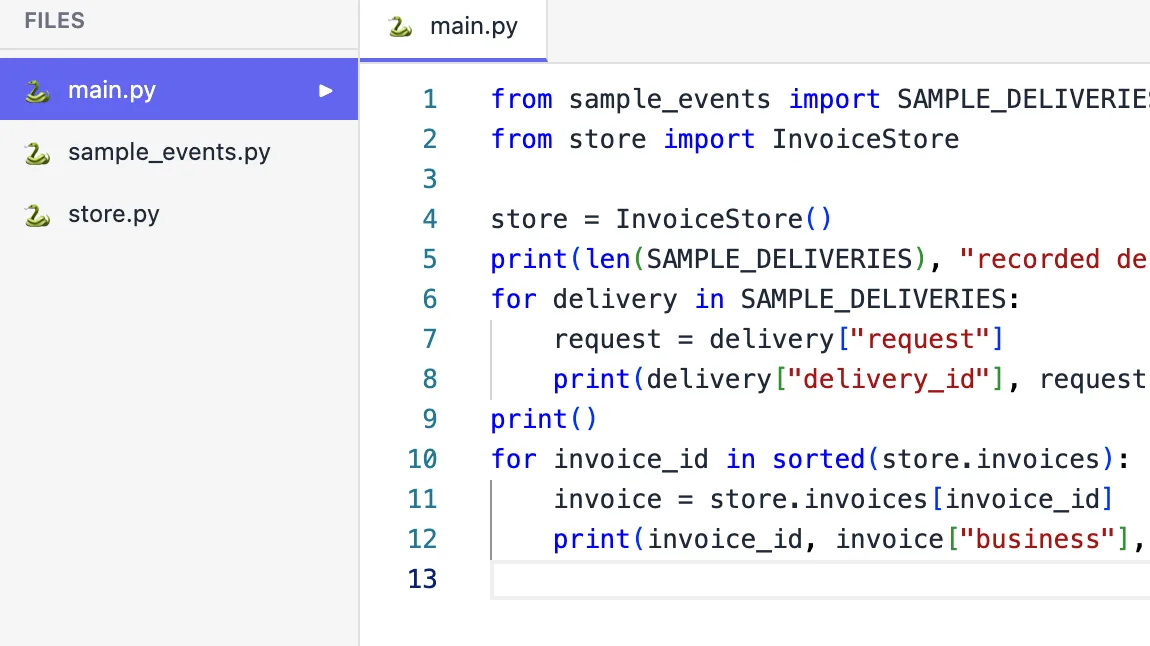
What a strong candidate did: Made the handler safe to receive the same event twice, ignored events that arrive out of order, and showed both reported bugs fixed with tests. The note told billing operations which past invoices to re-check.
How the decision gets made
With Gateway, backend developer candidates work through situations written from your job description: a webhook handler that double counts, a nightly ingest with a hard morning deadline, a knowledge base serving stale answers. They write code and SQL, then a short note for the team that depends on the fix. The backend lead reads a score and written feedback for each skill, opens the candidate's code and queries read-only, and spends interview time only on people whose fixes would hold in production.
See your next backend developer at work before you meet them
Paste your job description and Gateway writes the assessment in about 5 to 10 minutes. Your team can edit every question before it goes out.
Questions
Can the assessment use our language and database?
Yes. Gateway writes the tasks from your job description, so they use the language, framework and database the role names. Your team can change any question before it goes out.
Does the candidate write real SQL?
Yes, when the situation calls for it. Candidates can work in code, SQL, a whiteboard for designs and a written note, and every piece of work opens read-only for your reviewers.
How is each candidate scored?
Each skill gets a score and written feedback, the candidate gets a tier from 1 to 5, and you see whether the candidate meets your line. Your team can override any score and makes the final decision.
We hire several backend developers at once. Can we send it to many candidates?
Yes. Add candidates from an ATS export, a spreadsheet or resumes; each gets one link and a deadline, and results can be shared with the hiring manager with a note.
Does it replace our system design interview?
It decides who gets one. The design discussion is more useful when it starts from an ingest or webhook design the candidate has already drawn for your kind of problem.
Related