Hire a principal engineer whose technical calls hold up across teams
A principal engineer sets technical direction across several teams: which systems to build, which to retire, and where risk sits, usually without managing anyone. The way to tell candidates apart is to see each one work a real cross-cutting problem, including the written reasoning, before the CTO and senior staff spend days on a loop.
What the hiring manager needs from a principal engineer
A company hiring a principal engineer usually has technical decisions that no single team can make: a platform choice, a risky migration, a security commitment to a large customer. The CTO needs one person whose judgement others trust, who writes decisions down clearly and who can still read and fix code when it matters.
A design decision stalled between teams
Two teams want different approaches to the same shared service and each is right about something. The principal engineer lays out both options with their costs, makes a recommendation in a written decision record, and gets agreement without pulling rank.
A large customer asks for something the platform was not built for
Sales brings back single sign-on from the customer's portal and custom reporting. The principal engineer separates what the platform already supports from genuinely new work and names the open questions before anyone promises a date.
A security or compliance review with a deadline
A prospective customer sends a questionnaire about data handling and AI use. Someone has to answer truthfully, including where a control is not yet in place, without contradicting the contract. That person is often the principal engineer.
Code that decides something important
A prototype written from a generic template now decides who gets access to a service. The principal engineer reads it against real data, fixes the cases that would wrongly grant or deny access, and leaves a handoff note the owning team can act on.
Where hiring a principal engineer usually goes wrong
- Hiring the conference talk
- A polished talk on event sourcing or platform strategy shows the candidate can present. It does not show whether the person can make a good call on your systems with your constraints, which is the whole job.
- Expecting a principal to be a faster senior engineer
- Some loops test a principal candidate on the same coding problems as everyone else, only harder. The real gap between senior and principal is breadth of judgement and influence, and harder puzzles do not measure it.
- Ignoring written decisions
- Principal engineers lead mostly through documents: design reviews, decision records, answers to customers. A loop that never asks the candidate to write one cannot tell a clear thinker from a confident talker.
- Letting brand-name architecture stand in for fit
- Experience designing for enormous scale at a famous company can be the wrong instinct for a smaller platform that needs simpler answers. The question is whether the candidate fits the solution to the problem in front of the team.
Real tasks from a Gateway assessment
These come from a Gateway assessment for a solutions architect, with the employer’s name taken out. Gateway writes every assessment from your own job description, so the tasks your candidates get are built around your role.
Code, then a short handoff note
Fixing an eligibility mapper before handoff
A new employer client will send a nightly eligibility file. A prototype mapper was written from a generic template before the client produced a real file, and it decides who can enrol.
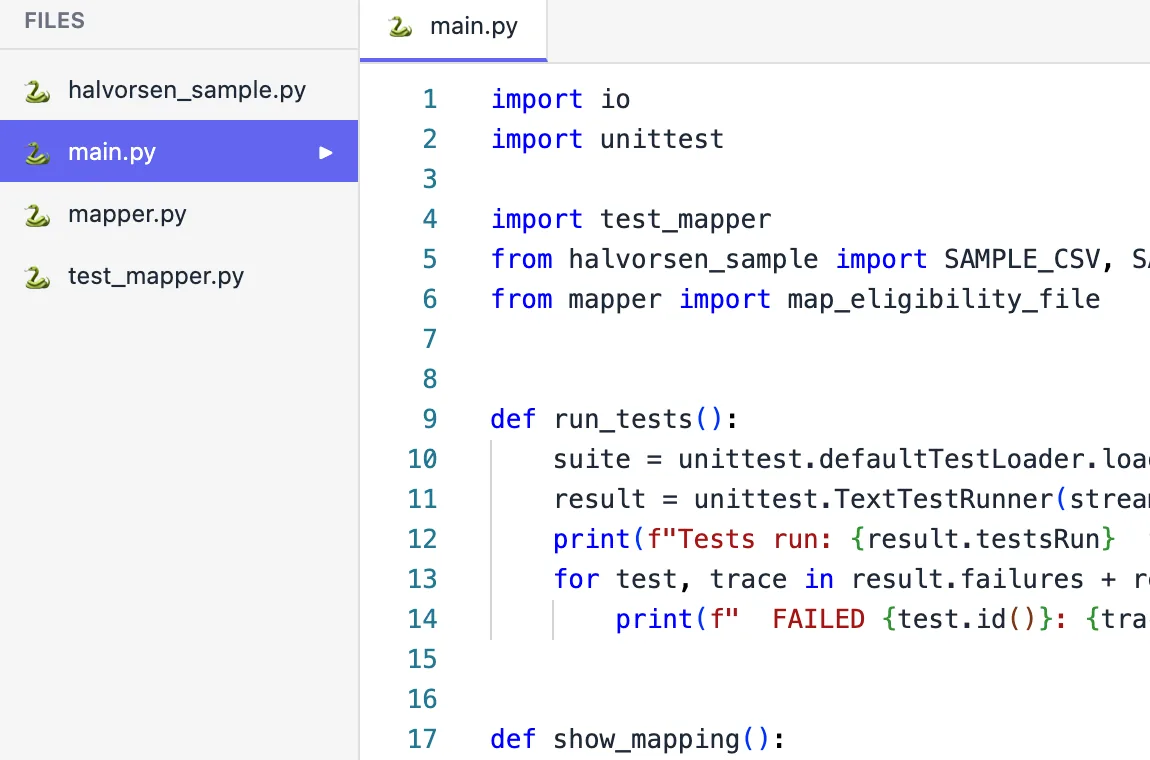
What a strong candidate did: Tested the mapper against the real file, fixed the cases where people would wrongly gain or lose access, and listed what the client must confirm.
A design on a whiteboard, then a written note
Fitting a partner’s SSO and reporting asks onto the platform
After a discovery call, a large partner wants single sign-on from its own portal and custom reporting. The candidate has the account executive’s raw notes and the platform’s integration guide.
What a strong candidate did: Separated what the platform already supports from real new work, drew how the sign-on would flow, and listed the questions to settle with the partner before any promise is made.
How the decision gets made
With Gateway, principal engineer candidates work through situations written from your job description, such as fixing code that controls access before handoff or fitting a customer's sign-on request onto the platform, using code, a whiteboard and a written note. The CTO sees a score and written feedback per skill and can open each design and note read-only. The final loop with senior staff then starts from a real decision the candidate already made.
See your next principal engineer at work before you meet them
Paste your job description and Gateway writes the assessment in about 5 to 10 minutes. Your team can edit every question before it goes out.
Questions
Is an assessment appropriate for a principal-level candidate?
The work is the kind a principal engineer does in the first months: a design, a written recommendation, a review of risky code. Each step says what it involves before the candidate accepts it, and the CTO gets something concrete to discuss in the loop.
Can we include our own architecture and constraints?
Gateway writes the assessment from your job description, and your team can read and edit every question before it goes out, so you can add the constraints that make your platform's decisions hard.
Our principal engineers use AI daily. Can candidates?
With an AI-assisted assessment, yes. Your team sees how the candidate used the assistant, which shows whether the candidate checks what it suggests or accepts it as written.
How do senior engineers on the panel give their view?
Results can be shared with each reviewer with a note, and any candidate's work opens read-only. For the next round, async video lets panel members record questions once, then vote and leave notes on each answer.
Related