Hire a TypeScript developer whose types catch bugs before users do
A TypeScript developer makes a codebase safer to change: types that describe the real data, validation where outside data enters, and a compiler that points at every call site when something changes. Type puzzles reveal little about that, so the way to tell candidates apart is to see each one work real frontend and backend problems in TypeScript before interviews.
What the hiring manager needs from a TypeScript developer
Teams that advertise for a TypeScript developer usually run TypeScript on both sides, a React or Vue frontend and a Node backend, sometimes with types shared between them. The tech lead needs someone who uses the type system to prevent the bugs the team keeps seeing, without turning simple code into a maze of generics.
Types that say one thing while the data says another
An API response is typed as always having a field, and production data sometimes lacks it. The page crashes even though the compiler was happy. A good TypeScript developer validates data at the boundary with a library such as Zod and lets the types follow from the validation.
A gradual move to strict mode
The project compiles with strict checks off and any in many places. The developer turns checks on area by area, fixes the real bugs that surface, and avoids silencing errors with casts just to get a green build.
Types shared between the server and the client
The frontend keeps its own copy of the API types and they drift. The developer sets up one source of truth, generated or shared, so a server change breaks the client build instead of the client in production.
A refactor the compiler should guide
A core status value gains a new state. With a discriminated union and exhaustive checks, the compiler lists every place that must handle it. The developer designs types so that kind of change is safe, and so a webhook can never move a status backwards unnoticed.
Where hiring a TypeScript developer usually goes wrong
- Hiring JavaScript experience with a TypeScript label
- Many resumes list TypeScript because a project had a tsconfig file. The candidate may still type everything as any or cast past every error. The difference only shows when you see the candidate's own types.
- Rewarding clever types
- Some candidates enjoy deeply nested conditional types. They impress in an interview and slow down every teammate who has to read them. Good TypeScript is usually plain, with complexity only where it prevents a real bug.
- Forgetting that types vanish at runtime
- Interviews often test the type system in isolation. The common production failure is trusting a type for data from an API, a form or a webhook that was never checked, and only a realistic task reveals whether the candidate knows that.
Real tasks from a Gateway assessment
These come from a Gateway assessment for a full stack developer, with the employer’s name taken out. Gateway writes every assessment from your own job description, so the tasks your candidates get are built around your role.
Code, then a short note
Status webhooks: duplicate changes in staging
A partner job board posts application status events to a webhook. QA found some applications showing the same status change twice in their history. The candidate owns the endpoint and has to make it safe to ship.
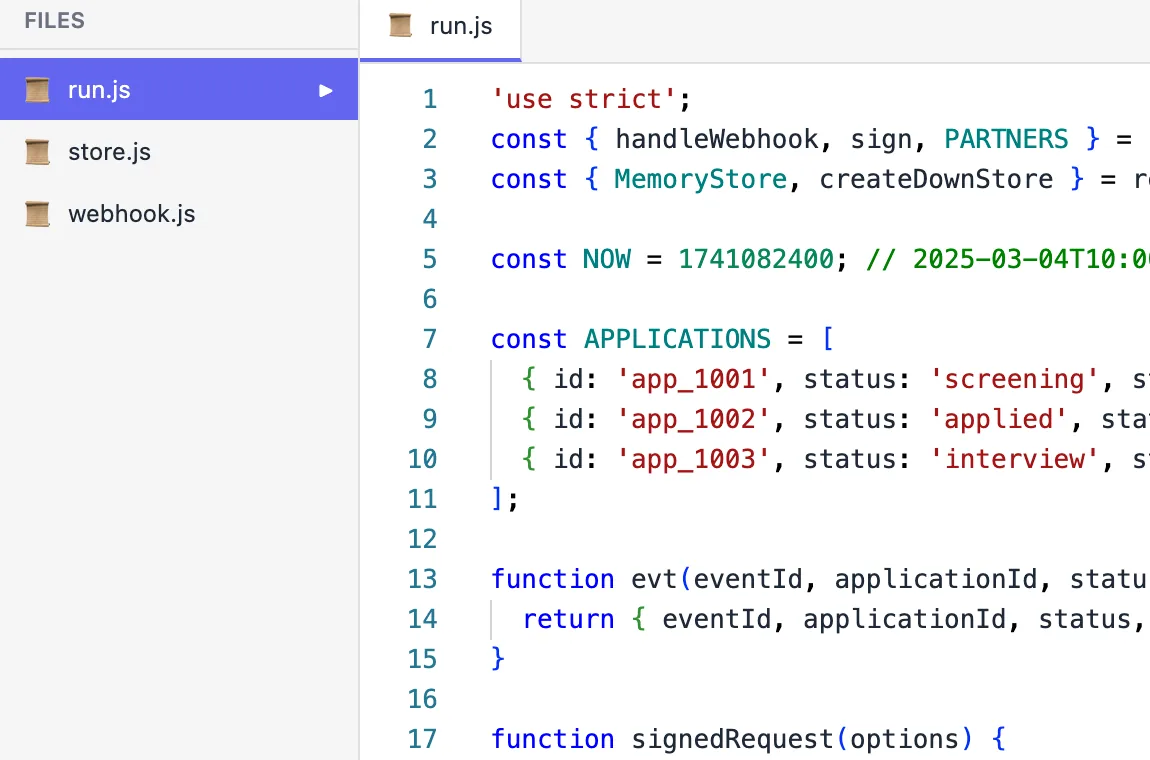
What a strong candidate did: Made each event count once even when the partner retries, rejected events that would move a status backwards, and added tests for the exact sequence QA reported.
Web code in the browser
Search results that don’t match the search box
QA reports that typing fast in an applicants page search leaves results that have nothing to do with the text, and sometimes the page says “Loading…” forever.
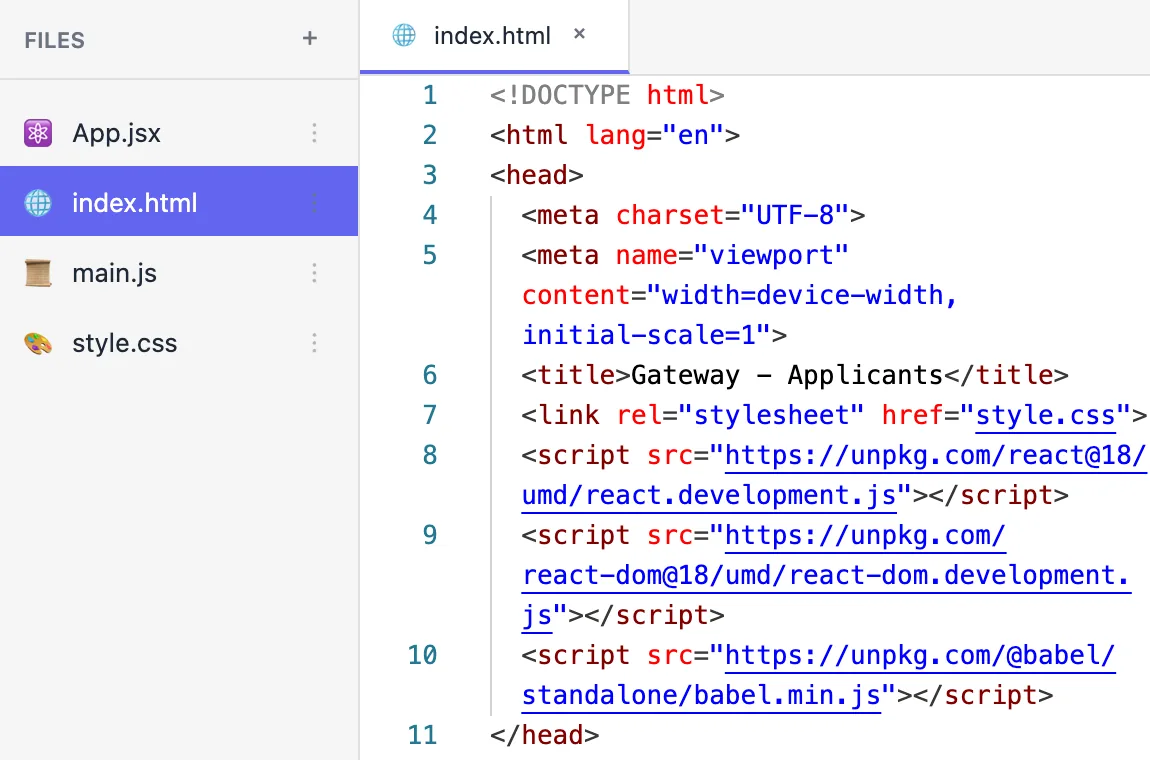
What a strong candidate did: Traced both bugs to responses arriving out of order and an unhandled failure, fixed them so the list always matches the box, and gave the page a clear error state.
How the decision gets made
With Gateway, TypeScript developer candidates work through situations written from your job description, such as a status webhook that records the same change twice or a search page whose results fall out of step with the input. Candidates write server code and web code in TypeScript, then a short note. The tech lead reads a score and written feedback for each skill, opens the code read-only to look at the actual types, and invites only candidates whose types would make the codebase safer.
See your next TypeScript developer at work before you meet them
Paste your job description and Gateway writes the assessment in about 5 to 10 minutes. Your team can edit every question before it goes out.
Questions
Will candidates write TypeScript, not JavaScript?
Yes, when your job description asks for TypeScript. Gateway writes the tasks from it, and your team can read and edit every question before it goes out.
Can the tasks cover both our frontend and our Node backend?
Yes. Candidates can work in code for the server and in web code in the browser, with frontend frameworks ready to use, within one assessment.
Can our reviewers read the candidate's types?
Yes. Any candidate's work opens read-only in the same tool, next to a score and written feedback for each skill. Your team can change any score.
How quickly can we start?
An assessment is written from your job description in about 5 to 10 minutes. Add candidates from an ATS export, a spreadsheet or resumes, and each gets one link and a deadline.
What if the candidate uses an AI assistant to write the types?
In a standard assessment the work stays with the candidate, and monitoring can be switched on if you want it. In an AI-assisted assessment the assistant is allowed and your team sees how the candidate used it.
Related