Hire a Go developer who writes services that stay up and shut down cleanly
A Go developer earns the role by writing small, fast services whose goroutines finish, whose errors are handled where they happen, and whose behaviour under load is predictable. Go is quick to learn, so many applicants can write it; the way to find those who write it well is to see each candidate work on a real service problem before interviews.
What the hiring manager needs from a Go developer
Teams that hire a Go developer usually run APIs, workers, proxies or infrastructure tools in Go, often as many small services talking over HTTP or gRPC. The hiring manager needs someone who uses Go's simplicity as intended: plain code, explicit errors, careful concurrency, and services that are easy to operate.
Goroutines that never exit
Memory and goroutine counts climb for days until the service is restarted. A capable Go developer finds the goroutine blocked on a channel nobody reads, or a request that ignores its context, and fixes it so work stops when the caller has gone.
Errors swallowed or wrapped into nothing
A downstream failure surfaces as an empty response because an error was logged and dropped several layers down. The developer has to return errors with useful context, decide where each one is handled, and make failures visible to the caller and to the logs.
A worker that must survive restarts
A Go worker pulls changes from a partner API, and a deploy in the middle of a run loses track of where it was. Making the work resumable and safe to repeat, with a clean shutdown on SIGTERM, is ordinary Go service work.
A data race found only in production
A map shared between handlers panics now and then under traffic. The developer runs the race detector, chooses between a mutex, a channel or a redesign, and adds a test that would catch the same mistake next time.
Where hiring a Go developer usually goes wrong
- Hiring by translating from another language
- Strong Java or Python engineers sometimes write Go with deep interfaces, frameworks and exceptions-by-panic. Their code works but fights the language, and the team spends review time undoing it.
- Testing goroutines with toy puzzles
- A ping-pong channel exercise checks syntax. It does not show whether the candidate cancels work on timeout, limits concurrency against a database, or cleans up on shutdown, which is where Go services fail.
- Overlooking operability
- Go is often chosen for services that must run unattended. A hiring loop that never asks how the service reports health, handles shutdown or exposes metrics misses half of the role.
Real tasks from a Gateway assessment
These come from a Gateway assessment for a backend engineer, with the employer’s name taken out. Gateway writes every assessment from your own job description, so the tasks your candidates get are built around your role.
A design on a whiteboard, then a written note
Nightly job ingestion from a partner scheduling API
Each night the product pulls changed jobs from a partner scheduling platform into PostgreSQL. At 06:00 a dispatch agent builds every business’s day plan from them, and dispatch teams start at 06:30. Jobs have been missing and duplicated.
What a strong candidate did: Designed an ingest that resumes from where it stopped, updates rather than duplicates, and finishes well before 06:00 with an alert if it will not. Named the one case that still needs a person to look.
SQL, then a written note
Stale answers from the support assistant’s knowledge base
An AI support assistant answers from help articles that a nightly job splits, embeds and stores. Customers are getting answers from articles that were changed or removed weeks ago.
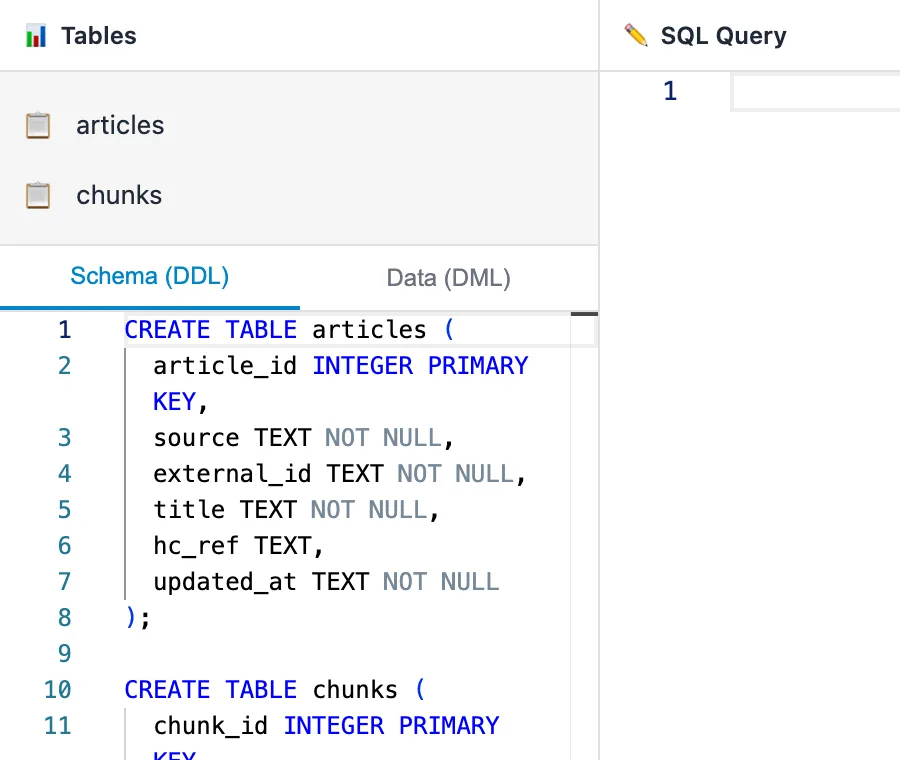
What a strong candidate did: Found in the data which articles were stale and why the refresh skipped them, sized how many answers were affected, and proposed a refresh that removes deleted articles as well as adding new ones.
Code, then a short written note
Payment webhook handler for invoice updates
A billing product for home-services businesses learns about each payment from a provider webhook. Some homeowners got two receipts for one payment, and some paid invoices still show as unpaid. The candidate owns the handler.
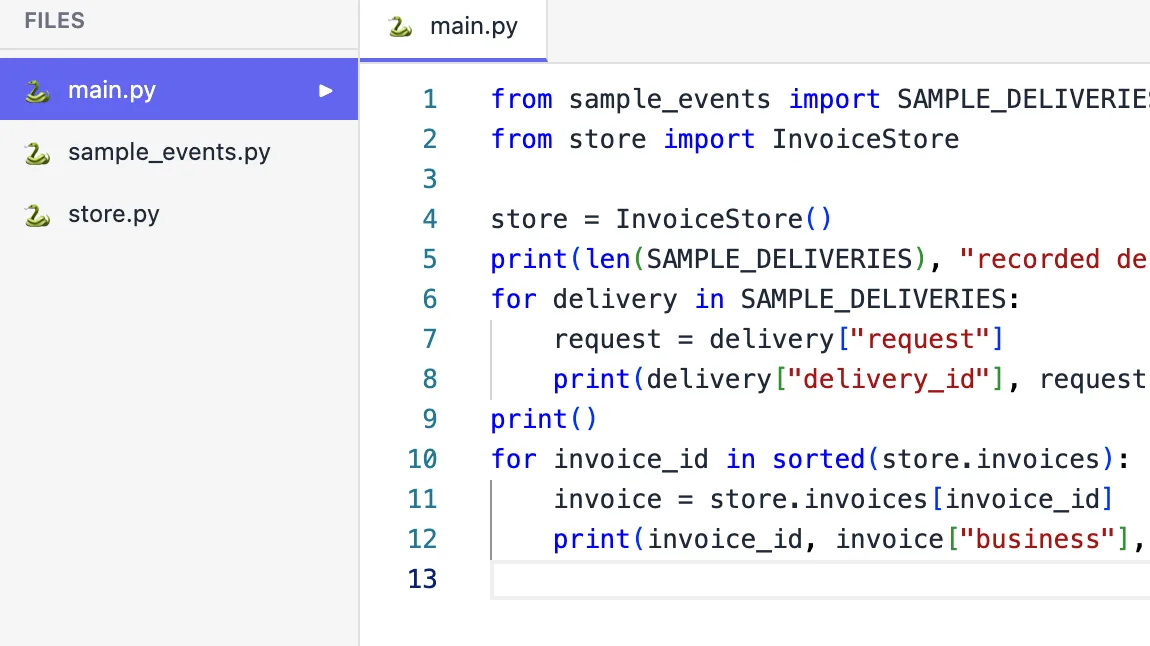
What a strong candidate did: Made the handler safe to receive the same event twice, ignored events that arrive out of order, and showed both reported bugs fixed with tests. The note told billing operations which past invoices to re-check.
How the decision gets made
With Gateway, each Go candidate works on situations written from your job description: designing a nightly ingest that resumes where it stopped and alerts if it will miss its deadline, investigating stale data in SQL, or making a webhook handler safe against repeated events. Work happens on a whiteboard, in SQL or in code, followed by a short note. The hiring manager sees each skill scored with written reasons, opens the work read-only, and interviews only those who handled retries, failure and timing correctly.
See your next Go developer at work before you meet them
Paste your job description and Gateway writes the assessment in about 5 to 10 minutes. Your team can edit every question before it goes out.
Questions
Can the tasks include gRPC, Kafka or Kubernetes?
Yes, if your job description mentions them. Gateway writes the situations from your role, and your team can edit any task to match your services before sending.
Will the assessment show whether a candidate understands concurrency?
The situations involve real concurrency problems, such as repeated events and work that must stop cleanly, and the score for each skill comes with an explanation, so the hiring manager can see how the candidate reasoned.
How long does it take to set up a Go assessment?
About 5 to 10 minutes from your job description, followed by your own review. Each candidate then gets one link and a deadline.
What about candidates moving to Go from another language?
The assessment shows how each person actually writes Go on a realistic problem, so you can judge a candidate who is new to the language on the work rather than on years listed.
Related