Hire a Kotlin developer who writes idiomatic, safe Kotlin on the server
A Kotlin developer is worth hiring when the Kotlin code the developer writes uses coroutines, null safety and the type system to prevent bugs, and fits cleanly beside the Java code most Kotlin teams still run. Many candidates write Kotlin that is Java with fewer semicolons, so compare them by seeing real work from your own backend before interviews.
What the hiring manager needs from a Kotlin developer
Teams hiring a Kotlin developer for backend work usually run Ktor or Spring Boot services in Kotlin, often next to older Java modules being moved over. The engineering lead needs someone who brings Kotlin's safety benefits into that codebase without creating a second style nobody else can follow.
Coroutines that outlive their request
A service launches work in GlobalScope, and when a request is cancelled the work keeps running and holding connections. A good Kotlin developer uses structured concurrency with a proper scope, so cancellation and errors travel where they should.
Null safety that stops at the Java boundary
Kotlin code calls a Java library that returns platform types, and a null slips through as if it were safe. The developer has to mark those boundaries explicitly so the compiler can help, instead of adding !! wherever a warning appears.
Blocking calls inside suspend functions
A JDBC call or a file read runs on the default dispatcher and stalls other coroutines under load. Recognising blocking work and moving it to the right dispatcher, or to a non-blocking driver, is a Kotlin backend skill worth testing directly.
A Java module moving to Kotlin
The team converts a Java package to Kotlin one file at a time. The developer has to keep both sides callable, decide where data classes and sealed types make the code clearer, and avoid annotations that change how frameworks see the classes.
Where hiring a Kotlin developer usually goes wrong
- Assuming Android Kotlin equals backend Kotlin
- Many Kotlin resumes come from Android work. The language is shared, but server concerns such as transactions, connection pools and idempotent handlers are different, and only a backend task shows whether a candidate has met them.
- Rewarding clever language features
- Extension functions, scope functions and DSLs can make code compact and hard to read. A candidate who chains let, apply and also everywhere may impress in an interview and slow down every code review afterwards.
- Never testing coroutine failure
- Most interviews check that a candidate can write a suspend function. Few check what happens when one child coroutine fails or a timeout fires, which is where production incidents in Kotlin services start.
Real tasks from a Gateway assessment
These come from a Gateway assessment for a backend engineer, with the employer’s name taken out. Gateway writes every assessment from your own job description, so the tasks your candidates get are built around your role.
SQL, then a written note
Stale answers from the support assistant’s knowledge base
An AI support assistant answers from help articles that a nightly job splits, embeds and stores. Customers are getting answers from articles that were changed or removed weeks ago.
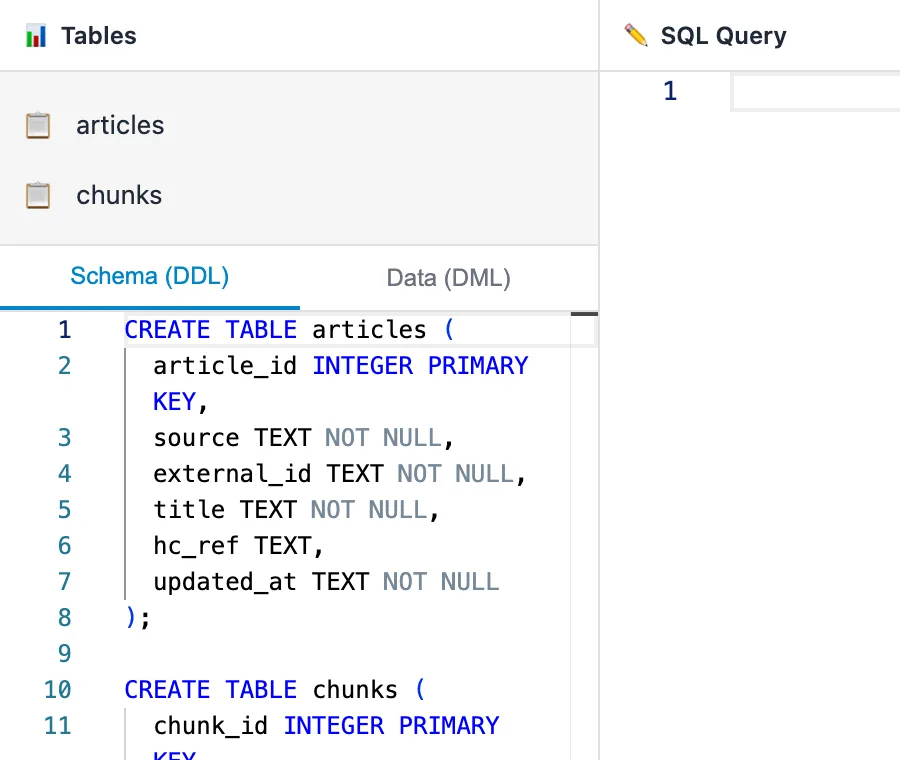
What a strong candidate did: Found in the data which articles were stale and why the refresh skipped them, sized how many answers were affected, and proposed a refresh that removes deleted articles as well as adding new ones.
Code, then a short written note
Payment webhook handler for invoice updates
A billing product for home-services businesses learns about each payment from a provider webhook. Some homeowners got two receipts for one payment, and some paid invoices still show as unpaid. The candidate owns the handler.
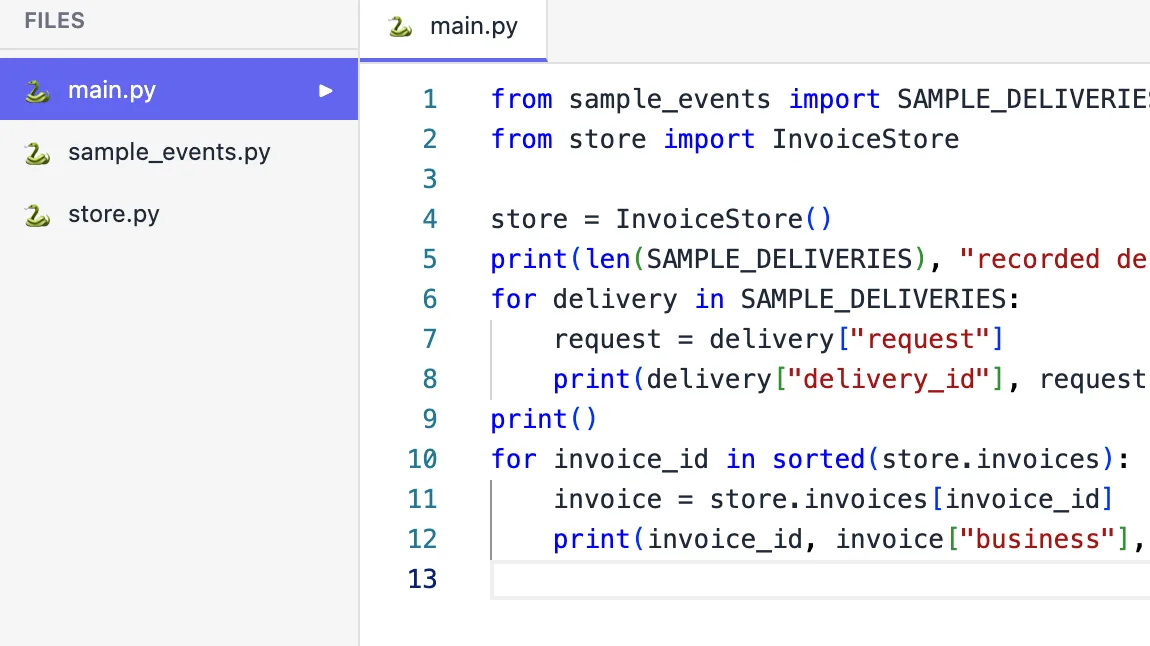
What a strong candidate did: Made the handler safe to receive the same event twice, ignored events that arrive out of order, and showed both reported bugs fixed with tests. The note told billing operations which past invoices to re-check.
A design on a whiteboard, then a written note
Nightly job ingestion from a partner scheduling API
Each night the product pulls changed jobs from a partner scheduling platform into PostgreSQL. At 06:00 a dispatch agent builds every business’s day plan from them, and dispatch teams start at 06:30. Jobs have been missing and duplicated.
What a strong candidate did: Designed an ingest that resumes from where it stopped, updates rather than duplicates, and finishes well before 06:00 with an alert if it will not. Named the one case that still needs a person to look.
How the decision gets made
With Gateway, each Kotlin candidate gets situations from your job description, such as a knowledge base refresh that leaves deleted articles behind, a payment webhook that must handle repeated and out-of-order events, or a nightly partner sync that must finish before the morning. Candidates investigate in SQL, write code or sketch a design, then add a short note. Your engineering lead sees each skill scored with the reason, opens every submission read-only, and invites only the candidates whose work was correct and idiomatic.
See your next Kotlin developer at work before you meet them
Paste your job description and Gateway writes the assessment in about 5 to 10 minutes. Your team can edit every question before it goes out.
Questions
We hire Kotlin developers for Android too. Does Gateway handle that?
The assessment is written from the job description you provide, so a mobile Kotlin role gets mobile situations. This page shows backend tasks because that is the Kotlin work described here.
Can the tasks use Ktor or Spring Boot with Kotlin?
Yes. Name the framework in your job description and the situations will use it. Your team can review and edit every question before sending.
How does the engineering lead compare Kotlin candidates?
Each candidate has a score and written feedback per skill, a tier from 1 to 5, and a mark against your line. The submitted code opens read-only, and the lead can change any score.
Can candidates use AI tools while writing Kotlin?
You decide. In an AI-assisted assessment, candidates may use an assistant and your team sees how each one worked with it; in a standard assessment the work is the candidate's own.
Related