Hire a Nuxt developer who keeps server rendering and Vue state in step
A Nuxt developer builds Vue applications that render on the server, fetch data without doing it twice, and keep state consistent between the first server render and the browser. Vue knowledge alone does not cover that, so the way to tell candidates apart is to see each one solve real Nuxt problems before your team schedules interviews.
What the hiring manager needs from a Nuxt developer
Employers hiring a Nuxt developer usually have a Vue product or storefront that depends on server rendering for speed and search, with Pinia for state and Nitro server routes for small backend pieces. Many are also partway through moving an older Nuxt app to the current version. The frontend lead needs someone who understands what runs where, and who can carry that migration without stopping feature work.
Data fetched twice, or not at all
A page calls an API on the server and again in the browser, or shows nothing until the client loads. A good Nuxt developer uses useFetch or useAsyncData with keys that match, so the server result is reused on the client and the request runs once.
Hydration mismatch warnings in production
A component renders a date, a random ID or something from local storage, and the server and client disagree. The developer moves browser-only work into a client-only component or the mounted hook and keeps the server output stable.
State that leaks between users on the server
A store defined at module level is shared across requests during server rendering, so one visitor briefly sees another's data. The developer moves state into Pinia or useState scoped to the request, and checks every other store for the same mistake.
Moving an older Nuxt app forward
The app still runs on an older major version with the Options API and modules that have no direct replacement. The developer plans the move page by page, swaps or rewrites the modules, and keeps the store and routes working throughout.
Where hiring a Nuxt developer usually goes wrong
- Hiring a Vue developer and hoping Nuxt follows
- Client-only Vue experience does not teach server rendering, request-scoped state or Nitro. The resume lists both, and the gap appears the first time the hire touches a server-rendered page.
- Shrinking the pool to people who have done the exact migration
- Few candidates have moved a large Nuxt app between major versions. Looking only for that experience leaves the role open for a long time. A candidate who reasons clearly about rendering and state in a realistic task often handles the migration well.
- React-style interviews for a Vue team
- Generic frontend rounds tend to be written around React. A Nuxt candidate is then judged on patterns your codebase does not use, and the skills that matter to your team are never tested.
Real tasks from a Gateway assessment
These come from a Gateway assessment for a full stack developer, with the employer’s name taken out. Gateway writes every assessment from your own job description, so the tasks your candidates get are built around your role.
Web code in the browser
Search results that don’t match the search box
QA reports that typing fast in an applicants page search leaves results that have nothing to do with the text, and sometimes the page says “Loading…” forever.
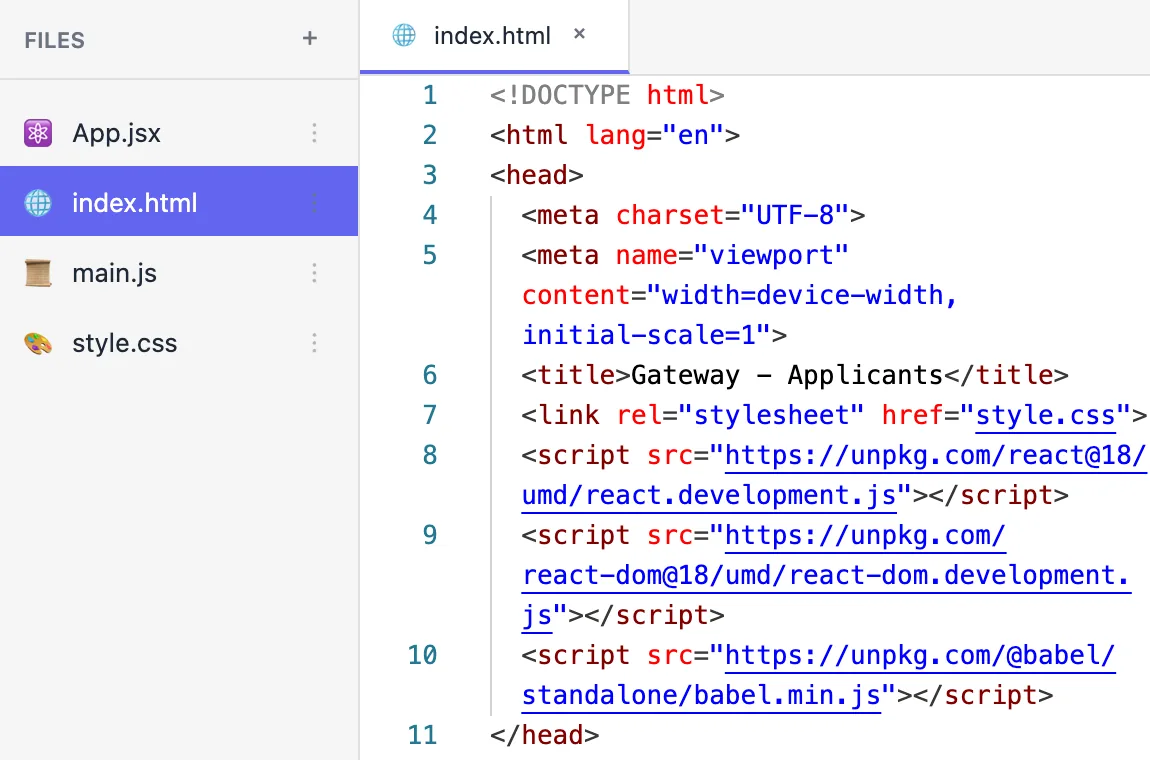
What a strong candidate did: Traced both bugs to responses arriving out of order and an unhandled failure, fixed them so the list always matches the box, and gave the page a clear error state.
Code, then a short note
Status webhooks: duplicate changes in staging
A partner job board posts application status events to a webhook. QA found some applications showing the same status change twice in their history. The candidate owns the endpoint and has to make it safe to ship.
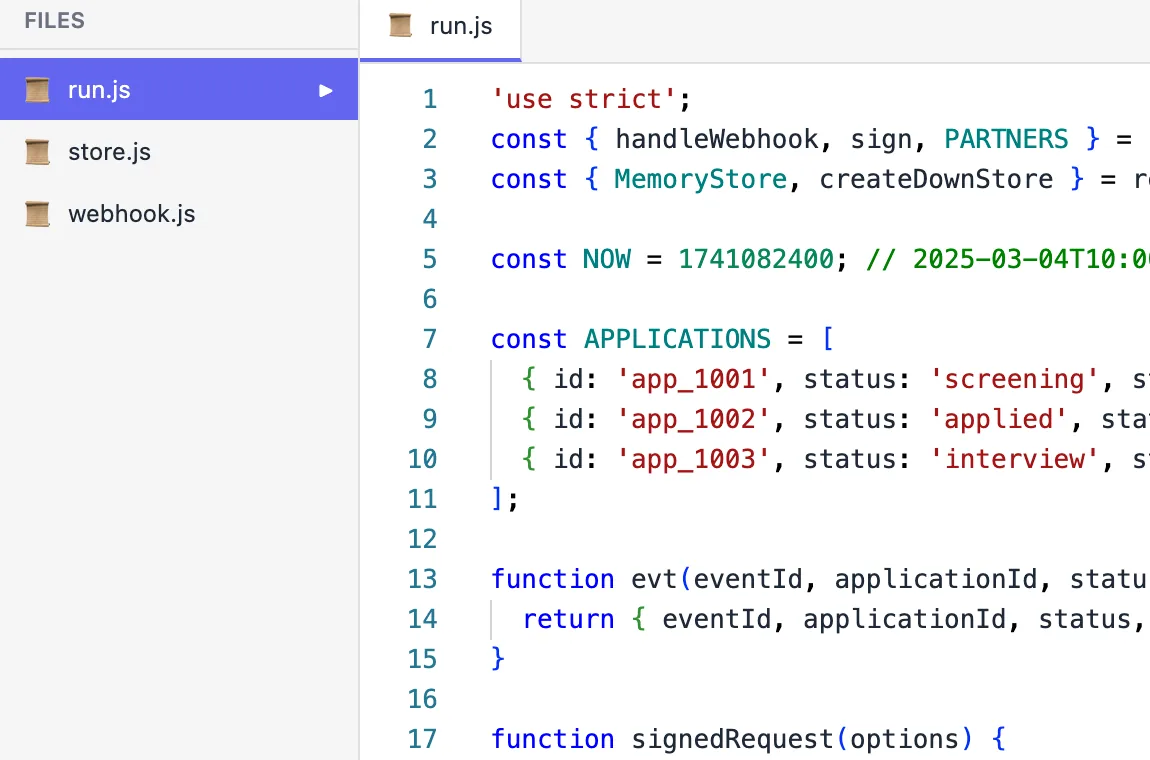
What a strong candidate did: Made each event count once even when the partner retries, rejected events that would move a status backwards, and added tests for the exact sequence QA reported.
SQL, then a written plan
A slow dashboard query and a safe rollout
A recruiter dashboard list has become slow on the production database. The candidate owns the query the API runs and has to speed it up without changing what recruiters see.
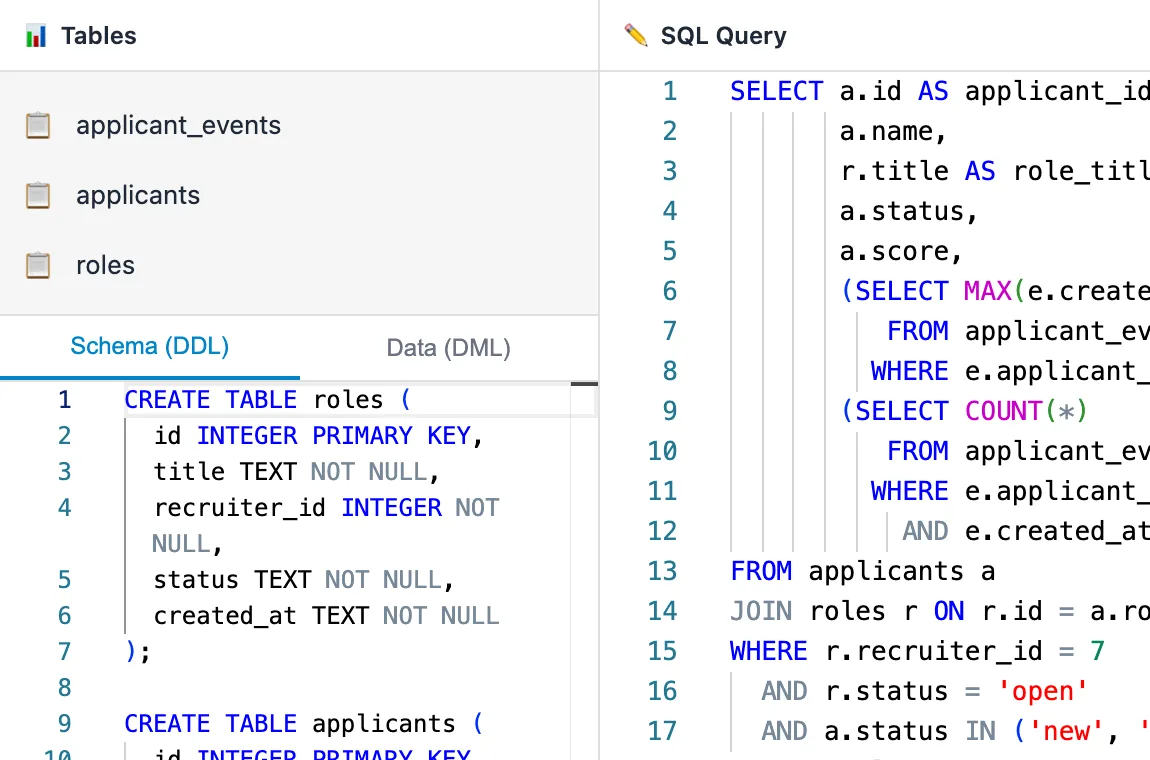
What a strong candidate did: Rewrote the query and proposed the index it needs, showed the results are identical, and planned a rollout that can be turned back in minutes if something looks wrong.
How the decision gets made
With Gateway, Nuxt developer candidates work through situations written from your job description, such as a search page whose results stop matching the box, a webhook endpoint that records status changes twice, or a slow query behind a dashboard. Candidates work in web code, server code and SQL, then explain the change in a short note. The frontend lead reads a score and written feedback for each skill, opens each candidate's code read-only, and meets only the people whose rendering and state decisions hold up.
See your next Nuxt developer at work before you meet them
Paste your job description and Gateway writes the assessment in about 5 to 10 minutes. Your team can edit every question before it goes out.
Questions
Will the tasks be about Nuxt and Vue, not React?
Yes. Gateway writes the assessment from your job description, so the situations follow the framework, state library and server setup you name. Your team can edit every question before it goes out.
Can the assessment include our migration work?
You can describe the migration in the job description or edit a task to match it, so candidates reason about the move your team is actually making.
Does it test the server side of Nuxt too?
If the role covers server routes or an API, the situations can include server code and SQL as well as the page itself.
How are candidates scored?
Each skill gets a score with written feedback, each candidate gets a tier from 1 to 5, and you see who meets your line. Your team can change any score and makes the decision.
What do candidates need?
A laptop or desktop and one link. Each step says what it involves before the candidate accepts it, and there is no multiple choice.
Related