Hire a Next.js developer who knows what renders on the server and why
A Next.js developer decides, page by page, what renders on the server, what runs in the browser and how long data stays cached, and those decisions set the site's speed, search visibility and freshness. Knowing React is not the same skill, so the way to tell candidates apart is to see each one fix real Next.js problems before your team interviews.
What the hiring manager needs from a Next.js developer
Teams hiring a Next.js developer usually run a product or marketing site where speed and search traffic matter, often on the App Router with server components, route handlers and incremental revalidation. The frontend lead needs someone who understands the rendering model, because most Next.js bugs come from putting code on the wrong side of the server and client line.
A content edit that never shows up
Marketing updates a page in the CMS and the live site still shows the old text hours later. A good Next.js developer finds which fetch is cached and for how long, sets revalidation that matches how often the content changes, and adds on-demand revalidation for edits that cannot wait.
A hydration error after a small change
A component reads the window or the current time during render, and the server and client output disagree. The developer moves that logic to the client boundary or an effect, and keeps the rest of the component on the server.
A client bundle that keeps growing
One use client directive near the top of the tree pulled a large part of the page into the browser. The developer pushes the boundary down to the interactive pieces so the rest renders on the server and ships no JavaScript.
A search page that must stay correct as the user types
Filters live in the URL so results can be shared, and responses come back out of order on slow connections. The developer keeps the URL, the input and the results in step, with real loading, empty and error states.
Where hiring a Next.js developer usually goes wrong
- Treating React experience as Next.js experience
- A strong React developer may never have thought about server components, caching or the edge. The resume reads React and Next.js together, and the gap appears the first time a page shows stale data.
- Hiring on the Pages Router alone
- Candidates who learned Next.js before the App Router may apply old patterns to the new model. That is fine if your codebase still uses pages, and a problem if it does not. Seeing the candidate work in your setup settles it.
- Ignoring SEO and metadata as engineering work
- Titles, canonical links, structured data and sitemaps are part of why teams choose Next.js. A loop that never touches them hires someone who treats search traffic as someone else's problem.
Real tasks from a Gateway assessment
These come from a Gateway assessment for a full stack developer, with the employer’s name taken out. Gateway writes every assessment from your own job description, so the tasks your candidates get are built around your role.
Web code in the browser
Search results that don’t match the search box
QA reports that typing fast in an applicants page search leaves results that have nothing to do with the text, and sometimes the page says “Loading…” forever.
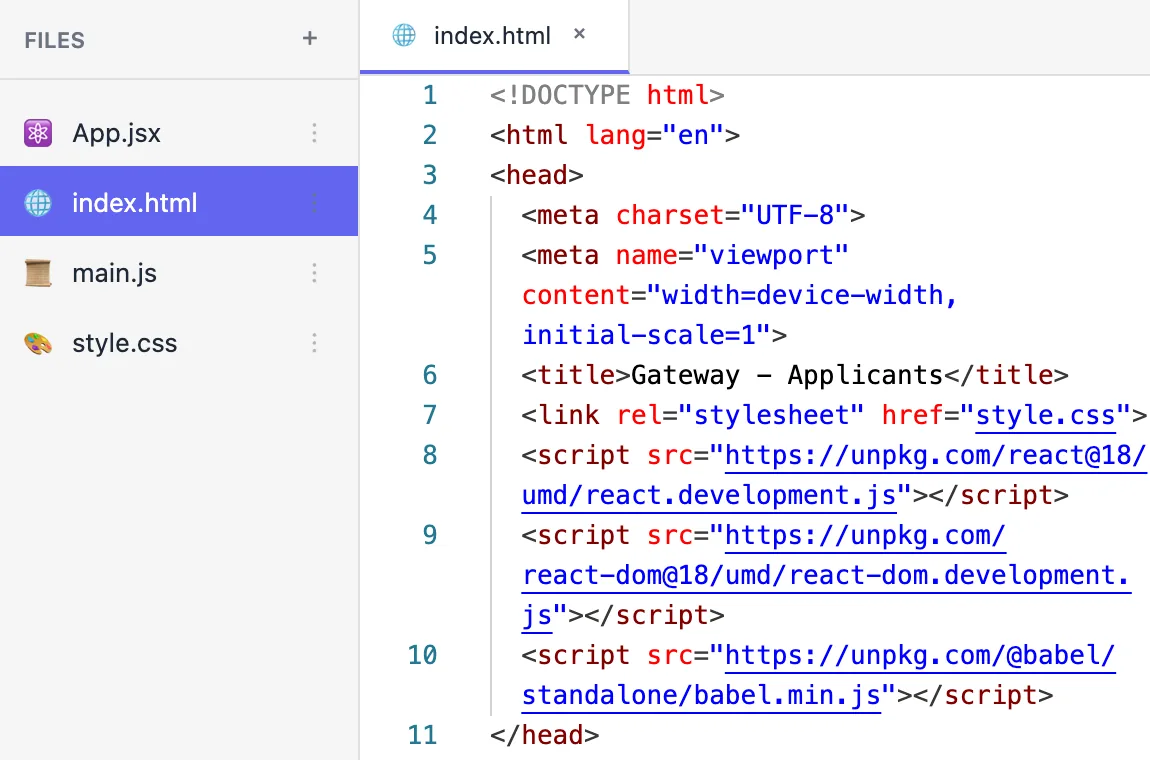
What a strong candidate did: Traced both bugs to responses arriving out of order and an unhandled failure, fixed them so the list always matches the box, and gave the page a clear error state.
SQL, then a written plan
A slow dashboard query and a safe rollout
A recruiter dashboard list has become slow on the production database. The candidate owns the query the API runs and has to speed it up without changing what recruiters see.
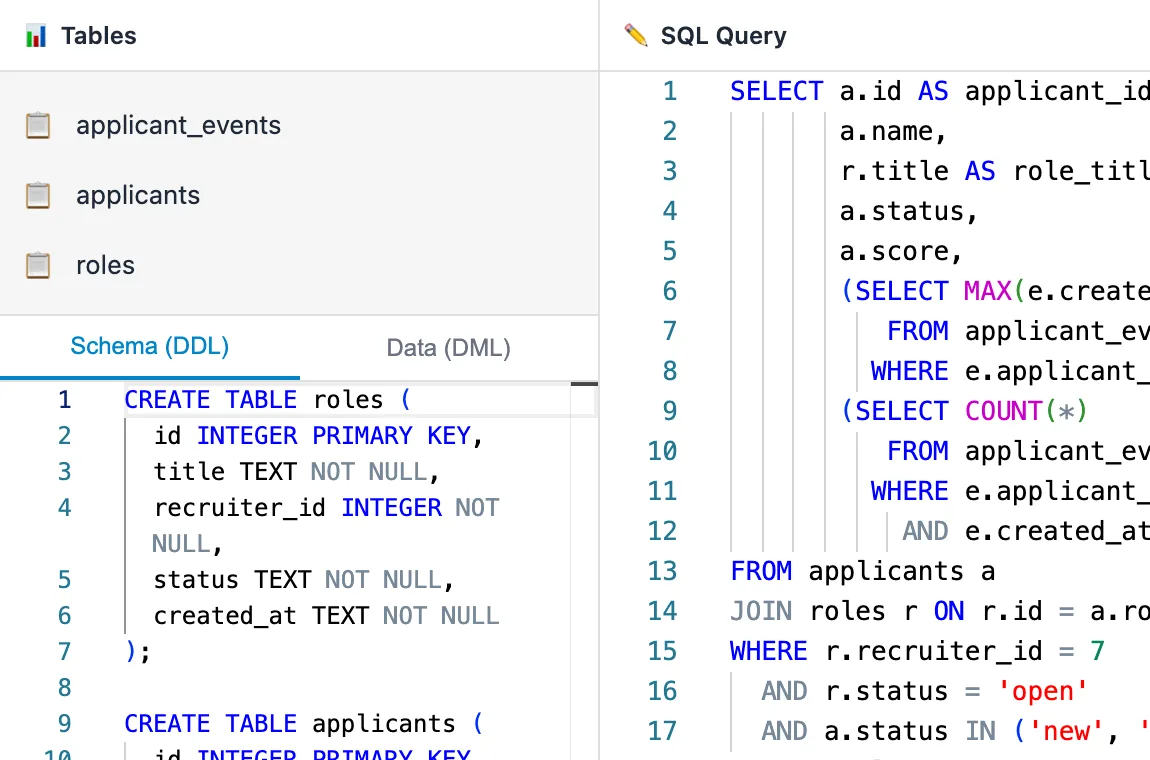
What a strong candidate did: Rewrote the query and proposed the index it needs, showed the results are identical, and planned a rollout that can be turned back in minutes if something looks wrong.
How the decision gets made
With Gateway, Next.js developer candidates work through situations written from your job description, such as a search page whose results fall out of step with the input, or a slow query behind a dashboard that needs a safe rollout. Candidates work in web code in the browser, SQL and a short written note. The frontend lead reads a score and written feedback for each skill, opens the code read-only, and spends interviews only on candidates whose rendering and data decisions already hold up.
See your next Next.js developer at work before you meet them
Paste your job description and Gateway writes the assessment in about 5 to 10 minutes. Your team can edit every question before it goes out.
Questions
Can tasks follow our setup, App Router or Pages Router?
Gateway writes the assessment from your job description, so name your router, data layer and hosting there. Your team can read and edit every question before it goes out.
Do candidates write real code, or describe what they would do?
Real code. Candidates work in web code in the browser, with frontend frameworks ready to use, and in SQL or a written note where the situation needs it.
Can it cover the backend side of a Next.js app, like route handlers?
If your role includes it, yes. Situations can include server code and the database behind a page, as well as the page itself.
What does the frontend lead see?
A score and written feedback for each skill, a tier from 1 to 5, whether the candidate meets your line, and every piece of work read-only. Results can be shared with the hiring manager with a note.
How long does setup take?
About 5 to 10 minutes from a job description, then one link per candidate with a deadline.
Related