Hire a Rust developer who makes systems code safe without making it slow
A Rust developer is worth hiring when the systems code the developer writes is memory-safe, fast and clear about who owns what, including at the edges where Rust meets C or hardware. Rust's compiler catches so much that a beginner's code can look as solid as an expert's, so the way to compare candidates is to see each one work on a real systems problem before interviews.
What the hiring manager needs from a Rust developer
Teams hire a Rust developer to replace or harden code where a crash or a memory bug is expensive: embedded and flight software, networking, storage, or a C or C++ component with a history of faults. The engineering lead needs someone who uses the borrow checker as a design tool and knows exactly when unsafe is justified.
A shared data structure read by several threads
A store of live records is written by one thread and read by a display and a decision loop. A good Rust developer designs ownership so reads are safe without locking everything, choosing between Arc, RwLock, channels or a copy-on-write approach for real reasons.
Calling into an existing C library
The device driver stays in C for now. The developer writes the FFI layer, keeps unsafe blocks small and documented, and wraps them in a safe interface so the rest of the Rust code cannot misuse the pointers.
Async code that stalls under load
A tokio service slows down because a blocking call runs on the async runtime, or a lock is held across an await point. Spotting these is specific Rust knowledge and decides whether the service keeps its latency.
Porting a component from C++
A C++ module with recurring memory bugs is being rewritten. The developer has to preserve its behaviour, including the odd parts other code depends on, and show with tests that the Rust version matches before switching over.
Where hiring a Rust developer usually goes wrong
- Mistaking enthusiasm for production experience
- Many candidates have learned Rust through personal projects and enjoy it. That is valuable, but it differs from shipping Rust next to C, under timing limits, where a design choice affects other teams.
- Fighting the borrow checker in the interview
- Live coding rounds in Rust often turn into compiler error battles under time pressure. A realistic task with time to think shows the candidate's design choices far more clearly.
- Not asking about unsafe
- Some candidates avoid unsafe at any cost, others reach for it to silence the compiler. The role needs someone who can justify each unsafe block, and interviews rarely test that judgement.
Real tasks from a Gateway assessment
These come from a Gateway assessment for a C++ developer, with the employer’s name taken out. Gateway writes every assessment from your own job description, so the tasks your candidates get are built around your role.
C++, then a short note
Radar track store: ownership and templates
The flight software lead asks for the in-memory list of radar tracks that the display and cueing logic read. Three kinds of track rank themselves differently, and the lead will review the change.
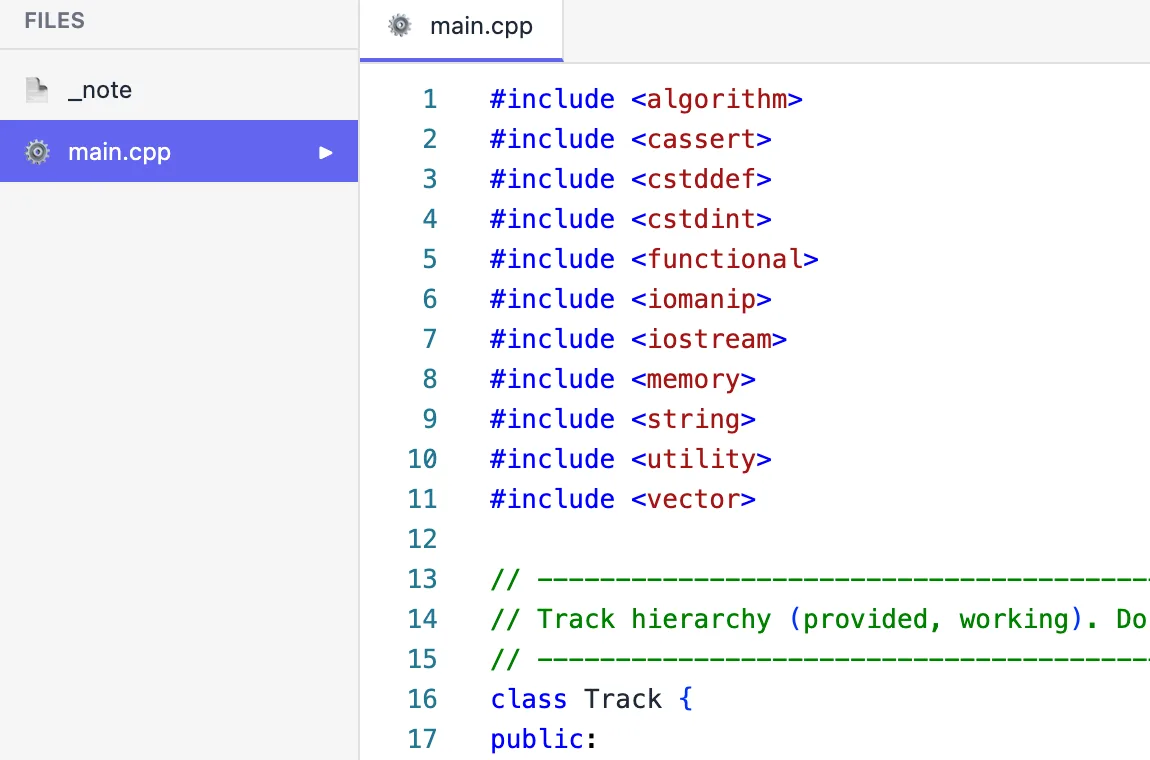
What a strong candidate did: Gave the store clear ownership of its tracks, kept ranking inside each track type, and made the reads safe for the display while tracks are added.
C++, then a short note
Telemetry queue: fix the race and prove it
On an unmanned aircraft, a sensor thread fills a bounded queue and a link thread sends frames over the radio. Telemetry freezes now and then in the field, and nobody can reproduce it on demand.
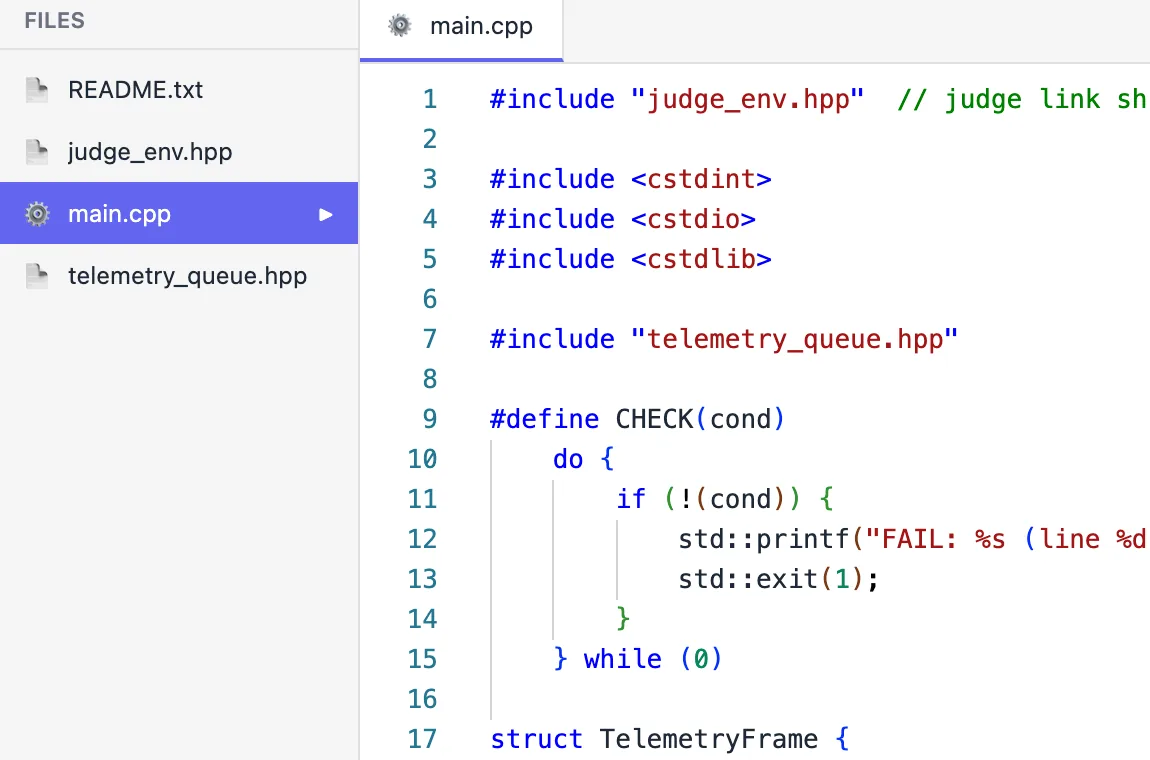
What a strong candidate did: Found the race in the queue, fixed it without adding latency, and wrote a stress test that fails reliably on the old code and passes on the new.
How the decision gets made
With Gateway, each Rust candidate works on systems situations from your job description, such as designing an in-memory track store with clear ownership that the display can read safely while tracks are added, or fixing a race in a bounded queue between a sensor thread and a radio link. The code and a short note show how the candidate reasoned. The engineering lead sees each skill scored with written feedback, reads the code read-only, and interviews only candidates whose designs were safe and fast.
See your next Rust developer at work before you meet them
Paste your job description and Gateway writes the assessment in about 5 to 10 minutes. Your team can edit every question before it goes out.
Questions
The example tasks are in C++. Will Rust candidates work in Rust?
These are real tasks from systems assessments. Gateway writes your assessment from your job description, so a Rust role gets its situations in Rust. Your team can edit every task before sending.
Can the assessment cover embedded Rust or async services?
Yes. The situations follow whichever kind of Rust your role describes, whether no_std firmware, tokio services or FFI with an existing C codebase.
How do we judge a candidate who is strong in C++ and newer to Rust?
The candidate's work is scored skill by skill with written reasons, so your lead can see where systems judgement is strong and where Rust idioms are still developing, and decide with that in view.
Can we see a replay if something looks unusual?
If you turn monitoring on, there are four levels from activity only to camera on, with a replay of the test. Gateway never marks a candidate as cheating on its own; your team reviews it.
Related