Hire a Scala developer whose data pipelines produce numbers people trust
A Scala developer is worth the hire when the Spark jobs and data services the developer builds produce correct numbers on time and can be read by the rest of the team. Scala resumes often stress functional programming theory, so the way to tell candidates apart is to see each one find and fix a real data problem before interviews.
What the hiring manager needs from a Scala developer
Most employers hiring a Scala developer use it for data: Spark batch and streaming jobs, Kafka consumers and services that feed analytics or models. The data engineering manager needs someone who writes typed, testable Scala and also understands what happens to the data as it moves through joins, shuffles and late arrivals.
A join that multiplies rows
A Spark job joins spend to campaigns, and the totals come out far above the source system. A capable Scala developer checks the keys on both sides, finds the duplicated dimension, and fixes the join so the totals tie back before anyone trains a model on them.
One task that runs for hours
A nightly job finishes most partitions quickly and then waits on a single skewed key. The developer has to read the Spark UI, recognise skew, and choose salting, a broadcast join or a different partitioning rather than adding more executors.
A pipeline that must be safe to rerun
A job that writes to a downstream API or table is rerun after a failure and duplicates its output. Writing jobs that can run again without harm, and that hold back bad records one at a time, is core work for a Scala data developer.
Code only one person can read
A module built on implicits and advanced type classes works, but nobody else on the team can change it. The developer needs to judge when Scala's expressiveness helps and when plain case classes and functions serve the team better.
Where hiring a Scala developer usually goes wrong
- Screening on functional programming theory
- Questions about monads and type classes reward candidates who enjoy theory. The daily work is closer to finding why a Spark aggregate is wrong, and theory questions do not test that.
- Treating Spark API knowledge as data skill
- Knowing the DataFrame API is common. Noticing that a result is too large to be true, and tracing it back to a join, is the skill that protects the business from bad numbers.
- Hiring for the language, ignoring the data
- A strong Scala engineer from a backend service team may have never dealt with late data, partitions or schema drift. A data-heavy role needs those habits, and only a data task shows them.
- Not reading how problems are explained
- Scala data developers often report to analysts and data scientists who rely on their tables. A candidate who fixes a job without telling the data scientist which training days were affected creates the next problem.
Real tasks from a Gateway assessment
These come from a Gateway assessment for a data engineer, with the employer’s name taken out. Gateway writes every assessment from your own job description, so the tasks your candidates get are built around your role.
SQL, then a written note
Inflated spend in a feature table
A strategist summed ad spend from the feature table behind an automated ads optimizer and found it far above the billing report for the same days. A data scientist trains a model on the same table.
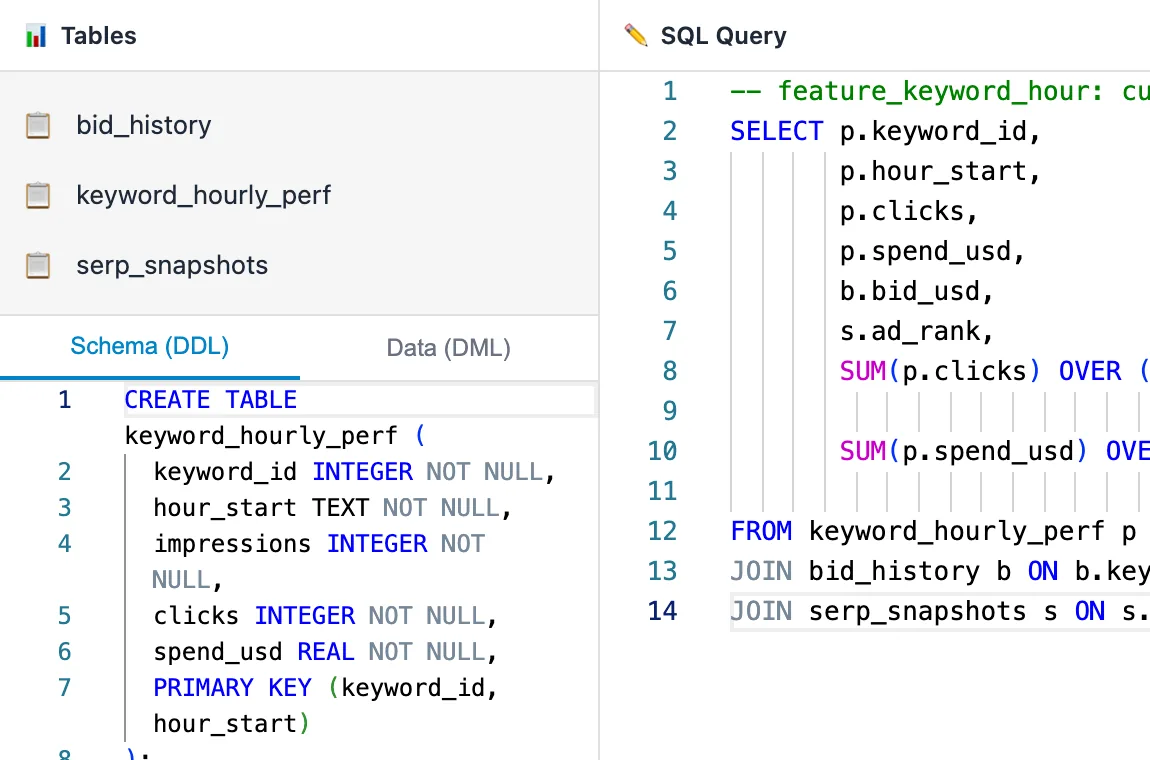
What a strong candidate did: Found the join that multiplied spend, fixed the query so totals tie to billing, and told the data scientist which training days were affected.
Code, then a short note
Gate and deduplicate outbound bid changes
A pipeline pushes bid and budget changes to an ads API every 15 minutes. A rerun pushed the same edits twice, and a broken join once sent zero bids live. The strategist also wants good edits to go through when one bad edit is stopped.
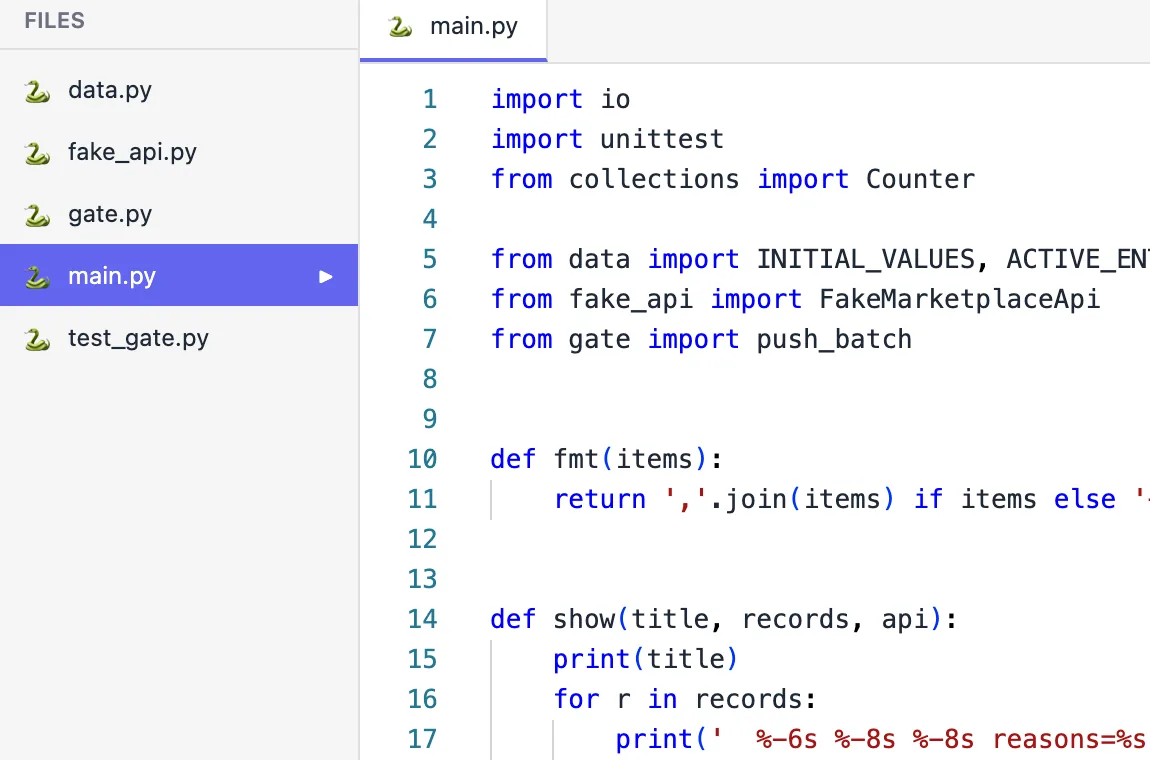
What a strong candidate did: Made each push safe to rerun, stopped bad values one edit at a time instead of the whole batch, and logged what was held and why.
How the decision gets made
With Gateway, each Scala candidate works on situations from your job description: tracing inflated spend to a join that multiplied rows, or making a pipeline that pushes changes to an external API safe to rerun and able to hold back one bad edit without stopping the rest. Candidates work in SQL or code and write a short note for the people who use the data. The hiring manager sees each skill scored with written feedback, opens the work read-only, and invites only those whose numbers tied back to the source.
See your next Scala developer at work before you meet them
Paste your job description and Gateway writes the assessment in about 5 to 10 minutes. Your team can edit every question before it goes out.
Questions
Why do the example tasks look like data engineering?
Most Scala roles are data roles, so this page uses tasks from data engineering assessments. If your Scala role is a backend service role, describe it in the job description and the situations will follow.
Can the assessment use Spark, Kafka or Akka?
Yes, when the job description names them. Your team can read and edit every task before it is sent to candidates.
How do we review a candidate's Scala or SQL?
Every submission opens read-only in the tool the candidate used, next to a score and written feedback for each skill. Your team can change any score and makes the final decision.
Can our data scientists review results too?
Yes. Results can be shared with a hiring manager or reviewer with a note, so the people who depend on the Scala developer's tables can see the work before an interview.
Related