Hire a .NET developer who can own the whole application, not one layer
A .NET developer earns the role by keeping a Microsoft-stack application healthy end to end: the ASP.NET Core API, the Entity Framework data layer, the SQL Server database and the way it is deployed. Platform names fill every resume, so the dependable way to compare candidates is to see each one solve a real backend problem from your own role before the interview loop starts.
What the hiring manager needs from a .NET developer
Teams hiring a .NET developer usually mean the platform, not only the language. The person will touch the web API, background services, the database, configuration across environments and often an older .NET Framework system that still pays the bills. The development manager needs someone who can move confidently between those parts.
A .NET Framework system that has to move forward
An internal application still runs on .NET Framework and IIS, with WCF services and settings in web.config. Moving it to modern .NET means finding what has no direct replacement, planning the steps, and keeping the old and new versions working side by side while the move happens.
Entity Framework queries that slow the API
A report endpoint takes seconds because EF Core loads related data row by row and tracks thousands of entities it never changes. The developer needs to read the generated SQL, check the plan in SQL Server, and fix the query without moving all logic into stored procedures.
A background worker that stops quietly
A hosted service that syncs data overnight sometimes dies without logging anything useful, and nobody notices until morning. A good .NET developer adds proper cancellation, retries and health checks so the failure is loud and the job can pick up where it stopped.
Settings that differ between staging and production
A feature works in staging and fails in production because a connection string or secret is read from a different source. Understanding appsettings layering, environment variables and Azure Key Vault is part of owning a .NET application, not a job for someone else.
Where hiring a .NET developer usually goes wrong
- Reading a list of Microsoft acronyms
- ASP.NET, MVC, EF, LINQ, WCF, Azure: the list looks the same on most .NET resumes. It does not show whether the candidate has migrated anything, tuned a query, or only maintained screens in a project someone else designed.
- Testing C# syntax and calling it .NET
- A quiz on value types and reference types checks the language. The person you hire will spend more time on dependency injection lifetimes, middleware order and data access, and a language quiz says nothing about those.
- Overlooking the database half of the role
- Many .NET roles depend heavily on SQL Server. Teams that interview only on application code can hire someone who writes a clean controller and then ships a query that locks a busy table at month end.
- Assuming Framework experience transfers by itself
- Years on Web Forms or classic MVC are real experience, but modern .NET changes hosting, configuration and deployment. Without seeing the candidate work in the current model, you cannot tell whether that adjustment has happened.
Real tasks from a Gateway assessment
These come from a Gateway assessment for a backend engineer, with the employer’s name taken out. Gateway writes every assessment from your own job description, so the tasks your candidates get are built around your role.
A design on a whiteboard, then a written note
Nightly job ingestion from a partner scheduling API
Each night the product pulls changed jobs from a partner scheduling platform into PostgreSQL. At 06:00 a dispatch agent builds every business’s day plan from them, and dispatch teams start at 06:30. Jobs have been missing and duplicated.
What a strong candidate did: Designed an ingest that resumes from where it stopped, updates rather than duplicates, and finishes well before 06:00 with an alert if it will not. Named the one case that still needs a person to look.
SQL, then a written note
Stale answers from the support assistant’s knowledge base
An AI support assistant answers from help articles that a nightly job splits, embeds and stores. Customers are getting answers from articles that were changed or removed weeks ago.
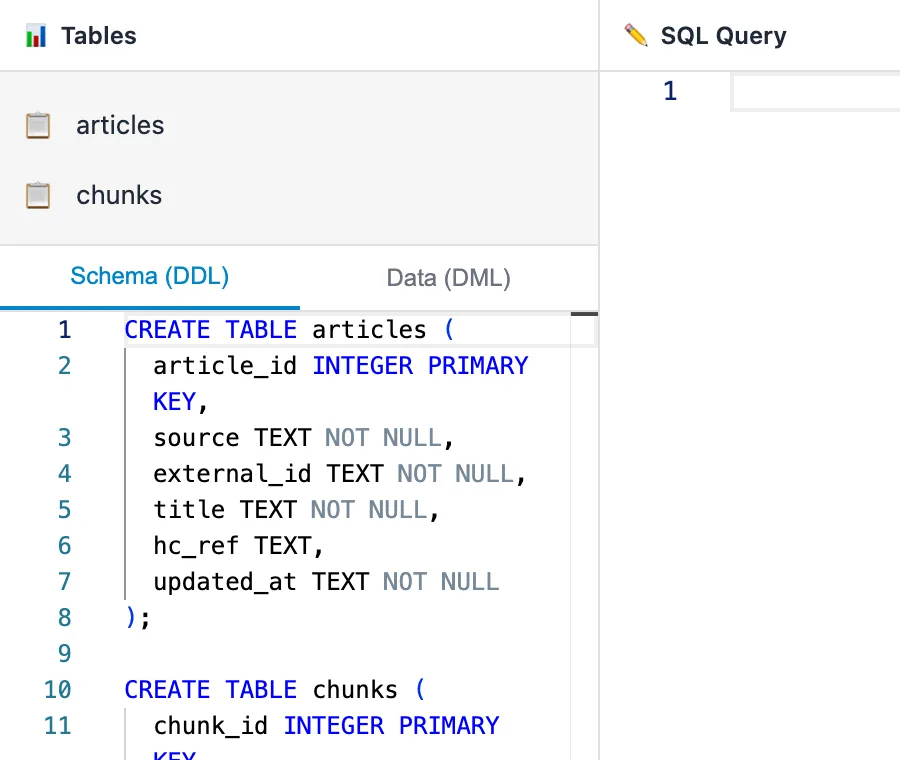
What a strong candidate did: Found in the data which articles were stale and why the refresh skipped them, sized how many answers were affected, and proposed a refresh that removes deleted articles as well as adding new ones.
How the decision gets made
With Gateway, each .NET candidate works on situations drawn from your job description: an overnight ingest into a relational database that misses and duplicates rows, a knowledge base that serves stale content, a handler that must survive repeated events. The work is done as a design, in SQL or in code, followed by a short written note. Your development manager reads a score and written feedback per skill, opens any submission read-only, and spends interview time only on candidates who handled the data and the failure cases properly.
See your next .NET developer at work before you meet them
Paste your job description and Gateway writes the assessment in about 5 to 10 minutes. Your team can edit every question before it goes out.
Questions
Can the assessment cover Azure and SQL Server as well as C# code?
Yes, when your job description includes them. A single assessment can combine code, SQL and a written design note, so you see the application and the data work together.
We are migrating from .NET Framework. Can the tasks test that?
Describe the migration in the job description and the situations will reflect it. Your team can also edit any task before sending, for example to name the parts of your system that are moving.
How is this different from hiring a C# developer on Gateway?
The tasks come from the role you describe. A .NET platform role usually brings in hosting, configuration, data access and deployment, while a role focused on the C# language may centre on code design and correctness.
Who decides whether a candidate goes forward?
Your team. Gateway gives a score, written feedback and a tier from 1 to 5, and shows whether the candidate meets your line. Your engineers can change any score before deciding.
Related