Hire a C# developer whose code is still correct under load
A C# developer is worth hiring when the code the developer writes behaves correctly with real concurrency, real data and real failures, and reads clearly to the next engineer. Most C# candidates know the syntax well, so the way to find the strong ones is to see each candidate write and fix C# for a real situation before the interview stage.
What the hiring manager needs from a C# developer
A C# developer may work on web services, desktop tools, integrations or game logic, but the hiring manager's concern is the same: does the code hold up? C# gives a lot of power through async/await, LINQ, generics and events, and each one can hide a bug that only appears in production.
An async call that freezes the application
Somewhere a developer called .Result on a Task, and under load the service or the desktop UI stops responding. A strong C# developer recognises the deadlock pattern, makes the call path async all the way through, and passes a CancellationToken so slow work can be stopped.
A LINQ query that runs in memory by accident
A query that looked like one database call pulls a whole table into memory because an IEnumerable slipped in where an IQueryable was expected. Knowing where a LINQ expression actually runs is a C#-specific skill that separates careful developers from fast ones.
Shared state touched from several threads
A cache held in a static Dictionary works until two requests update it together. The developer has to choose between a ConcurrentDictionary, a lock or an immutable approach, and explain the cost of each.
Null values that crash a customer flow
A NullReferenceException shows up in logs every day from a path nobody thought could be null. Turning on nullable reference types in older code, and fixing the warnings honestly rather than silencing them, is slow work that tells you a lot about a developer.
Where hiring a C# developer usually goes wrong
- Hiring on language features recited in interview
- Explaining the difference between a struct and a class, or what yield return does, is easy to prepare. It does not show whether the candidate notices that a disposable connection is never disposed in a loop that runs all day.
- Ignoring how candidates handle exceptions
- Empty catch blocks and catch-all handlers that log and continue are common in C# codebases. A short code task shows straight away whether a candidate lets real errors surface or hides them until the data is wrong.
- Over-valuing pattern vocabulary
- Some candidates describe repositories, factories and mediators fluently and then wrap a simple feature in five layers. The team that inherits the code pays for that, and only seeing the candidate's own code shows which kind of developer you are looking at.
Real tasks from a Gateway assessment
These come from a Gateway assessment for a backend engineer, with the employer’s name taken out. Gateway writes every assessment from your own job description, so the tasks your candidates get are built around your role.
Code, then a short written note
Payment webhook handler for invoice updates
A billing product for home-services businesses learns about each payment from a provider webhook. Some homeowners got two receipts for one payment, and some paid invoices still show as unpaid. The candidate owns the handler.
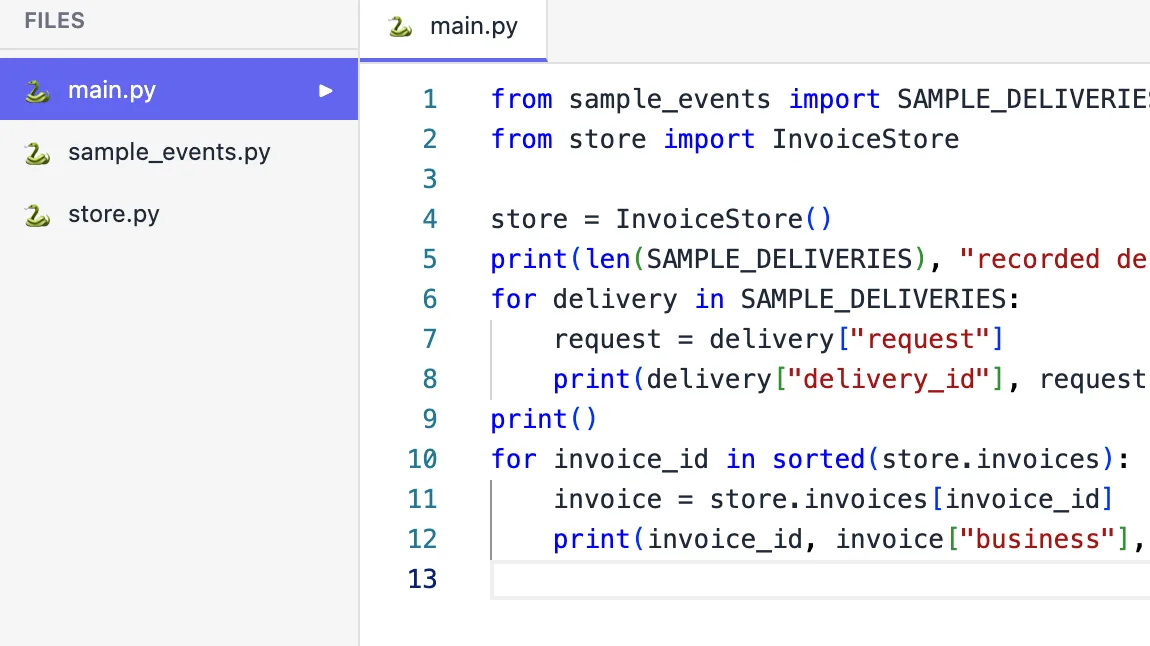
What a strong candidate did: Made the handler safe to receive the same event twice, ignored events that arrive out of order, and showed both reported bugs fixed with tests. The note told billing operations which past invoices to re-check.
SQL, then a written note
Stale answers from the support assistant’s knowledge base
An AI support assistant answers from help articles that a nightly job splits, embeds and stores. Customers are getting answers from articles that were changed or removed weeks ago.
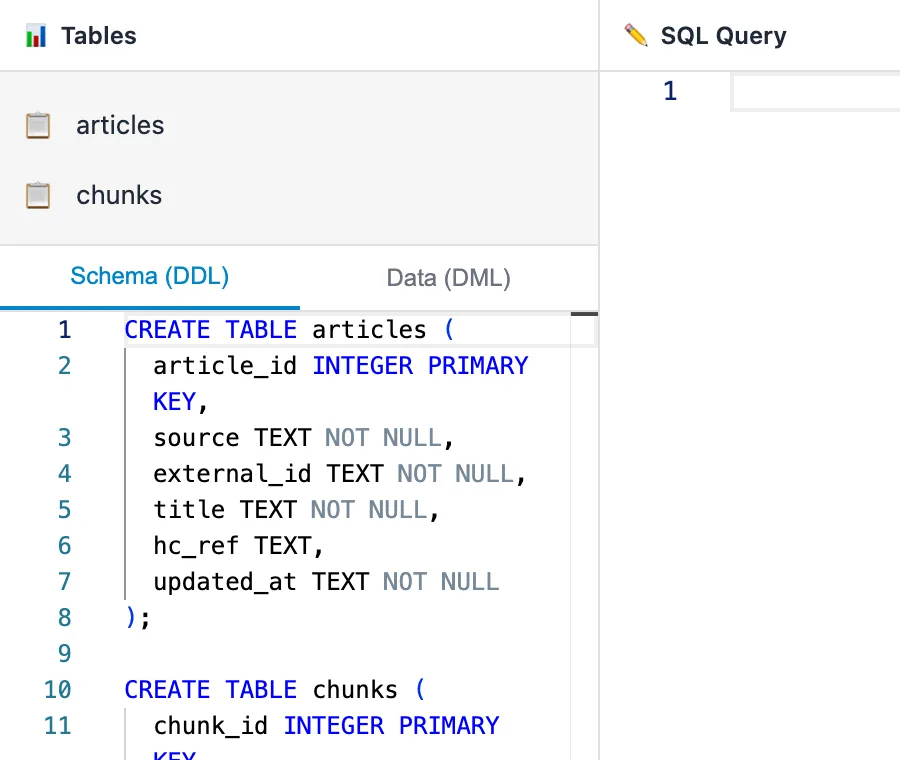
What a strong candidate did: Found in the data which articles were stale and why the refresh skipped them, sized how many answers were affected, and proposed a refresh that removes deleted articles as well as adding new ones.
How the decision gets made
With Gateway, each C# candidate solves situations taken from your job description, such as making a payment webhook handler safe against repeated and out-of-order events, written in a real code editor with tests and a short note. Where the role needs it, a second task asks for a design or a SQL investigation. The hiring manager sees each skill scored with written reasons, can open every line the candidate wrote, and invites only those whose code was correct and readable. Interviews then go deeper into choices already on the page.
See your next C# developer at work before you meet them
Paste your job description and Gateway writes the assessment in about 5 to 10 minutes. Your team can edit every question before it goes out.
Questions
Our C# work is desktop or Unity, not web APIs. Does this still fit?
The assessment is written from your job description, so the situations follow the kind of C# your team writes. Review the tasks before sending and change anything that does not match your product.
Can we see whether a candidate writes tests?
Yes. Candidates work in a code editor where tests are part of the task when your role expects them, and your engineers can open the submitted code read-only to see exactly what was tested.
How long does a C# assessment take to prepare?
Gateway drafts it from your job description in about 5 to 10 minutes. Your team then reads each question and edits whatever needs to change.
Do candidates need to install Visual Studio?
No. They need a laptop or desktop and the link you send. The work happens in the browser, and each step explains what it involves before the candidate accepts it.
Related