Hire a senior software engineer who decides well without being told how
A senior software engineer is worth the premium when a vague problem can be handed over and comes back solved, with the trade-offs written down and nothing left for the manager to clean up. Years on a resume do not show that, so the way to tell candidates apart is to see how each one scopes and designs a real, messy problem before any interview loop starts.
What the hiring manager needs from a senior software engineer
The word senior on a job description usually means one thing to the engineering manager: less supervision. The manager wants someone who takes an unclear request, chooses an approach, spots the risk nobody mentioned and finishes, while making the engineers around the work better through review and example.
A one-line ticket with a real deadline
Product writes that partner jobs are sometimes missing by morning and need fixing before the next release. Nobody has said whether to patch the import, rebuild it or change the partner contract. A senior engineer asks the few questions that matter, picks a path and says what it will not cover.
The production incident nobody else can explain
Something fails intermittently, the logs are noisy, and the on-call engineer has run out of ideas. The senior person narrows it down methodically, separates the cause from the noise and writes up what happened so the same incident is not debugged twice.
A quick fix that would cost more later
The fastest change works this week and makes the next few features harder. A senior engineer names that cost to the manager in plain terms, proposes the smallest change that avoids it, and accepts the quick fix openly when the business needs it.
Reviewing code that works but will hurt
A junior engineer's pull request passes tests and quietly duplicates state that will drift. The senior reviewer catches it, explains why in a way the junior engineer can reuse, and does not hold the change hostage to personal style.
Where hiring a senior software engineer usually goes wrong
- Treating years of experience as seniority
- Many years of repeating the first year produces a long resume and little judgement. The useful question is whether the candidate has owned ambiguous problems end to end, and that only shows when the candidate faces one.
- Rehearsed system design rounds
- Designing a famous social network on a whiteboard is a well-practised script, and strong performers have often studied the script. It rarely tests how the person handles your actual constraints: a fixed morning deadline, a partner API that changes data overnight, a database that cannot be taken offline.
- Title inflation from the last company
- Senior at one company is mid-level at another. A title earned in a small team with no production traffic is not the same as one earned owning incidents, and the resume line looks identical.
- Judging only the code
- Much of a senior engineer's value is in the written plan, the review comment and the incident note. Loops that score only working code miss whether the candidate can bring a team along.
Real tasks from a Gateway assessment
These come from a Gateway assessment for a backend engineer, with the employer’s name taken out. Gateway writes every assessment from your own job description, so the tasks your candidates get are built around your role.
A design on a whiteboard, then a written note
Nightly job ingestion from a partner scheduling API
Each night the product pulls changed jobs from a partner scheduling platform into PostgreSQL. At 06:00 a dispatch agent builds every business’s day plan from them, and dispatch teams start at 06:30. Jobs have been missing and duplicated.
What a strong candidate did: Designed an ingest that resumes from where it stopped, updates rather than duplicates, and finishes well before 06:00 with an alert if it will not. Named the one case that still needs a person to look.
SQL, then a written note
Stale answers from the support assistant’s knowledge base
An AI support assistant answers from help articles that a nightly job splits, embeds and stores. Customers are getting answers from articles that were changed or removed weeks ago.
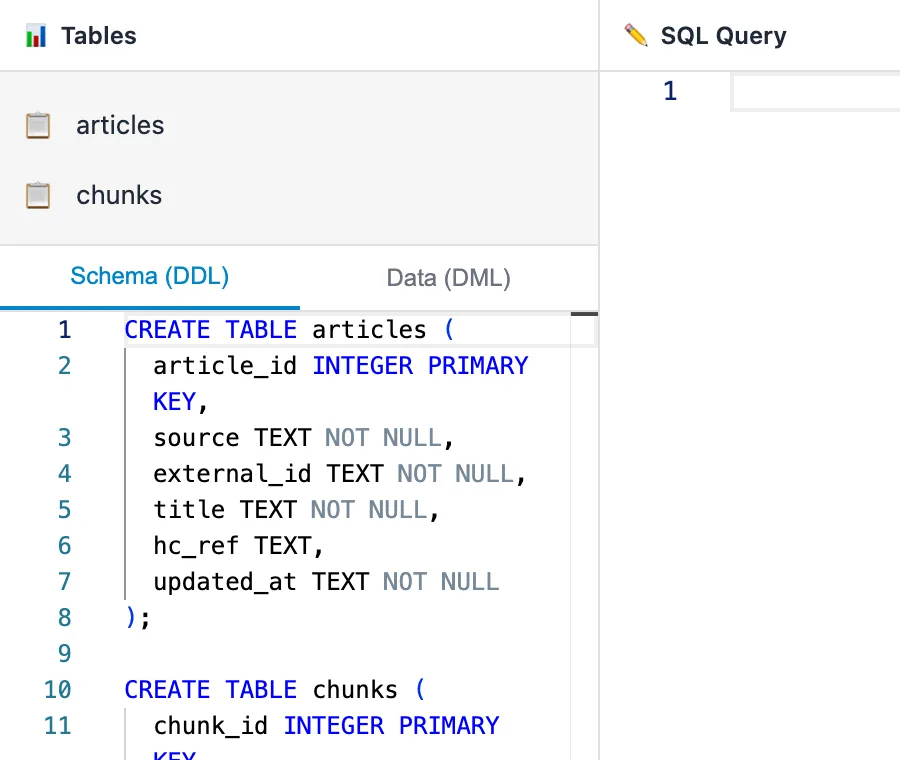
What a strong candidate did: Found in the data which articles were stale and why the refresh skipped them, sized how many answers were affected, and proposed a refresh that removes deleted articles as well as adding new ones.
Code, then a short written note
Payment webhook handler for invoice updates
A billing product for home-services businesses learns about each payment from a provider webhook. Some homeowners got two receipts for one payment, and some paid invoices still show as unpaid. The candidate owns the handler.
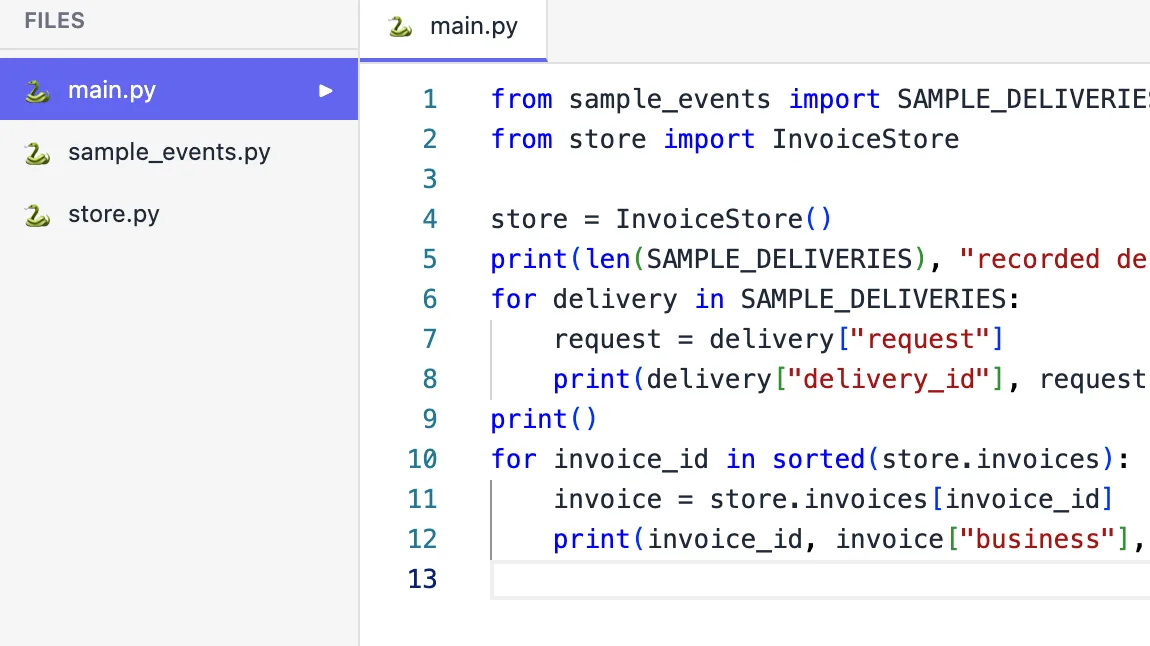
What a strong candidate did: Made the handler safe to receive the same event twice, ignored events that arrive out of order, and showed both reported bugs fixed with tests. The note told billing operations which past invoices to re-check.
How the decision gets made
With Gateway, senior software engineer candidates get situations written from your job description that start ambiguous on purpose: an ingest that must finish before the morning, stale data to trace in SQL, a webhook bug in code someone else wrote. Each candidate designs on a whiteboard, writes code and explains the reasoning in a note. The engineering manager reads scored feedback per skill, opens the actual design and code read-only, and spends the senior loop only on people whose judgement is already visible.
See your next senior software engineer at work before you meet them
Paste your job description and Gateway writes the assessment in about 5 to 10 minutes. Your team can edit every question before it goes out.
Questions
Can an assessment really show seniority, or only coding ability?
The situations are written to require choices: what to fix first, what to leave, what to warn the business about. Each skill gets a score with written feedback, so the hiring manager can see the reasoning behind each choice, not only whether the code ran.
Will senior candidates accept doing an assessment?
Each step says what it involves before the candidate accepts it, and the work looks like the job rather than a quiz. Candidates need a laptop or desktop and one link, and work in tools engineers already use: code, SQL, a whiteboard and written notes.
Can we use it alongside our existing system design interview?
Yes. Gateway decides who reaches that interview. Your engineers then discuss a design the candidate already produced for your kind of problem, which is a more useful conversation than a design drawn from nothing.
We expect senior engineers to use AI tools. Can the assessment allow that?
Yes. An AI-assisted assessment lets the candidate use an assistant, and your team sees how the candidate worked with it: what was accepted, what was questioned, what was rewritten.
Who makes the final call?
Your team. Gateway gives a tier from 1 to 5 and whether the candidate meets your line, and your engineers can change any score before deciding.
Related