Hire a fullstack developer who can take a feature from database to screen
A fullstack developer is hired to take a feature through every layer, the schema, the API and the screen, and ship it without handing pieces to three other people. Most candidates are stronger on one side, so the way to tell them apart is to see each one work real problems on both sides before your team spends time interviewing.
What the hiring manager needs from a fullstack developer
Companies hiring a fullstack developer are usually small product teams, or teams where one engineer owns a feature from start to finish. The engineering manager needs someone who can follow a bug from the browser into the database, ship a change that touches every layer, and roll it back cleanly if something looks wrong.
A bug that could be frontend or backend
Users see the wrong status on a record. It could be a duplicate webhook on the server, a stale cache in the API or a race in the UI. A good fullstack developer traces it through every layer instead of fixing the side the developer is more comfortable with.
A screen that got slow because of the query behind it
A dashboard list takes seconds to load. The fix is in the SQL and an index, and the change must not alter what users see. The developer proves the results are identical and plans a rollout that can be reversed in minutes.
A small feature that touches everything
Product asks for one new field on a form. It needs a migration, validation on the server, an API change and a UI update with loading and error states. The developer ships it as one coherent change with tests at the layers that matter.
A search page that shows the wrong results
Typing fast leaves results that do not match the box, and sometimes the page shows a loading message forever. The developer finds the out-of-order responses and the unhandled failure, and gives the page a clear error state.
Where hiring a fullstack developer usually goes wrong
- Accepting a frontend developer with a tutorial backend
- Many fullstack resumes are frontend experience plus a side project API. The gap shows the first time the candidate has to write a migration on a large table or make an endpoint safe to retry.
- Or a backend developer who avoids the UI
- The reverse is just as common: solid server code and screens with no loading or error handling. Fullstack hiring has to check both sides, or the team has hired half the role.
- Two separate interviews that never connect
- A backend round and a frontend round, each with its own interviewer, rarely test whether the candidate can follow one problem across the boundary. That crossing is what the role exists for.
- Judging on a polished side project
- A full app built over months shows persistence. It does not show how the candidate debugs someone else's code across layers under a deadline.
Real tasks from a Gateway assessment
These come from a Gateway assessment for a full stack developer, with the employer’s name taken out. Gateway writes every assessment from your own job description, so the tasks your candidates get are built around your role.
Code, then a short note
Status webhooks: duplicate changes in staging
A partner job board posts application status events to a webhook. QA found some applications showing the same status change twice in their history. The candidate owns the endpoint and has to make it safe to ship.
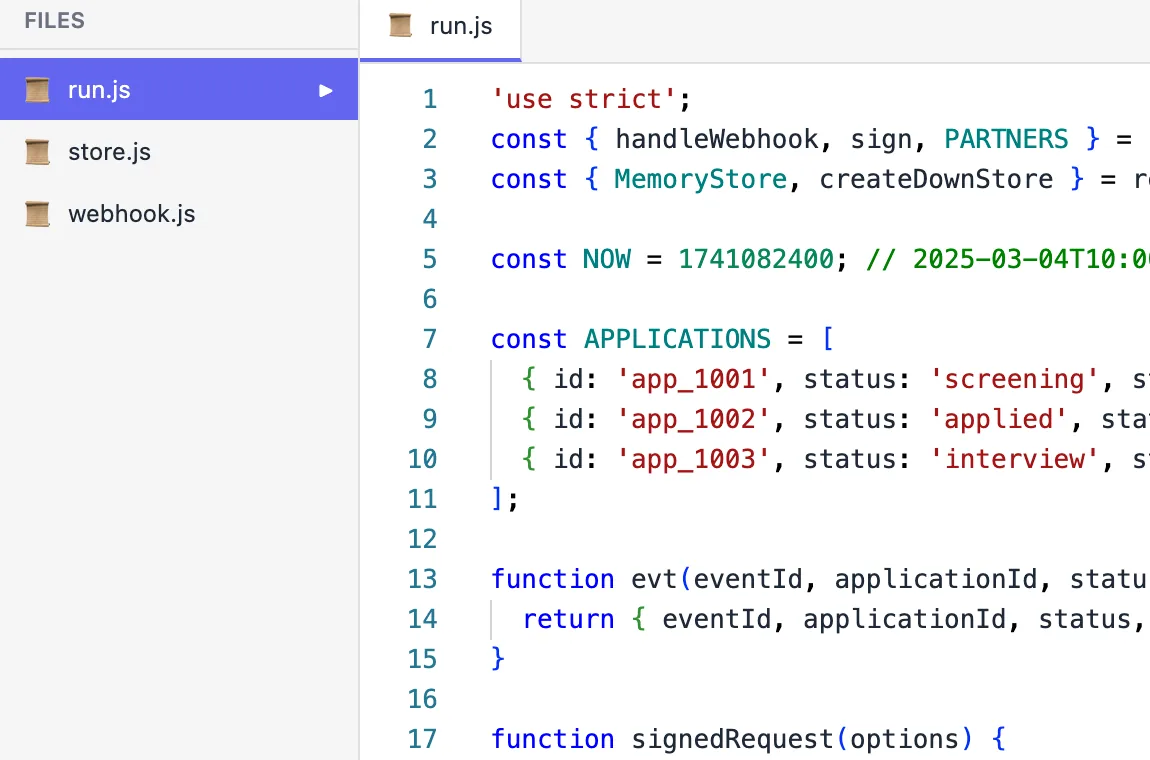
What a strong candidate did: Made each event count once even when the partner retries, rejected events that would move a status backwards, and added tests for the exact sequence QA reported.
SQL, then a written plan
A slow dashboard query and a safe rollout
A recruiter dashboard list has become slow on the production database. The candidate owns the query the API runs and has to speed it up without changing what recruiters see.
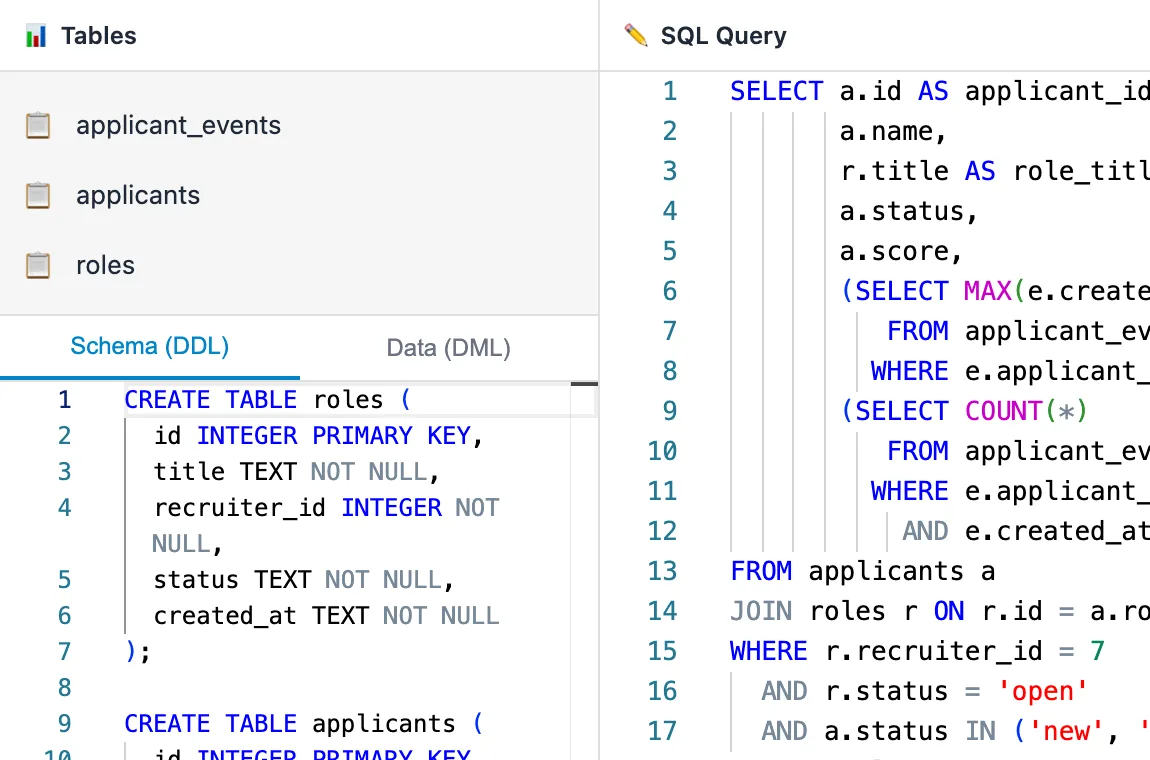
What a strong candidate did: Rewrote the query and proposed the index it needs, showed the results are identical, and planned a rollout that can be turned back in minutes if something looks wrong.
Web code in the browser
Search results that don’t match the search box
QA reports that typing fast in an applicants page search leaves results that have nothing to do with the text, and sometimes the page says “Loading…” forever.
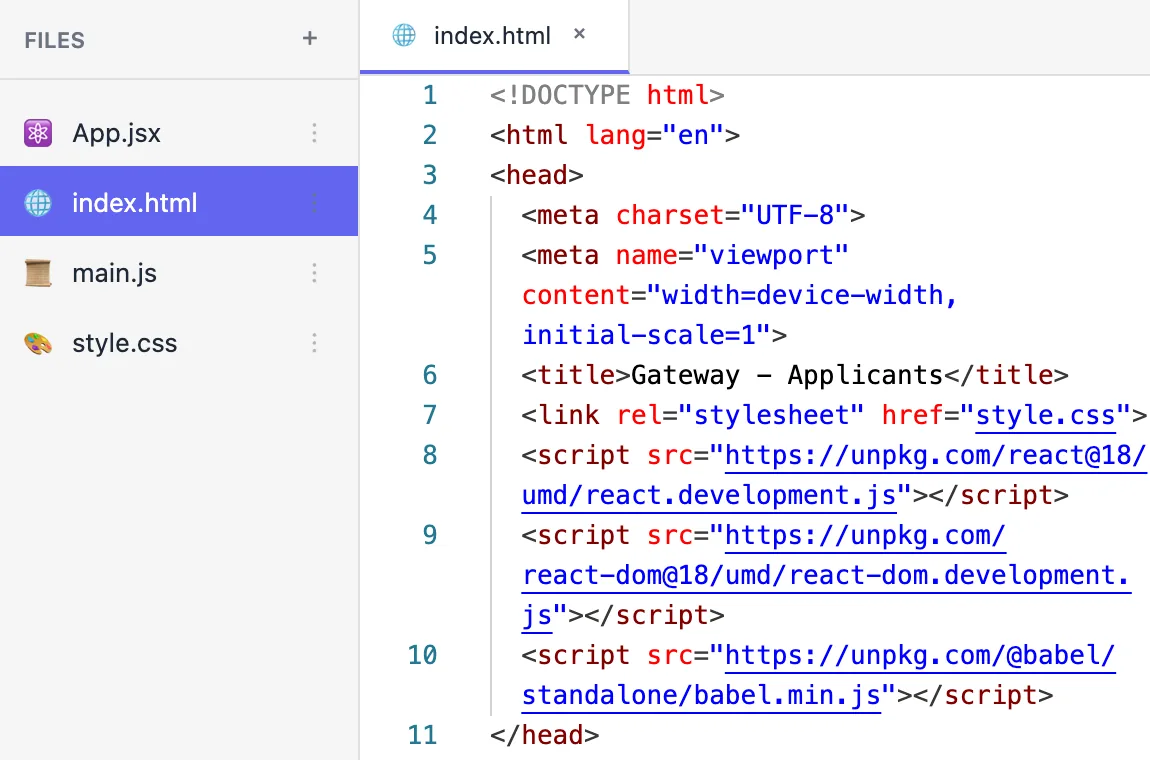
What a strong candidate did: Traced both bugs to responses arriving out of order and an unhandled failure, fixed them so the list always matches the box, and gave the page a clear error state.
How the decision gets made
With Gateway, fullstack developer candidates work through situations written from your job description that cross layers: a status webhook that records duplicate changes, a slow dashboard query with a safe rollout plan, and a search page that falls out of step with its input. They write server code, SQL and web code in the browser, then a short note. The engineering manager sees scored feedback for each skill, opens every piece of work read-only, and meets only candidates who were strong on both sides.
See your next fullstack developer at work before you meet them
Paste your job description and Gateway writes the assessment in about 5 to 10 minutes. Your team can edit every question before it goes out.
Questions
Can one assessment cover both frontend and backend?
Yes. Candidates can work in code, SQL and web code in the browser with frontend frameworks ready to use, all within one assessment written from your job description.
Will it show which side a candidate is weaker on?
Each skill gets its own score and written feedback, so the hiring manager can see, for example, strong SQL and weak error handling in the UI, and decide whether that fits the team.
How long does it take us to set up?
About 5 to 10 minutes from a job description. Your team can read and change every question before sending one link to each candidate.
Can candidates use AI tools?
In an AI-assisted assessment, yes, and your team sees how each candidate worked with the assistant. A standard assessment keeps the work to the candidate.
Does it replace our technical interviews?
It decides who gets them. Your engineers then talk through work the candidate already did on your kind of feature.
Related