Hire a Salesforce developer who keeps the org safe to change
A Salesforce developer has to add features to an org that sales, service and finance use every hour, without breaking a flow, a trigger or a governor limit along the way. Certifications and Trailhead badges look alike across applicants, so the reliable way to tell them apart is to see each candidate fix real Apex and integration problems before your team books interviews.
What the hiring manager needs from a Salesforce developer
The person who owns your Salesforce org is usually carrying years of triggers, flows and managed packages that nobody fully documented. That owner needs a developer who can change one part of it without a sales rep losing a quote or a renewal dropping out of the pipeline report.
A trigger that fails on bulk loads
A lead import of a few thousand records hits governor limits because a trigger queries inside a loop. A capable Salesforce developer bulkifies the logic, adds a test that loads records in volume, and checks what else fires on the same object before deploying.
Duplicate payments posted from an outside system
The billing platform posts payment updates to Salesforce through an API, and some opportunities now show two payments or none. The developer makes the integration safe against retries and out-of-order messages, then tells the revenue team which records to correct.
Flows and Apex fighting over the same field
An admin built a record-triggered flow last year, and a newer Apex class updates the same field. The developer works out the order of execution, decides where the logic should live, and leaves one clear owner for it.
A release that goes out while the sales floor is working
Changes move from a sandbox to production during the working day. Test classes that assert real behaviour, a rollback plan and a clean pipeline separate a routine release from a weekend spent fixing opportunity data.
Where hiring a Salesforce developer usually goes wrong
- Counting certifications
- Platform Developer certificates show that someone passed an exam on Apex and the platform. They do not show whether the candidate spots a SOQL query inside a loop, or knows what a sharing rule change will do to the report the sales head opens every Monday.
- Treating admin experience as development
- Many applicants have built flows and page layouts for years and describe it as development. That work matters, but an org with heavy integrations needs someone who writes and tests Apex, handles callouts and reasons about what happens inside one transaction.
- Asking platform trivia in interviews
- Questions about the order of execution or the exact limit values reward memory. The skill your org needs is applying that knowledge to a failing deployment or a data load that stopped halfway through.
- Ignoring the state the candidate leaves the org in
- A developer who ships a fix with coverage padded by tests that assert nothing makes every later release riskier. You only see this by reading code the candidate wrote, which an interview rarely does.
Real tasks from a Gateway assessment
These come from a Gateway assessment for a backend engineer, with the employer’s name taken out. Gateway writes every assessment from your own job description, so the tasks your candidates get are built around your role.
Code, then a short written note
Payment webhook handler for invoice updates
A billing product for home-services businesses learns about each payment from a provider webhook. Some homeowners got two receipts for one payment, and some paid invoices still show as unpaid. The candidate owns the handler.
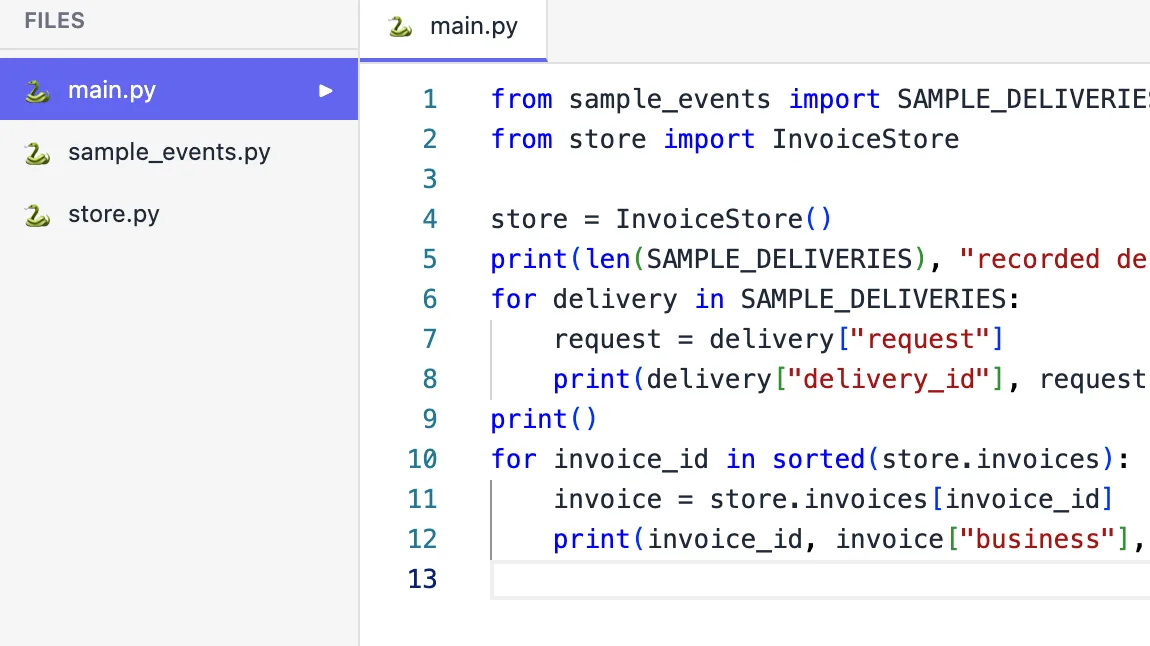
What a strong candidate did: Made the handler safe to receive the same event twice, ignored events that arrive out of order, and showed both reported bugs fixed with tests. The note told billing operations which past invoices to re-check.
SQL, then a written note
Stale answers from the support assistant’s knowledge base
An AI support assistant answers from help articles that a nightly job splits, embeds and stores. Customers are getting answers from articles that were changed or removed weeks ago.
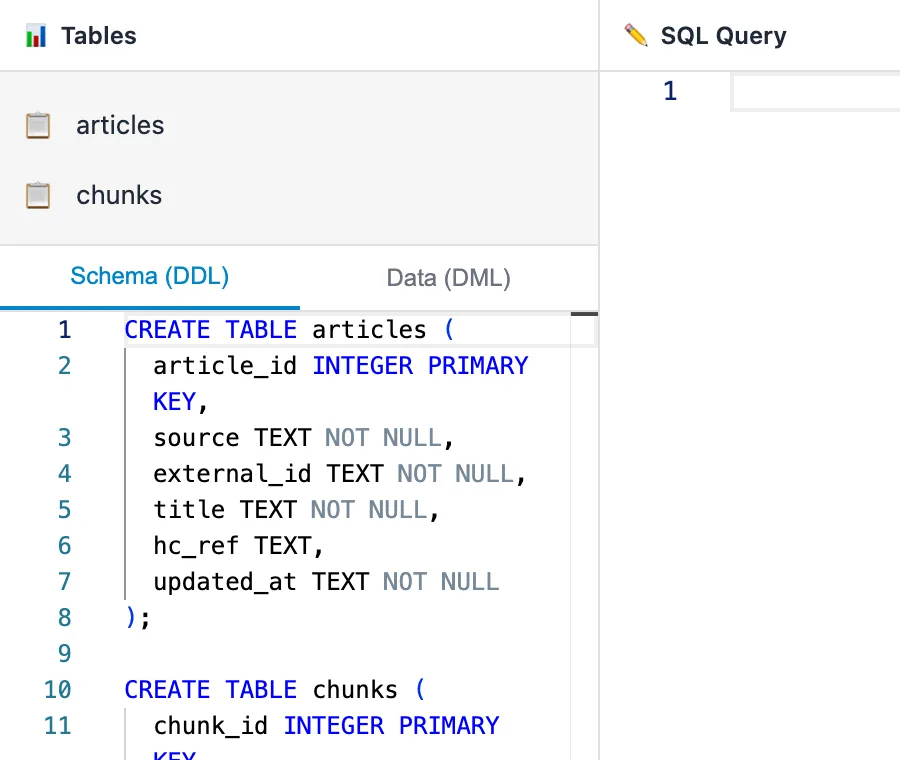
What a strong candidate did: Found in the data which articles were stale and why the refresh skipped them, sized how many answers were affected, and proposed a refresh that removes deleted articles as well as adding new ones.
How the decision gets made
With Gateway, each Salesforce developer candidate works through situations written from your job description, such as an integration that posts duplicate updates or a nightly data job that must not drop records, in a code editor and a short written note. Your Salesforce lead sees a score and written feedback for each skill, opens the candidate's code read-only, and moves forward only the developers whose fixes hold up under volume and retries. The interview that follows can go straight to your org: its packages, its flows, and the release process the new developer will join.
See your next Salesforce developer at work before you meet them
Paste your job description and Gateway writes the assessment in about 5 to 10 minutes. Your team can edit every question before it goes out.
Questions
Can the tasks reflect our Apex code and integrations rather than generic programming?
Gateway writes the assessment from your job description, so if the role mentions Apex, Lightning Web Components or a billing integration, the situations are built around that kind of work. Your team reads every question and can edit it before any candidate sees it.
We also need someone who can talk to sales operations. Can that be tested?
Yes. Alongside code, a task can ask for a written note to a sales operations or revenue audience explaining what broke and which records to check. Many Salesforce problems end with a message like that, so it is worth seeing before the hire.
How much of our Salesforce lead's time does setup take?
Generating the assessment from a job description takes about 5 to 10 minutes, plus whatever time your lead wants to spend reviewing the questions. Candidates then get one link and a deadline.
How do we know the candidate did the work alone?
Monitoring is off unless you switch it on, with four levels from activity only up to camera on, and a replay of the test. Gateway does not label anyone as cheating; anything unusual is for your team to review.
Does this replace the conversation with our architect?
No. It decides which candidates are worth that conversation, and gives your architect the code each developer actually wrote to discuss.
Related