Hire an Elasticsearch engineer who makes search results right and the cluster stable
An Elasticsearch engineer is hired so that users find what they search for, the index stays in step with the source data, and the cluster stays green under load. Plenty of candidates have run a search query; far fewer can fix relevance, mappings and shard layout, so the way to tell them apart is to see each one work a real search problem before interviews.
What the hiring manager needs from an Elasticsearch engineer
Search usually ends up with one Elasticsearch engineer after product, support and sales have all complained about it. The lead hiring for this seat needs someone who can improve what users see, keep the index accurate, and run the cluster without surprises during a reindex.
Users search and the right result is on page three
Searching a product name returns accessories first. The Elasticsearch engineer looks at the analyzer, the field boosts and the query type, builds a small set of real queries with expected results, and measures each change against it instead of tuning by feel.
The index no longer matches the database
Deleted records still show in search and recent edits are missing. The engineer traces how documents reach the index, finds where deletes are not propagated or updates are dropped, and designs a sync that can be replayed safely.
A mapping change that needs a full reindex
A field was mapped as text when it should have been a keyword, and aggregations on it are wrong. The engineer creates a new index with the right mapping, reindexes in the background, and switches an alias so search never goes down.
Cluster health turns yellow at peak
Heap pressure rises, some shards are unassigned and queries slow down. The engineer checks shard counts and sizes, looks for expensive queries such as deep pagination or leading wildcards, and fixes the layout instead of adding nodes blindly.
Where hiring an Elasticsearch engineer usually goes wrong
- Hiring on the stack name, not on relevance
- Having set up logging with an ELK stack is different from tuning product or document search. If your need is relevance, test relevance, because cluster operations alone will not show it.
- Forgetting that Elasticsearch is not the source of truth
- Candidates who write to the index as if it were the primary store leave you unable to rebuild it. Ask how the index would be recreated from scratch, and the strong candidates answer in detail.
- Measuring speed and ignoring wrong answers
- A search that returns quickly but ranks the wrong documents first costs conversions and support time. A useful test asks the candidate to judge result quality, not only latency.
Real tasks from a Gateway assessment
These come from a Gateway assessment for a backend engineer, with the employer’s name taken out. Gateway writes every assessment from your own job description, so the tasks your candidates get are built around your role.
SQL, then a written note
Stale answers from the support assistant’s knowledge base
An AI support assistant answers from help articles that a nightly job splits, embeds and stores. Customers are getting answers from articles that were changed or removed weeks ago.
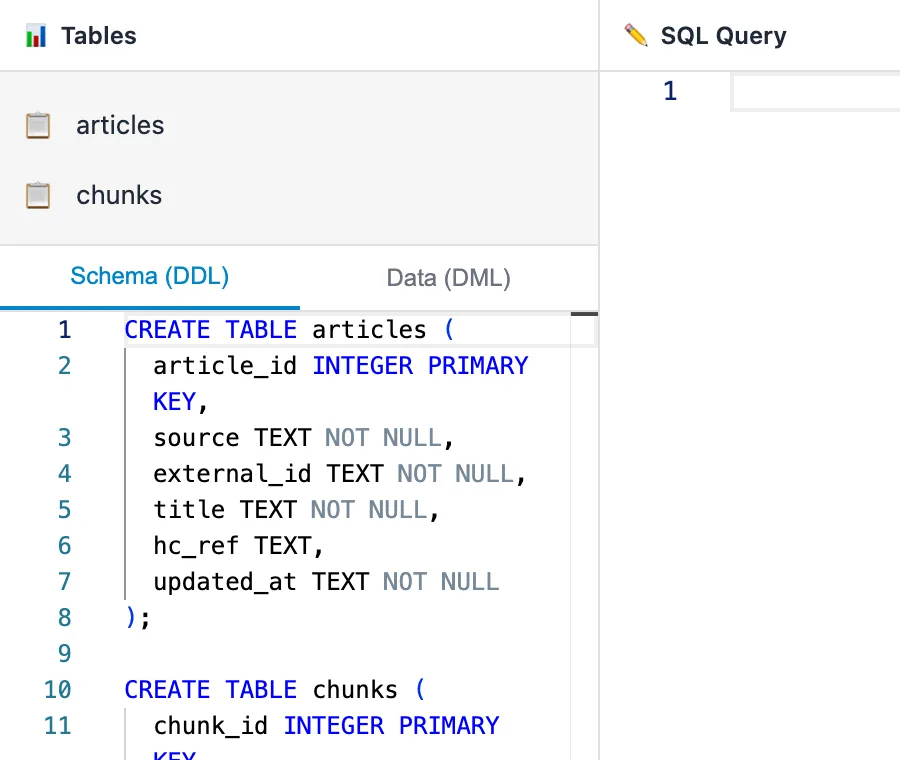
What a strong candidate did: Found in the data which articles were stale and why the refresh skipped them, sized how many answers were affected, and proposed a refresh that removes deleted articles as well as adding new ones.
A design on a whiteboard, then a written note
Nightly job ingestion from a partner scheduling API
Each night the product pulls changed jobs from a partner scheduling platform into PostgreSQL. At 06:00 a dispatch agent builds every business’s day plan from them, and dispatch teams start at 06:30. Jobs have been missing and duplicated.
What a strong candidate did: Designed an ingest that resumes from where it stopped, updates rather than duplicates, and finishes well before 06:00 with an alert if it will not. Named the one case that still needs a person to look.
How the decision gets made
In Gateway, Elasticsearch engineer candidates work on situations written from your job description, for example finding which stale documents a nightly refresh skipped, or designing an ingest that can resume without duplicates. They investigate in SQL or code, sketch the pipeline on a whiteboard, and write a note on what they would change and how they would check it. The hiring manager reads scores and written feedback per skill, opens the work read-only, and interviews only engineers who fixed the cause.
See your next Elasticsearch engineer at work before you meet them
Paste your job description and Gateway writes the assessment in about 5 to 10 minutes. Your team can edit every question before it goes out.
Questions
Can the test be about our kind of search, for example products or documents?
Gateway writes the assessment from your job description, so the situations follow what your users search for. Your team can rewrite any of them before it goes out.
Does the assessment cover running the cluster as well as relevance?
It covers what the role needs. If the seat owns both, include a relevance situation and an operations one, and each skill is scored on its own with written feedback.
Can candidates use AI tools, as they would at work?
With an AI-assisted assessment the candidate may use an assistant, and your team sees how the candidate worked with it, such as whether a suggested query was tested against real examples.
How long does it take to set up?
About 5 to 10 minutes to write it from your job description, plus whatever time your team spends reading and editing the questions before sending.
Related