Hire a GraphQL developer whose schema stays fast as clients ask for more
A GraphQL developer designs a schema that clients can rely on for years and resolvers that stay fast whatever shape of query arrives. Listing Apollo on a resume says little about either, so the way to tell candidates apart is to see each one handle a real slow query and a real data problem before your team interviews.
What the hiring manager needs from a GraphQL developer
Teams hiring a GraphQL developer usually have a GraphQL layer between several clients and a set of services or databases, often with Apollo Server or a similar library, and sometimes a federated graph across teams. The API lead needs someone who designs the schema for the clients' needs and keeps the resolvers from turning one query into hundreds of database calls.
A query that fans out into hundreds of database calls
A list of items with nested authors and comments takes seconds, because each nested field runs its own query. A good GraphQL developer batches loads with DataLoader or a joined query, and confirms the response is identical before and after.
A field that some users must not see
A sensitive field was added to a shared type and is now reachable through a path nobody checked. The developer moves the authorisation into the resolver or the business layer, so access is enforced however the query reaches the field.
Changing the schema without breaking clients
Mobile apps in the field still request an old field. The developer adds the replacement, marks the old field deprecated with a reason, watches usage, and removes it only once clients have moved.
A client sending a query that is too expensive
A deeply nested or very wide query can take the service down. The developer adds depth or cost limits and pagination on lists, and returns errors a client team can act on.
Where hiring a GraphQL developer usually goes wrong
- Hiring on the client library
- Writing Apollo Client queries in a frontend is a different skill from designing a schema and resolvers. Resumes often merge the two, and the team discovers the difference at the first slow query.
- Mirroring the database as the schema
- Candidates who generate the schema straight from tables produce an API shaped like storage, not like the product. Interviews rarely ask for schema design, so the habit goes unnoticed until clients complain.
- Never testing performance
- The N+1 problem is a familiar GraphQL failure in production and is rarely tested in interviews. A candidate who can recite it may still write resolvers that cause it.
- Skipping authorisation
- In GraphQL, the same data is reachable through many paths. A candidate who checks permissions only at the top-level query leaves gaps that a code review of a single resolver will not catch.
Real tasks from a Gateway assessment
These come from a Gateway assessment for a full stack developer, with the employer’s name taken out. Gateway writes every assessment from your own job description, so the tasks your candidates get are built around your role.
SQL, then a written plan
A slow dashboard query and a safe rollout
A recruiter dashboard list has become slow on the production database. The candidate owns the query the API runs and has to speed it up without changing what recruiters see.
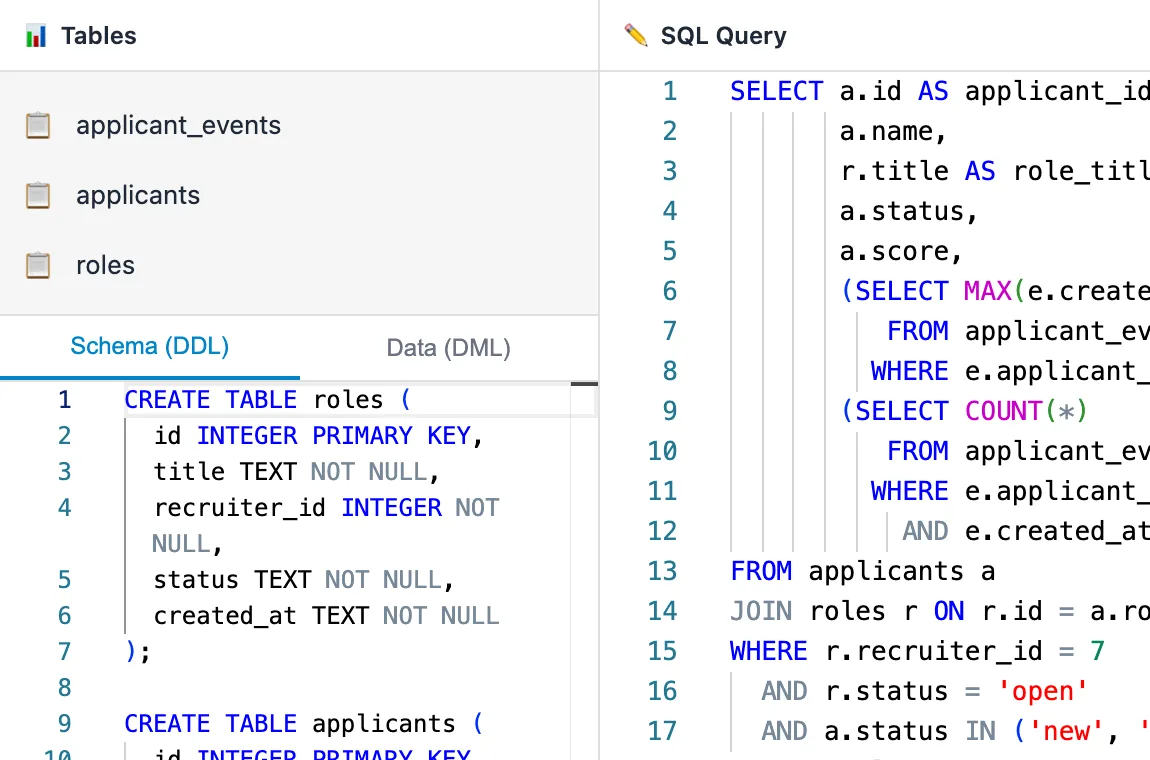
What a strong candidate did: Rewrote the query and proposed the index it needs, showed the results are identical, and planned a rollout that can be turned back in minutes if something looks wrong.
Code, then a short note
Status webhooks: duplicate changes in staging
A partner job board posts application status events to a webhook. QA found some applications showing the same status change twice in their history. The candidate owns the endpoint and has to make it safe to ship.
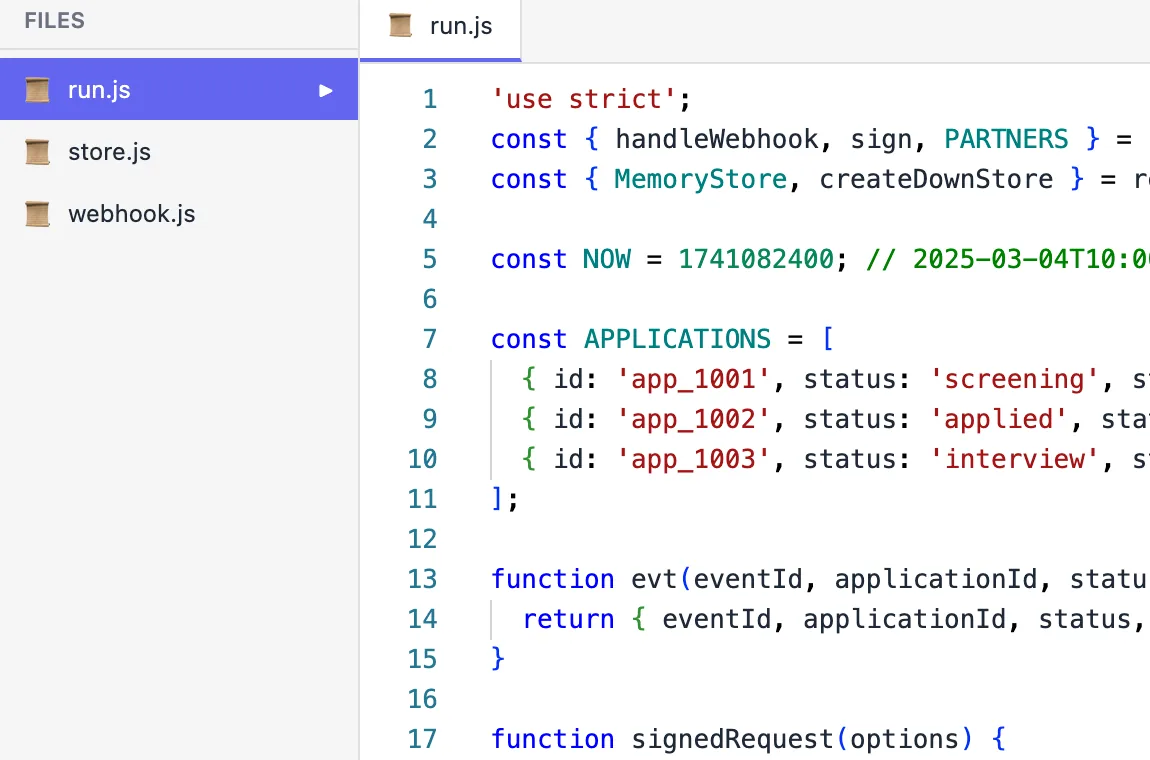
What a strong candidate did: Made each event count once even when the partner retries, rejected events that would move a status backwards, and added tests for the exact sequence QA reported.
How the decision gets made
With Gateway, GraphQL developer candidates work through situations written from your job description, such as a slow dashboard query that needs a fix and a safe rollout, or a webhook endpoint that records the same status change twice. Candidates work in SQL, code and a written plan. The API lead reads a score and written feedback per skill, opens the candidate's queries and code read-only, and interviews only the people who fixed the performance problem without changing what clients receive.
See your next GraphQL developer at work before you meet them
Paste your job description and Gateway writes the assessment in about 5 to 10 minutes. Your team can edit every question before it goes out.
Questions
Can the assessment focus on our GraphQL server and schema?
Yes. Gateway writes it from your job description, so the situations use the server library, data sources and federation setup you describe. Your team reads and edits every question before it goes out.
Will it test schema design or only resolvers?
Both, if the role needs both. A situation can ask for a schema change with a deprecation plan as well as a resolver fix, and each skill is scored with written feedback.
Our GraphQL developer also works on the React client. Can we include that?
Yes. Candidates can work in web code in the browser, with frontend frameworks ready to use, in the same assessment as the server tasks.
How long does setup take?
About 5 to 10 minutes from a job description. Then send each candidate one link with a deadline.
Who decides who moves forward?
Your team. Gateway gives a tier from 1 to 5 and whether each candidate meets your line, and any score can be changed before the decision.
Related