Hire a cybersecurity specialist who can cover the whole estate
A cybersecurity specialist is often the one person a company relies on for security across laptops, email, identity, cloud and suppliers at once, so the hire has to choose well with limited time and budget. Breadth on a resume is easy to claim; the way to tell candidates apart is to see how each one ranks real risks and argues a case to a finance leader before anyone interviews.
What the hiring manager needs from a cybersecurity specialist
Companies hiring a cybersecurity specialist rarely have a large security team behind the role. The IT head or CTO needs one person who keeps phishing, lost laptops, stale accounts and supplier questionnaires under control, says clearly which risk to accept and which to fix, and does it on a budget nothing like an enterprise security department.
A phishing email that several staff opened
Finance forwards a convincing invoice email that a handful of people clicked. The specialist works out who entered a password, resets those accounts and revokes sessions, checks mailboxes for forwarding rules the attacker added, and sends staff a short, calm note on what to watch for.
Laptops and accounts nobody has audited
Disk encryption, screen lock and patch levels vary across the fleet, and some former contractors still have email. The specialist sets a baseline through the device management tool, closes the stale accounts and keeps proof that both were done.
A supplier security questionnaire with a deadline
A large customer sends a long questionnaire before renewal. The specialist answers what is true today, flags the gaps honestly instead of overstating controls, and turns the gaps into a short plan the CTO can stand behind.
A budget conversation with leadership
The CFO asks whether the company really needs a new email filtering product or a managed detection service. The specialist explains the risk in money and disruption, offers a cheaper option where one exists, and accepts a no on the items that can wait.
Where hiring a cybersecurity specialist usually goes wrong
- Expecting deep expertise in one narrow area
- Despite the title, this role usually needs range more than depth. A candidate strong only in malware analysis or only in network defence may struggle when the same week brings a phishing incident, an audit request and a firewall change.
- Ignoring how the candidate talks to non-technical leaders
- Most decisions the specialist influences are made by people outside IT. A candidate who can describe a risk only in CVE identifiers loses the budget argument, and the risk stays open.
- Taking a long product list at face value
- Firewalls, EDR, SIEM and DLP products appear on the same resumes. Whether the candidate configured and tuned them, or only saw a console once, shows up only when the candidate has to make a decision with them.
- Never testing prioritisation
- Every company has more gaps than one person can close. A specialist who treats every finding as urgent burns out within a year and teaches the business to stop listening.
Real tasks from a Gateway assessment
These come from a Gateway assessment for a cybersecurity analyst, with the employer’s name taken out. Gateway writes every assessment from your own job description, so the tasks your candidates get are built around your role.
A spreadsheet and a chat with the CFO
Audit window decision across ISO 27001, SOC 2 and GDPR
A customer renewal requires a SOC 2 Type II report by a fixed date, and the CFO wants the audit to start on time. Some controls are not ready.
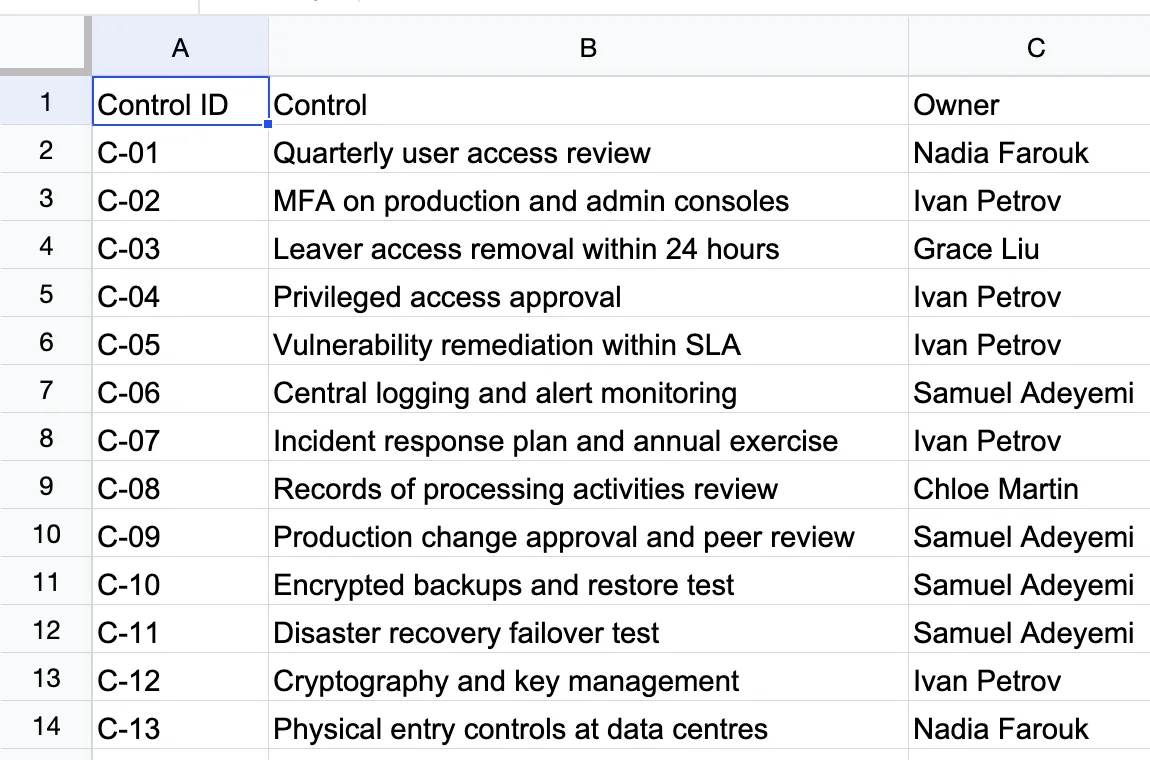
What a strong candidate did: Showed which gaps block the audit and which do not, proposed a start date that still meets the renewal, and held the line on the controls that cannot be skipped.
A spreadsheet, then a written recommendation
Vulnerability triage under a payments change freeze
A penetration test and weekly scans have been merged into one list of open findings. Payments systems are under a change freeze, and the CISO must sign a remediation recommendation before the next change board.
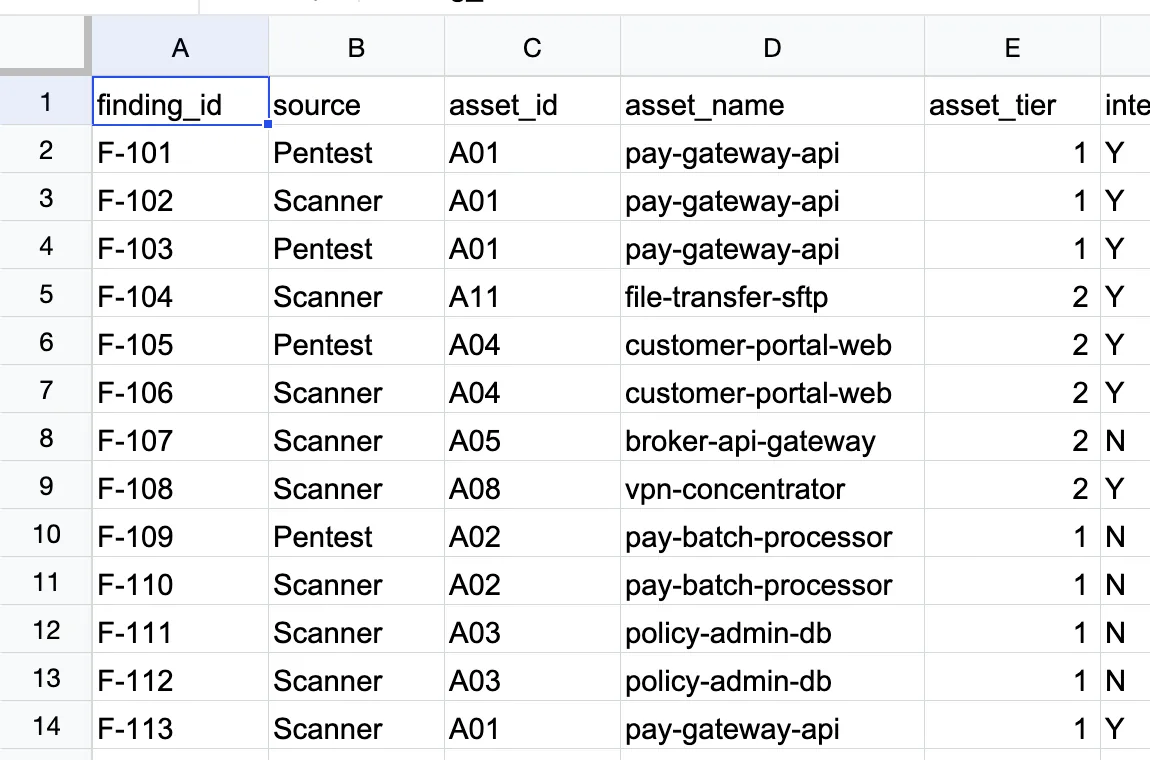
What a strong candidate did: Ranked findings by real exposure rather than scanner score, named the few that justify an exception to the freeze, and wrote the recommendation the CISO could sign.
How the decision gets made
In Gateway, each cybersecurity specialist candidate works through situations drawn from your job description: an audit window with some controls not ready and a CFO pressing for a start date, and a merged findings list that has to be ranked before a change board. The candidate works in a spreadsheet and holds a chat with an AI finance leader who pushes back the way your CFO would. Your IT head sees each skill scored with its reasoning, reads the chat and the ranking read-only, and interviews only the specialists who held firm on what matters and gave ground on what does not.
See your next cybersecurity specialist at work before you meet them
Paste your job description and Gateway writes the assessment in about 5 to 10 minutes. Your team can edit every question before it goes out.
Questions
We have no security team yet. Does Gateway suit a first security hire?
Yes. The assessment is written from your own job description, so it reflects the mix of IT and security work your specialist will actually do. Your team can edit any task before it goes out, including the systems and suppliers it mentions.
Can the assessment include a conversation with a stakeholder?
Yes. A candidate can hold a chat or a call with an AI stakeholder who questions cost and timing the way a real finance or operations leader would. You read the whole exchange alongside the scored work.
What do we get back for each candidate?
A score and written feedback for each skill, a tier from 1 to 5, and whether the candidate meets the line you set. Your team can change any score, and the decision stays with you.
Can candidates complete it on a phone?
No. Candidates need a laptop or desktop and one link. Each step tells the candidate what it involves before the candidate accepts it, so nobody is surprised halfway through.
Related