Hire a penetration tester whose findings your engineers can fix
A penetration tester earns the role by finding the weaknesses an attacker would really use, proving them inside the agreed scope, and writing a report that engineers can act on. Tool fluency and capture-the-flag ranks are common, so the way to tell candidates apart is to see how each one separates real exposure from scanner output and explains it, before your team spends hours on interviews.
What the hiring manager needs from a penetration tester
Whether the tester joins an internal red team or runs engagements for clients, the person managing the work needs findings that hold up. A false positive in a client report costs credibility; a missed chain of small issues that ends in account takeover costs far more.
A scope with awkward boundaries
The rules of engagement exclude production payments but include a staging copy that shares a login service. The tester respects the boundary exactly, notices when a finding crosses it, and stops to ask rather than carrying on.
Scanner output that looks alarming
An automated scan flags dozens of high-severity items on a web application. A good tester confirms which ones are exploitable in this setup, discards the rest with a reason, and spends the saved time on logic flaws a scanner cannot see, such as reading another customer's records by changing an ID.
Several low findings that add up
A verbose error message, a weak password reset flow and a missing rate limit each look minor. The tester who chains them into a working takeover, and rates the chain rather than the parts, changes what the client fixes first.
A report read by two audiences
Executives read the summary and decide budget; developers read the detail and write the fix. The tester writes both: a plain statement of business risk at the top, and reproducible steps with a specific remediation for each finding below it.
Where hiring a penetration tester usually goes wrong
- Hiring on certification acronyms alone
- An offensive security certification proves the candidate passed a lab exam. It says little about report quality, scope discipline, or how the candidate behaves when a client's system starts to fall over mid-test.
- Interviewing only on exploitation
- Asking how to exploit a well-known vulnerability checks recall. Most of an engagement's value sits in deciding what to test, what to ignore and how to describe the impact, which few interview loops touch.
- Not reading anything the candidate wrote
- Teams often hire on a technical conversation and discover the report problem after the first engagement goes out. A report that misrates severity or gives vague fixes reaches the client with your name on the cover.
- Accepting generic severity
- A tester who rates everything critical makes the remediation team ignore the list. Severity has to reflect this system's exposure and compensating controls, not the default score printed next to a CVE.
Real tasks from a Gateway assessment
These come from a Gateway assessment for a cybersecurity analyst, with the employer’s name taken out. Gateway writes every assessment from your own job description, so the tasks your candidates get are built around your role.
A spreadsheet, then a written recommendation
Vulnerability triage under a payments change freeze
A penetration test and weekly scans have been merged into one list of open findings. Payments systems are under a change freeze, and the CISO must sign a remediation recommendation before the next change board.
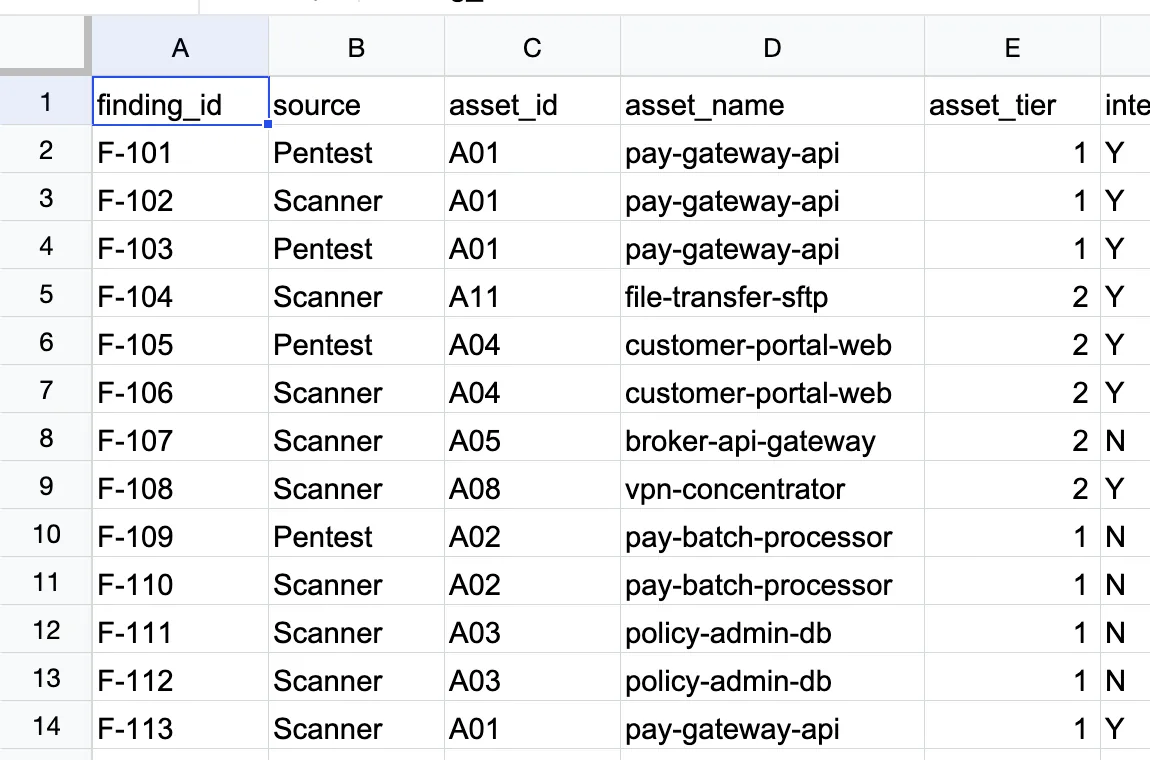
What a strong candidate did: Ranked findings by real exposure rather than scanner score, named the few that justify an exception to the freeze, and wrote the recommendation the CISO could sign.
A spreadsheet and a chat with the CFO
Audit window decision across ISO 27001, SOC 2 and GDPR
A customer renewal requires a SOC 2 Type II report by a fixed date, and the CFO wants the audit to start on time. Some controls are not ready.
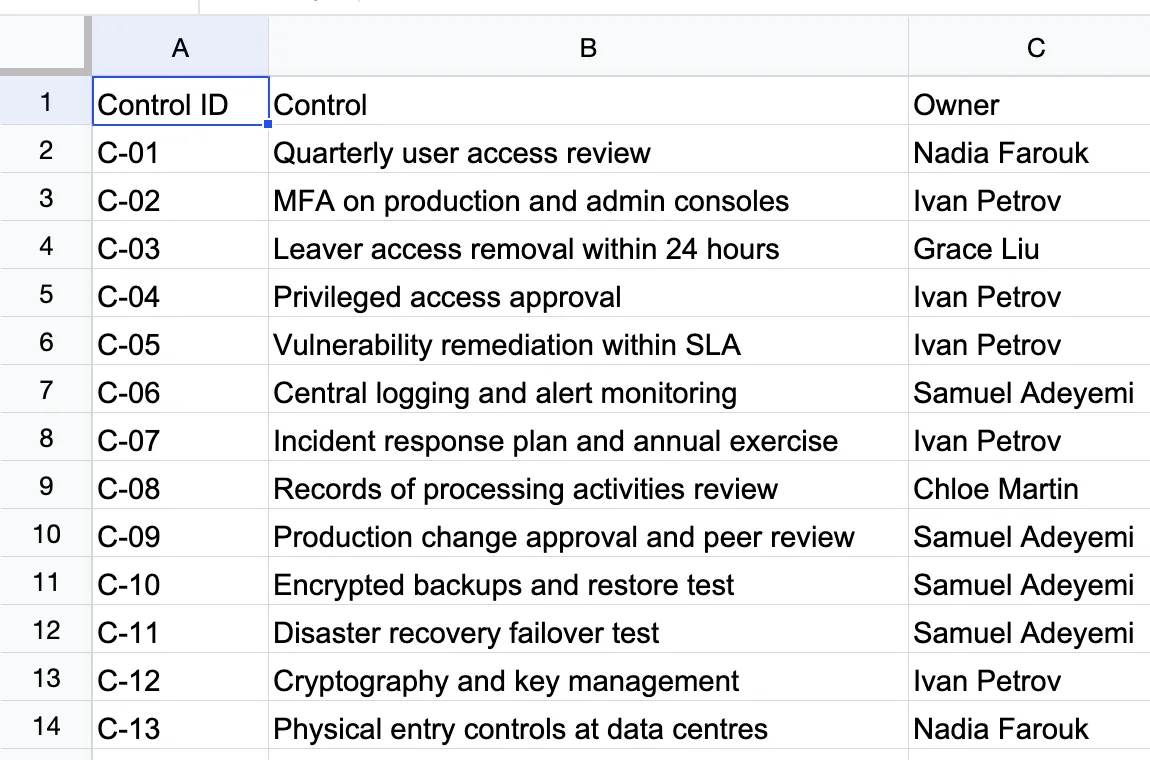
What a strong candidate did: Showed which gaps block the audit and which do not, proposed a start date that still meets the renewal, and held the line on the controls that cannot be skipped.
How the decision gets made
With Gateway, each penetration tester candidate works through situations written from your job description, such as a merged list of pen test and scan findings that has to be ranked under a payments change freeze, ending in a recommendation a CISO can sign. The candidate works in a spreadsheet and writes the recommendation, so the hiring manager sees both the triage and the writing that would reach a client. Each skill comes with a score and written feedback, the work opens read-only, and only the testers whose ranking reflects real exposure move on to a technical interview.
See your next penetration tester at work before you meet them
Paste your job description and Gateway writes the assessment in about 5 to 10 minutes. Your team can edit every question before it goes out.
Questions
Can the assessment include hands-on exploitation?
The tasks follow your job description, candidates can work in code, and your team edits every task before sending. Many teams keep the assessment on triage, severity and the written recommendation, where reports succeed or fail, and use the technical interview to go deep on exploitation with the testers who earned it.
We run engagements for clients. Can the writing part reflect that?
Yes. Describe the audience in the job description, and the written part of the task asks for a recommendation pitched at that reader. You see the candidate's writing exactly as submitted.
Is monitoring on by default?
No. Monitoring stays off unless you turn it on, with four levels from activity only to camera on, plus a replay. Gateway never decides on its own that a candidate cheated.
How quickly can we start assessing pen testers?
An assessment is written from your job description in about 5 to 10 minutes. Add candidates from an ATS export, a spreadsheet or resumes, and each one receives a single link and a deadline.
Related