Hire a test engineer who designs tests that catch real failures
A test engineer designs the tests, data and environments that show whether a system works end to end, including the parts that connect to partners, databases and other services. Testing experience reads the same on most resumes, so the way to tell candidates apart is to see each one design tests around a real integration failure and a risky data change before your team interviews.
What the hiring manager needs from a test engineer
The engineering or quality lead hiring a test engineer usually has a system that works in pieces and fails at the joins: between services, with partner data, or after a database change. The lead needs someone who thinks in test design, builds the data and environments to run it, and can trace each requirement to evidence that it was tested.
An integration with a partner who retries
A partner system sends events that sometimes arrive twice, late or out of order. The test engineer designs the cases that matter (duplicates, reversals, gaps), builds a way to replay them in staging, and proves the system handles each one.
Test data that looks nothing like production
Staging holds a few clean records while production has years of edge cases. The test engineer builds data sets with the awkward shapes that cause failures (empty fields, legacy formats, very large accounts) without copying personal data out of production.
A database change that must not change results
A query is rewritten for speed. The test engineer designs a comparison that runs old and new versions against the same data and flags any difference, so the team knows the rollout is safe before it starts.
Requirements that need traceable coverage
In regulated or contract-driven work, someone will ask how a requirement was tested. The test engineer keeps the link from each requirement to its test and result, so that question has an answer the same afternoon.
Where hiring a test engineer usually goes wrong
- Treating test engineering as clicking through screens
- Hiring for UI testing experience alone misses the integration and data work where this role earns its keep. The defects that reach customers often sit between systems, out of sight of any single screen.
- No check on test design technique
- Boundary values, equivalence classes and state transitions sound academic until a candidate uses them to find the one input that breaks a partner import. Asking for definitions misses that; handing over a real interface to test does not.
- Ignoring environments and data
- A test engineer who cannot set up or reason about the environment produces results nobody trusts. Ask how the candidate would make a test repeatable, as well as what it checks.
- Hiring on time served
- Years in testing roles vary widely in what they taught. Someone who has maintained one regression pack for a long time may never have designed a test strategy for a new integration.
Real tasks from a Gateway assessment
These come from a Gateway assessment for a full stack developer, with the employer’s name taken out. Gateway writes every assessment from your own job description, so the tasks your candidates get are built around your role.
Code, then a short note
Status webhooks: duplicate changes in staging
A partner job board posts application status events to a webhook. QA found some applications showing the same status change twice in their history. The candidate owns the endpoint and has to make it safe to ship.
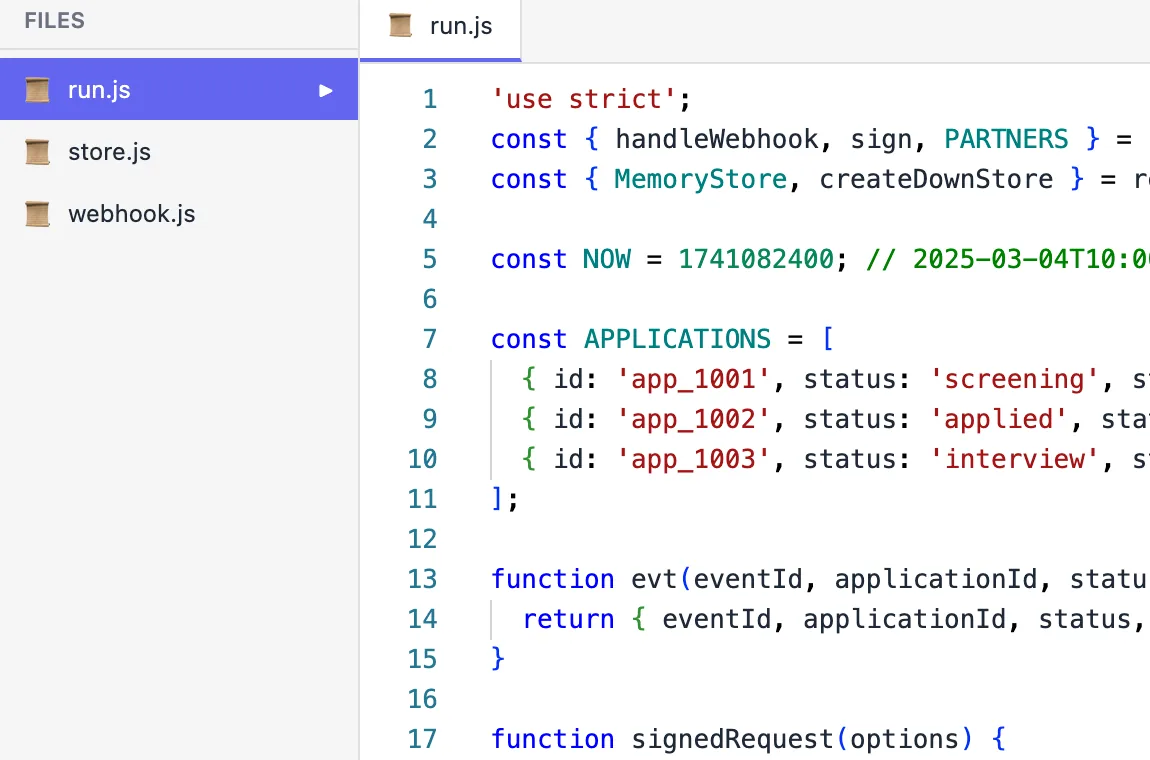
What a strong candidate did: Made each event count once even when the partner retries, rejected events that would move a status backwards, and added tests for the exact sequence QA reported.
SQL, then a written plan
A slow dashboard query and a safe rollout
A recruiter dashboard list has become slow on the production database. The candidate owns the query the API runs and has to speed it up without changing what recruiters see.
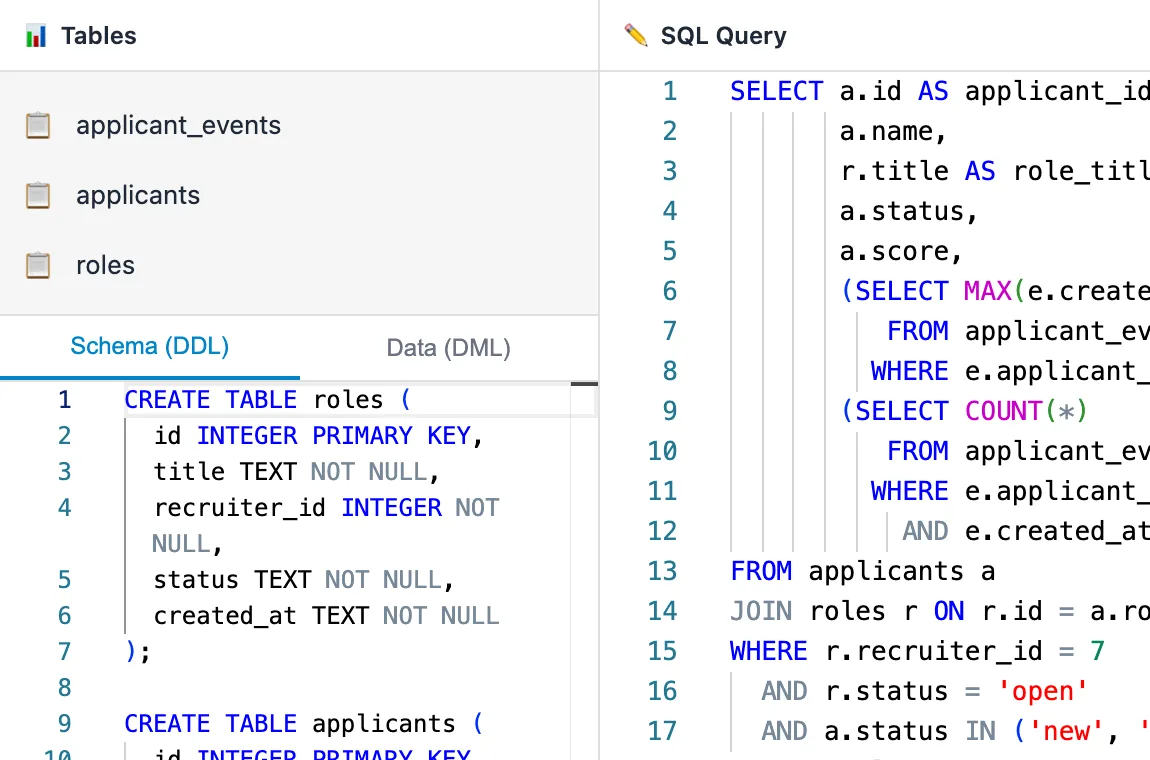
What a strong candidate did: Rewrote the query and proposed the index it needs, showed the results are identical, and planned a rollout that can be turned back in minutes if something looks wrong.
How the decision gets made
With Gateway, each test engineer candidate works through situations written from your job description: partner status events that create duplicate history entries, and a slow query that has to be rewritten without changing results and rolled out safely. The candidate works in code and SQL and adds a short written plan, so the hiring lead sees the test design, the data choices and the rollout thinking together. Each skill gets a score and written feedback, everything opens read-only, and only test engineers whose tests would have caught the failure go forward.
See your next test engineer at work before you meet them
Paste your job description and Gateway writes the assessment in about 5 to 10 minutes. Your team can edit every question before it goes out.
Questions
Our test engineers work on systems with hardware or device interfaces. Can the tasks reflect that?
The assessment is written from your job description, so the systems, interfaces and tools you describe shape the situations, and your team can rewrite any task before it is sent. The work itself happens at a computer, in code, SQL, a document or a whiteboard.
Can a candidate sketch a test environment or strategy?
Yes. Candidates can draw on a whiteboard or write in a document, so a test strategy or environment design can sit alongside code in the same assessment.
How is each candidate scored?
Each skill gets a score with written feedback, the candidate gets a tier from 1 to 5, and you see whether the candidate meets your line. Your team can override any score.
What does the hiring lead still need to do in interviews?
Discuss the decisions. The lead already has the candidate's test design and plan open, so the interview can test trade-offs and depth instead of confirming basic competence.
Related