Hire a Selenium tester who keeps a large suite reliable
A Selenium tester keeps browser tests running across the browsers your customers use, usually inside a Java or Python suite that has grown for years. Almost every candidate lists WebDriver and page objects, so the way to tell candidates apart is to see each one handle a real timing bug and real test code before your team books interviews.
What the hiring manager needs from a Selenium tester
Teams hiring a Selenium tester usually have an established suite: a page object layer, a Grid or cloud browser setup and a CI job that runs overnight. The QA lead needs someone who makes that suite reliable, extends it without making it slower, and knows when a check belongs below the browser.
Tests that fail on timing
A results list updates after an asynchronous call, and tests fail now and then with stale element errors. The Selenium tester replaces fixed sleeps with explicit waits on the right condition and fixes locators that break when the list re-renders.
A page object layer that has grown messy
Page classes hold assertions, test data and duplicated locators. The tester refactors toward small page objects with clear methods, so a layout change means editing one class instead of dozens of tests.
Cross-browser results that differ
A test passes in Chrome and fails in Safari or Firefox on the Grid. The tester works out whether the product or the test is at fault, and reports a genuine browser defect with the evidence a developer needs.
An overnight run that finishes too late
The full suite ends just before the team arrives, so failures delay the morning release. The tester parallelises safely, removes dependencies between tests and moves data setup to API calls instead of the browser.
Where hiring a Selenium tester usually goes wrong
- Trusting the word Selenium on its own
- WebDriver has been around long enough that most testers have touched it. Whether a candidate understands waits, the DOM after a re-render and test isolation is what separates a stable suite from a noisy one.
- Asking for method names from memory
- Questions on the exact call for switching frames reward recall. A candidate who looks that up in seconds but structures tests well is the one who keeps your suite healthy.
- Never looking at the candidate's test code
- Page objects can be clean or a tangle. Without reading code the candidate wrote, you cannot tell which kind of suite the person will leave behind.
- Hiring a builder for a maintenance role
- Most Selenium roles maintain and extend existing code. A candidate who has only started suites from scratch may struggle with the conventions, helpers and data setup that already exist in yours.
Real tasks from a Gateway assessment
These come from a Gateway assessment for a full stack developer, with the employer’s name taken out. Gateway writes every assessment from your own job description, so the tasks your candidates get are built around your role.
Web code in the browser
Search results that don’t match the search box
QA reports that typing fast in an applicants page search leaves results that have nothing to do with the text, and sometimes the page says “Loading…” forever.
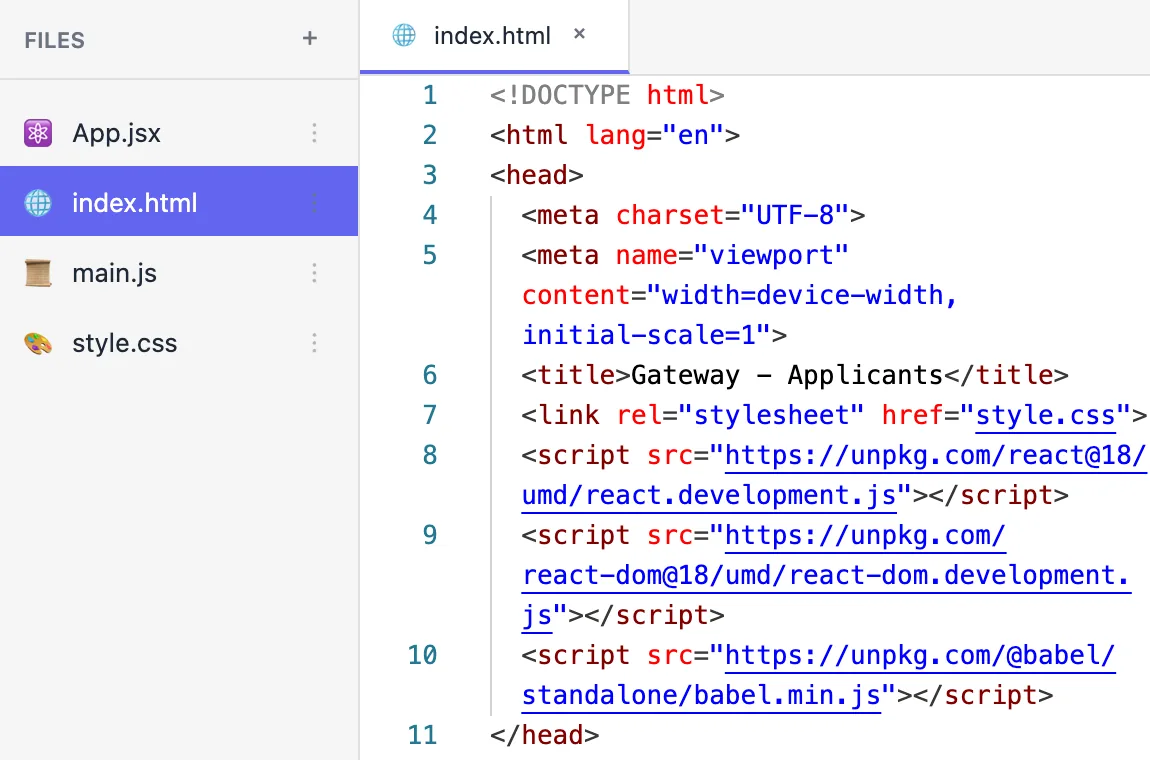
What a strong candidate did: Traced both bugs to responses arriving out of order and an unhandled failure, fixed them so the list always matches the box, and gave the page a clear error state.
SQL, then a written plan
A slow dashboard query and a safe rollout
A recruiter dashboard list has become slow on the production database. The candidate owns the query the API runs and has to speed it up without changing what recruiters see.
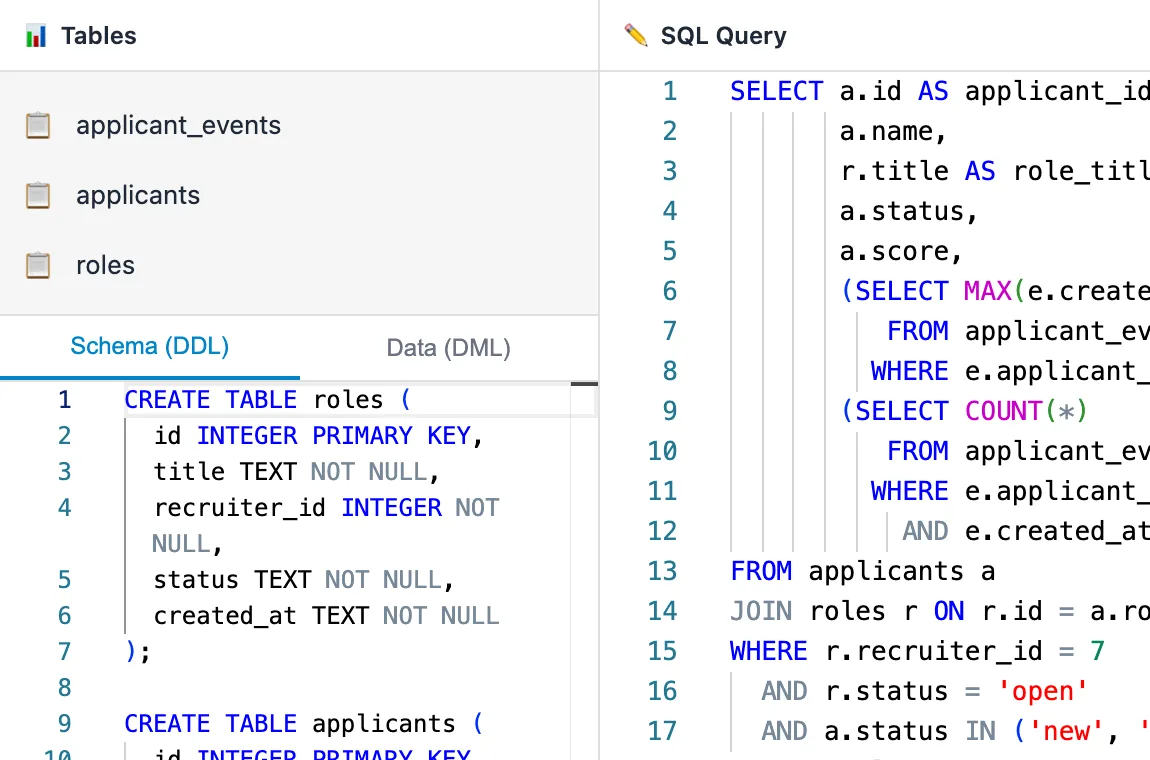
What a strong candidate did: Rewrote the query and proposed the index it needs, showed the results are identical, and planned a rollout that can be turned back in minutes if something looks wrong.
How the decision gets made
In Gateway, each Selenium tester candidate works through situations written from your job description, such as a search page whose results stop matching the search box when responses arrive out of order, and a dashboard query that must be sped up without changing what users see. The candidate works in browser code and SQL and explains the approach in a short plan, and your QA lead sees a score and written feedback for every skill with the work open read-only. Only Selenium testers who pinned down the timing problem and proved their checks move on to interview.
See your next Selenium tester at work before you meet them
Paste your job description and Gateway writes the assessment in about 5 to 10 minutes. Your team can edit every question before it goes out.
Questions
Can the assessment use Java or Python, whichever our suite uses?
The assessment is written from your job description, so the language and tools you name shape the tasks. Your team can read and change every task before it goes out.
Will it show whether a candidate understands waits and synchronisation?
The tasks put timing problems in front of the candidate on purpose, and your lead can read the candidate's code to see exactly how each wait was handled.
Can candidates use AI help?
Only if you choose an AI-assisted assessment. Your team then sees how each candidate used the assistant, which matters because locators and waits suggested by an assistant can be wrong for the page in front of it.
Is there monitoring during the test?
Monitoring is off by default. You can choose one of four levels, from activity only to camera on, with a replay, and your team reviews anything unusual. Gateway never marks a candidate as cheating on its own.
Related