Hire a security analyst who escalates the right alerts
A security analyst protects the business by reading alerts and logs through a shift, deciding quickly which ones are real, and escalating with enough evidence that the next person can act. Most applicants list the same SIEM and EDR tools, so the way to tell candidates apart is to watch each one triage a real queue and write up a finding before your SOC lead books interviews.
What the hiring manager needs from a security analyst
The SOC lead or security manager hiring an analyst needs someone who can sit with a noisy queue without missing the one alert that matters, and who closes the rest with a reason another analyst would accept. Speed counts, and so does the note left behind for the next shift.
An alert queue full of false positives
Detection rules fire on admin scripts, backup jobs and a developer's test tool every night. The analyst closes them with a short reason, suggests a tuning change to the detection owner, and still catches the run of logins from an unusual country that looks similar on the surface.
A user reports a suspicious email
Someone in sales forwards an email linking to a shared document. The analyst inspects the headers and the link safely, searches mail logs for everyone else who received it, and pulls it from inboxes before more people click.
Signs of a real intrusion near the end of a shift
An endpoint shows an office application spawning PowerShell with encoded commands. The analyst isolates or escalates according to the playbook, records the timeline, hashes and hosts involved, and hands over so the incident responder does not start from zero.
A vulnerability list that needs ranking
Scan results and an external pen test land in one spreadsheet. The analyst ranks them by what is exposed and exploitable in this environment rather than the scanner's label, so the fixes that reduce real risk happen first.
Where hiring a security analyst usually goes wrong
- Hiring on SIEM product names
- Splunk, Sentinel or QRadar on a resume shows which console the candidate has seen. It does not show whether the candidate can write a search that answers a question, or tell a misconfigured backup job from data leaving the network.
- Trivia about attack frameworks
- Naming the tactics in MITRE ATT&CK is useful vocabulary. The job is applying it to a messy log line at speed, which a recall question never touches.
- No check on written handovers
- A SOC runs on notes. An analyst whose tickets say only "checked, looks fine" forces the next person to repeat the investigation, and incidents get lost between shifts.
- Confusing caution with skill
- An analyst who escalates everything sounds safe in an interview answer. On shift, it floods the incident responders and teaches the team to ignore escalations, including the real one.
Real tasks from a Gateway assessment
These come from a Gateway assessment for a cybersecurity analyst, with the employer’s name taken out. Gateway writes every assessment from your own job description, so the tasks your candidates get are built around your role.
A spreadsheet, then a written recommendation
Vulnerability triage under a payments change freeze
A penetration test and weekly scans have been merged into one list of open findings. Payments systems are under a change freeze, and the CISO must sign a remediation recommendation before the next change board.
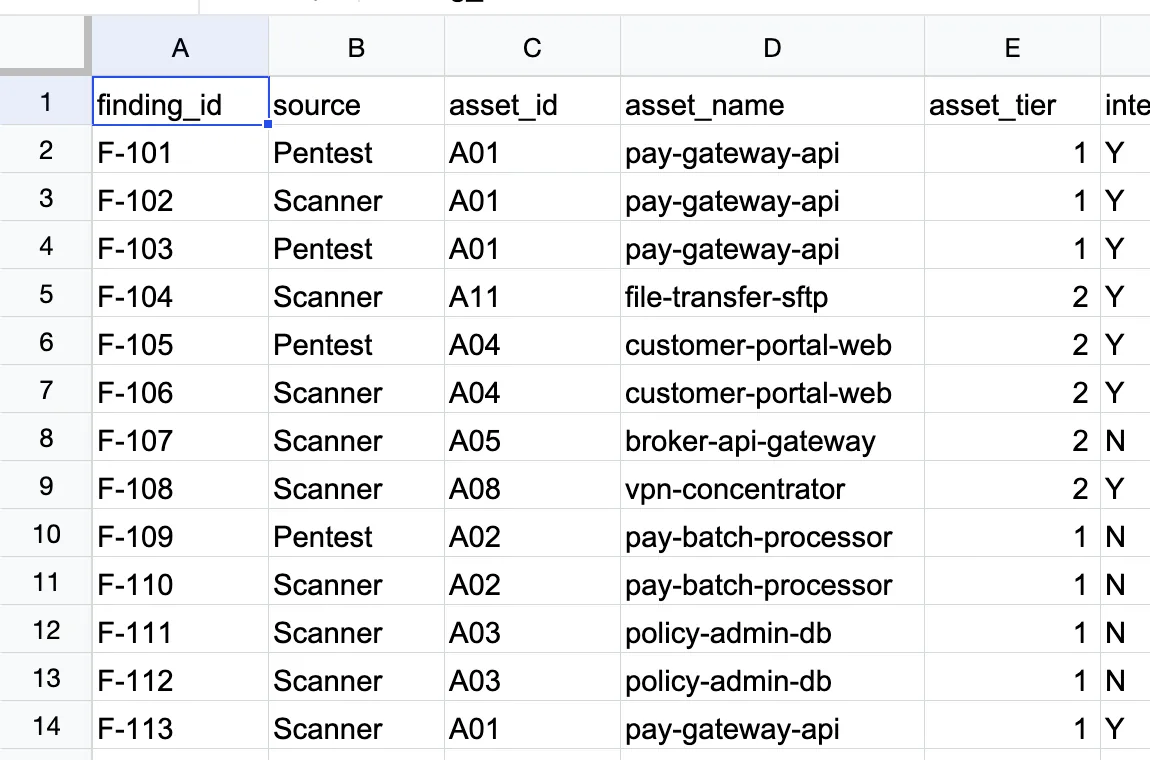
What a strong candidate did: Ranked findings by real exposure rather than scanner score, named the few that justify an exception to the freeze, and wrote the recommendation the CISO could sign.
A spreadsheet and a chat with the CFO
Audit window decision across ISO 27001, SOC 2 and GDPR
A customer renewal requires a SOC 2 Type II report by a fixed date, and the CFO wants the audit to start on time. Some controls are not ready.
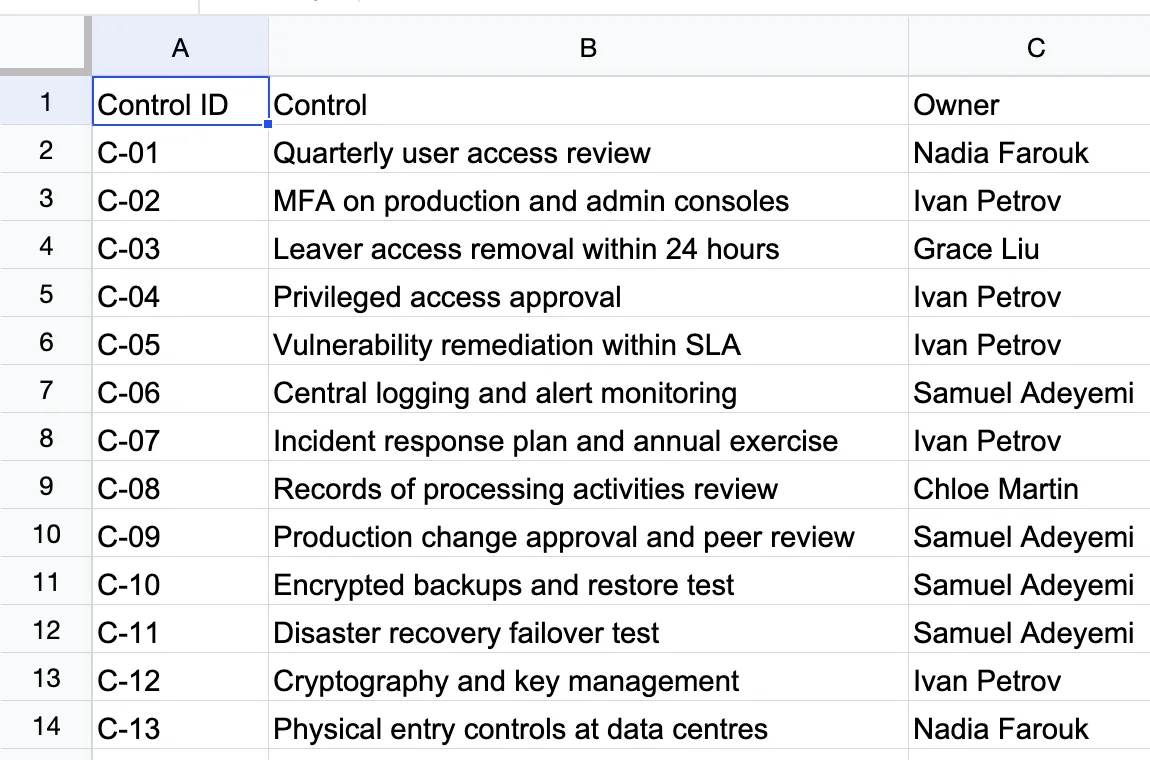
What a strong candidate did: Showed which gaps block the audit and which do not, proposed a start date that still meets the renewal, and held the line on the controls that cannot be skipped.
How the decision gets made
In Gateway, each security analyst candidate works through situations written from your job description, such as a merged list of scan and pen test findings to rank under a payments change freeze, closing with a recommendation for the CISO. The work happens in a spreadsheet and a written note, so your SOC lead sees both the judgement and the quality of the handover. Each skill is scored with written feedback, the candidate's sheet opens read-only, and only analysts who ranked by real exposure go on to interview.
See your next security analyst at work before you meet them
Paste your job description and Gateway writes the assessment in about 5 to 10 minutes. Your team can edit every question before it goes out.
Questions
We hire analysts for several shifts at once. Does Gateway handle that volume?
Yes. Add candidates from an ATS export, a spreadsheet or a set of resumes, and each person gets one link and a deadline. You review the analysts who meet the line you set.
Can we adjust the tasks to our SIEM and playbooks?
The assessment is written from your job description, and your team can edit every question before it goes out, so you can name your tools and describe your own escalation rules.
Are entry-level and experienced analysts assessed the same way?
You set the line. The same situations show how far each candidate gets, with a tier from 1 to 5 for each person, so a first-line analyst and a senior analyst can be judged against different bars.
Does Gateway flag candidates who cheat?
Gateway never marks a candidate as cheating on its own. Monitoring is off by default and can be set anywhere from activity only to camera on, with a replay; your team reviews anything unusual and decides.
Related