Hire an automation tester whose suite the team trusts
An automation tester is worth hiring when the regression suite catches real breakages, passes reliably when nothing is broken, and runs fast enough that developers wait for it. Framework names on a resume do not show that, so the way to tell candidates apart is to see each one write tests against a real bug before your team books interviews.
What the hiring manager needs from an automation tester
The QA or engineering lead hiring an automation tester often inherits a suite that fails at random, takes too long and gets re-run until it goes green. The lead needs someone who decides what deserves automation, writes tests that wait for the right thing, and keeps the suite stable as the product changes around it.
A flaky suite the team has stopped believing
Tests fail on one run and pass on the next, so developers ignore red builds. The automation tester finds the causes (fixed sleeps, shared test data, tests that depend on running order) and fixes them, instead of adding retries that hide real defects.
A bug that appears only when the user types fast
Search results stop matching the search box when responses arrive out of order. The automation tester writes a test that recreates the timing on purpose, so the regression cannot return unnoticed.
Deciding what to leave manual
Product wants every manual test case turned into a script. The automation tester picks the stable, high-value paths, leaves one-off and fast-changing screens to exploratory testing, and explains the maintenance cost of each choice.
A suite that holds up every merge
Every pull request waits on a long end-to-end run. The automation tester moves checks down to the API level where the browser adds nothing, runs tests in parallel and splits the suite so a fast core gates each merge.
Where hiring an automation tester usually goes wrong
- Hiring by framework
- Selenium, Cypress, Playwright and Appium appear on most automation resumes. Which tool a candidate used matters far less than whether the candidate writes tests that are stable, readable and worth keeping.
- Counting automated test cases
- A candidate who automated a large number of cases may have built a suite nobody trusted. Ask what the suite caught and how often it failed for no reason.
- Coding rounds unrelated to testing
- A generic algorithm problem tells you little about locator strategy, waiting, test data setup or isolating one test from its neighbours, which decide whether an automation suite survives its first year.
- No look at maintenance
- Writing a new test is the easy part. The tester you need updates tests when the product changes without rewriting half the suite, and that shows only when the candidate works with existing code.
Real tasks from a Gateway assessment
These come from a Gateway assessment for a full stack developer, with the employer’s name taken out. Gateway writes every assessment from your own job description, so the tasks your candidates get are built around your role.
Web code in the browser
Search results that don’t match the search box
QA reports that typing fast in an applicants page search leaves results that have nothing to do with the text, and sometimes the page says “Loading…” forever.
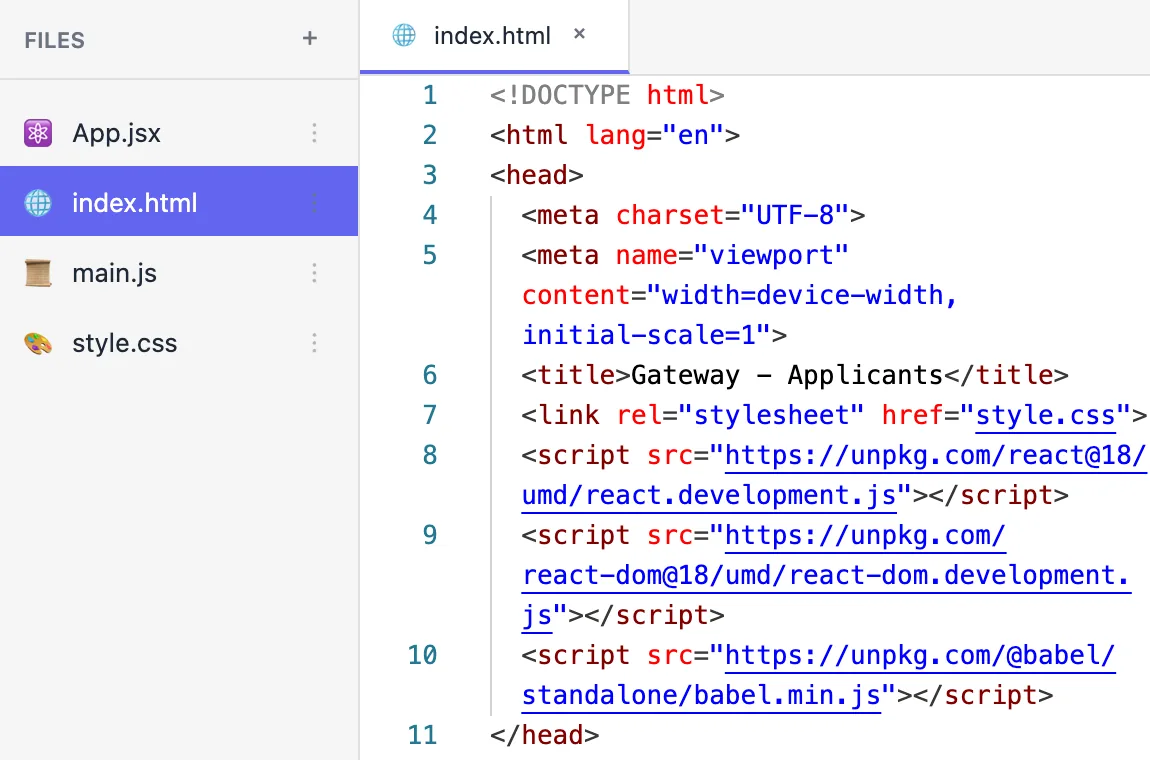
What a strong candidate did: Traced both bugs to responses arriving out of order and an unhandled failure, fixed them so the list always matches the box, and gave the page a clear error state.
Code, then a short note
Status webhooks: duplicate changes in staging
A partner job board posts application status events to a webhook. QA found some applications showing the same status change twice in their history. The candidate owns the endpoint and has to make it safe to ship.
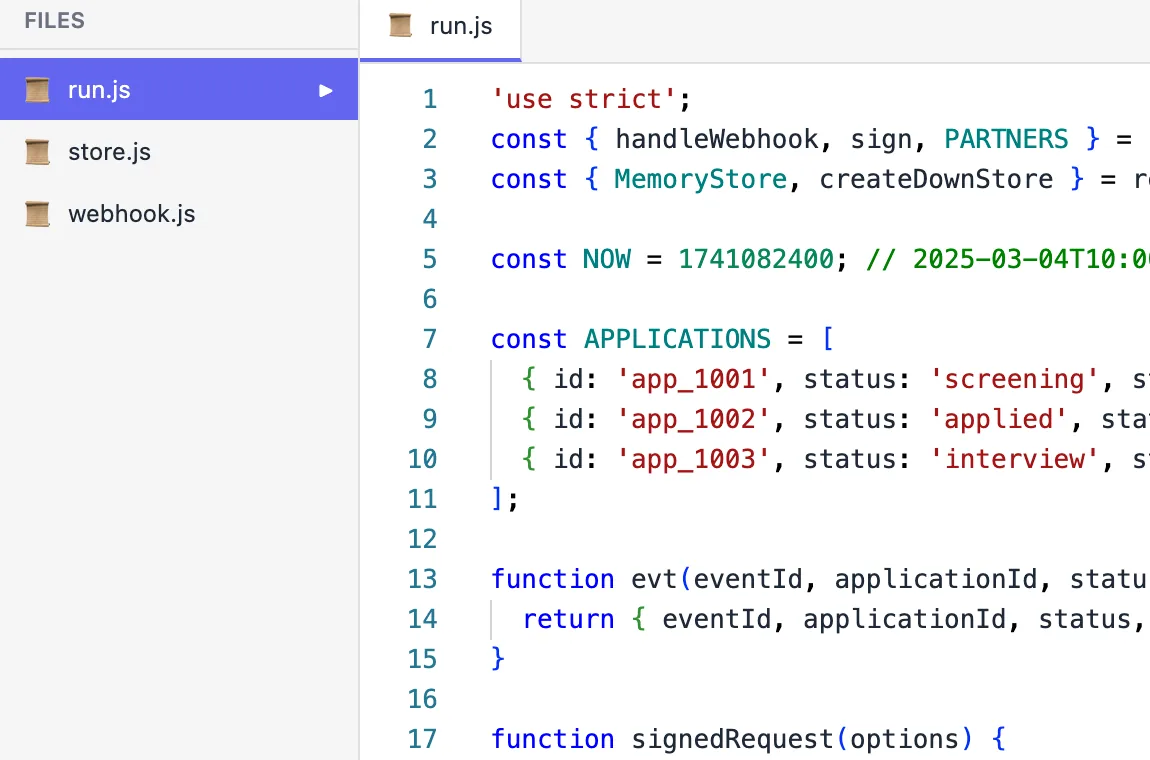
What a strong candidate did: Made each event count once even when the partner retries, rejected events that would move a status backwards, and added tests for the exact sequence QA reported.
SQL, then a written plan
A slow dashboard query and a safe rollout
A recruiter dashboard list has become slow on the production database. The candidate owns the query the API runs and has to speed it up without changing what recruiters see.
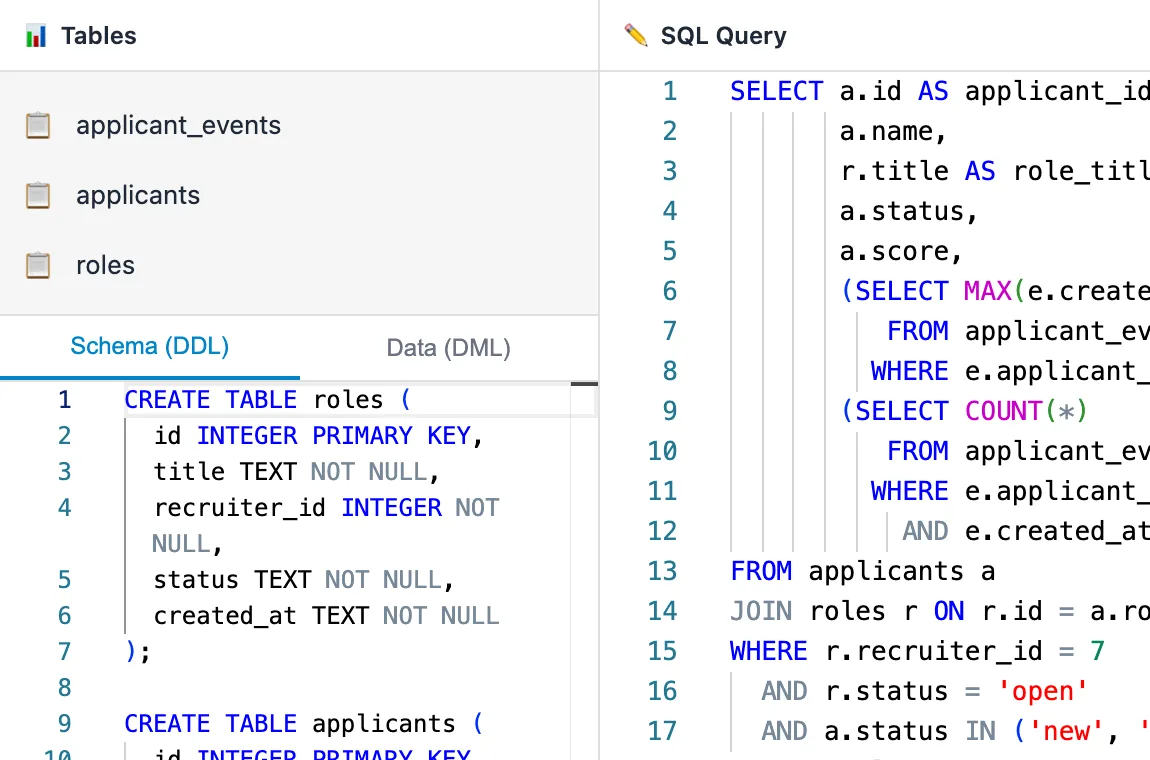
What a strong candidate did: Rewrote the query and proposed the index it needs, showed the results are identical, and planned a rollout that can be turned back in minutes if something looks wrong.
How the decision gets made
In Gateway, each automation tester candidate works through situations written from your job description: a search page that falls out of step with the search box, a webhook that records duplicate status changes, and a query change that must return identical results. The candidate writes tests and fixes in web code and code, adds a note on what to automate next, and your QA lead sees a score and written feedback for each skill with the candidate's code open read-only. Interviews go only to automation testers whose tests caught the bug and stayed stable.
See your next automation tester at work before you meet them
Paste your job description and Gateway writes the assessment in about 5 to 10 minutes. Your team can edit every question before it goes out.
Questions
Can the assessment use our automation framework?
The tasks follow the tools named in your job description, and your team edits every task before candidates see it. Web code runs in the browser with frontend frameworks ready to use.
Will we see whether a candidate writes stable tests or merely passing ones?
You see the candidate's actual code read-only, along with a score and written feedback for each skill, so your lead can check how the tests wait, set up data and stay independent of each other.
Can candidates use AI to write tests?
If you choose an AI-assisted assessment, yes, and your team sees how each candidate used the assistant, including whether generated tests were reviewed or pasted in as they came.
How do we add a large group of candidates?
Import them from an ATS export, a spreadsheet or a folder of resumes. Each candidate gets one link and a deadline, and every step says what it involves before the candidate accepts it.
Related