Hire a performance tester who finds the bottleneck before launch
A performance tester tells the business whether the system will hold up under real traffic and, if not, where it will break and why. Load tools are easy to list on a resume, so the way to tell candidates apart is to see each one diagnose a real slow query and a real failure under load before you schedule interviews.
What the hiring manager needs from a performance tester
The engineering lead hiring a performance tester usually has a date in mind: a product launch, a sales event, a large client going live. The lead needs someone who models realistic traffic, runs tests that mean something, reads the results down to the slow query or the exhausted connection pool, and gives a clear answer about whether the date is safe.
A dashboard that slows as data grows
A list that loaded instantly last year now takes seconds on production data. The performance tester reproduces it with realistic volumes, reads the query plan, identifies the missing index or the query shape at fault, and confirms the fix returns identical results.
A load test that proves nothing
Someone ran a test with many virtual users hitting the home page and declared the system ready. The performance tester builds a workload model from real usage: which pages, in what mix, with what think time, logged in or anonymous.
Failures that appear only under concurrency
Under concurrent use, a page hangs on "Loading" or shows results for an older request. The performance tester correlates the errors with response times and server metrics, and separates a timeout problem from a race condition.
A go or no-go before a high-traffic event
Leadership wants to know whether the system will cope with next month's event. The performance tester reports the capacity found, the first component to give out and the change that buys the most headroom, in language a non-engineer can act on.
Where hiring a performance tester usually goes wrong
- Hiring on load tool experience
- JMeter, k6, Gatling and LoadRunner scripts look alike on a resume. A candidate can generate huge traffic and still be unable to say why response times climbed, which is the part you are paying for.
- Treating performance testing as running scripts
- The test run is the easy half. Analysis (reading a query plan, a heap profile or a thread dump, and tying it to the slowdown) is where weak hires stop and hand the problem back to developers.
- Ignoring how results are reported
- A report full of graphs with no conclusion leaves the release decision with someone less qualified to make it. Ask the candidate to state the answer first and the evidence second.
- No check on workload design
- A test built on the wrong traffic mix gives confident, wrong answers. Candidates who never ask what real users do put every later capacity decision at risk.
Real tasks from a Gateway assessment
These come from a Gateway assessment for a full stack developer, with the employer’s name taken out. Gateway writes every assessment from your own job description, so the tasks your candidates get are built around your role.
SQL, then a written plan
A slow dashboard query and a safe rollout
A recruiter dashboard list has become slow on the production database. The candidate owns the query the API runs and has to speed it up without changing what recruiters see.
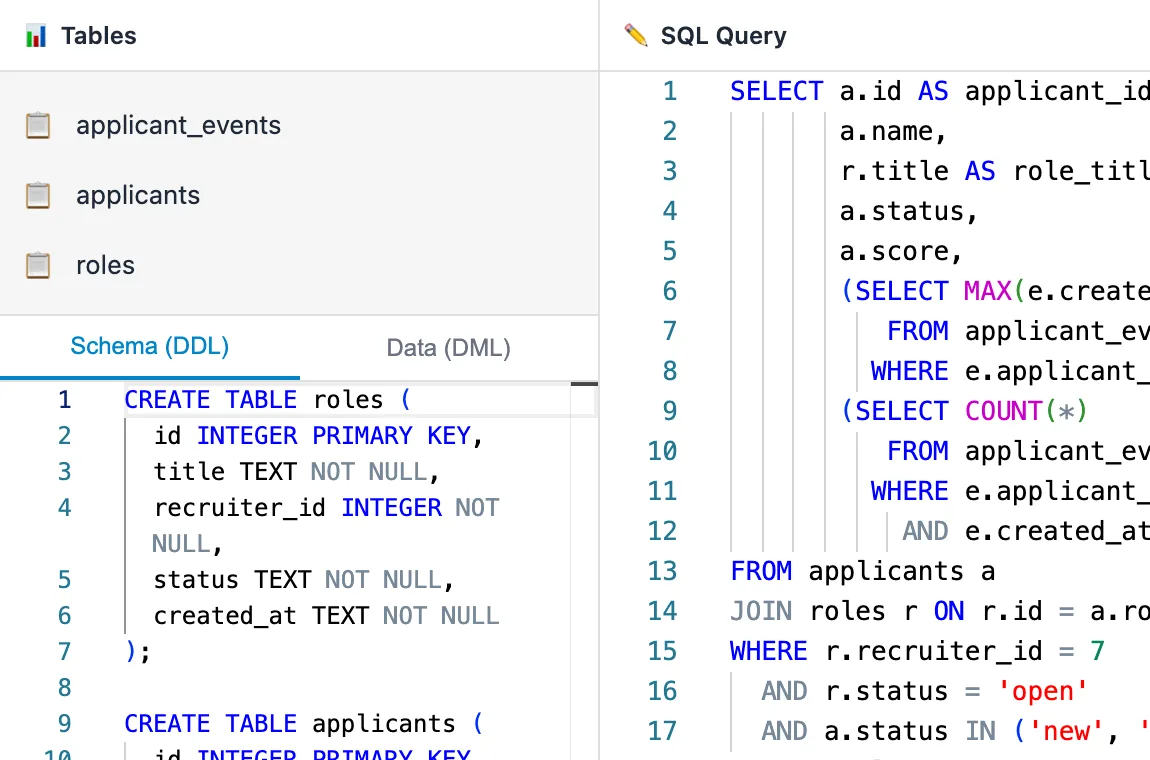
What a strong candidate did: Rewrote the query and proposed the index it needs, showed the results are identical, and planned a rollout that can be turned back in minutes if something looks wrong.
Web code in the browser
Search results that don’t match the search box
QA reports that typing fast in an applicants page search leaves results that have nothing to do with the text, and sometimes the page says “Loading…” forever.
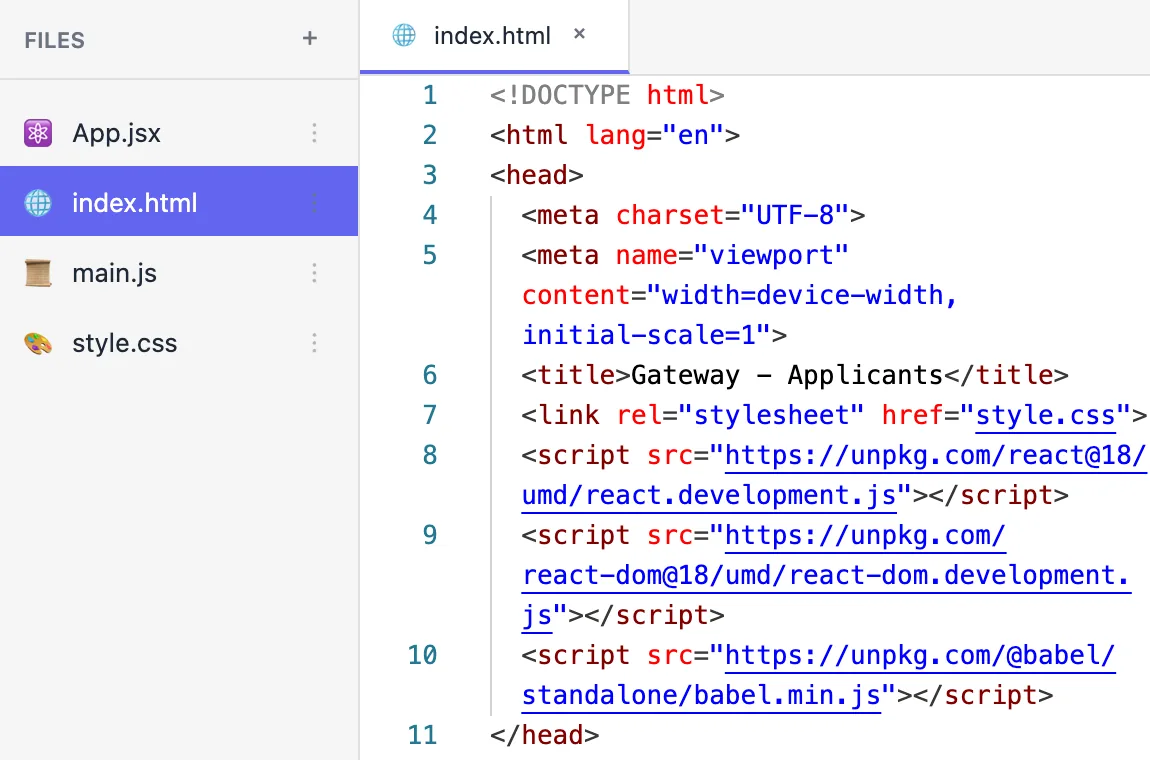
What a strong candidate did: Traced both bugs to responses arriving out of order and an unhandled failure, fixed them so the list always matches the box, and gave the page a clear error state.
How the decision gets made
With Gateway, each performance tester candidate works through situations written from your job description: a recruiter dashboard query that has become slow on production and must be sped up without changing results, then rolled out safely, and a search page that falls out of step and hangs on loading. The candidate works in SQL, web code and a written plan, so your engineering lead sees the diagnosis and the rollout reasoning together. Each skill is scored with written feedback, the work opens read-only, and only testers who found the actual cause move to interview.
See your next performance tester at work before you meet them
Paste your job description and Gateway writes the assessment in about 5 to 10 minutes. Your team can edit every question before it goes out.
Questions
Can the assessment include writing a load test script?
If your job description calls for it, yes. Candidates can work in code, and your team can edit every task, including the tool and language, before it goes out.
Does the assessment cover analysis, or only scripting?
Analysis is the centre of it. The situations ask the candidate to find why something is slow and prove the fix, with written reasoning your lead can read next to the score for each skill.
Can we include a capacity plan or architecture sketch?
Yes. Candidates can draw on a whiteboard or write a plan in a document, so you see how the candidate thinks about headroom, monitoring during the test and rollback.
How long does setup take?
About 5 to 10 minutes from your job description. Review the tasks, adjust what you want, and send each candidate one link with a deadline.
Related