Hire a security engineer who cuts risk without stopping delivery
A security engineer is worth the seat when the product gets safer and the developers keep shipping: access is tight, secrets stay out of code, and the findings that matter get fixed first. Certifications and tool lists look alike across applicants, so the way to tell candidates apart is to watch each one rank real findings and defend a real control decision before your team books interviews.
What the hiring manager needs from a security engineer
The engineering or security lead hiring this role usually has more open findings than people, a cloud account that grew faster than its permissions model, and developers who see security as the team that says no. The lead needs someone who changes code, configuration and pipelines directly, and explains each change in terms a product team accepts.
A scanner backlog nobody trusts
Dependency and container scans produce hundreds of findings, most labelled critical, and developers have stopped reading them. A strong security engineer checks which vulnerable code paths are actually reachable and exposed, fixes or suppresses each with a written reason, and leaves a list short enough that teams act on it.
Access that grew by hand
IAM roles and service accounts were created one urgent request at a time, and several now carry admin rights nobody remembers granting. The engineer has to tighten them without breaking a midnight deploy, which means reading what each role really uses before cutting anything.
A secret committed to a repository
An API key turns up in git history. The engineer rotates it, checks logs for any use since it leaked, adds a pre-commit or pipeline check so the next one is caught before merge, and tells the owning team plainly what happened.
A new feature that needs a design review
A team wants to add file uploads or a partner webhook next sprint. The engineer reads the design, names the few threats that matter for it (unchecked file types, missing signature checks, over-broad tokens) and proposes fixes the team can build inside the sprint.
Where hiring a security engineer usually goes wrong
- Hiring on certifications
- A security certification shows someone studied a syllabus. It does not show whether the candidate can read a Terraform plan and spot a public bucket, or write the pipeline rule that stops one reaching production.
- Quiz rounds on ports and acronyms
- Asking which port a protocol uses or what an acronym stands for rewards memory. The work is judgement: which of a long list of findings to fix this week, and how to fix it without the developers routing around security.
- Missing the persuasion half of the role
- A security engineer who is right but cannot get a fix merged leaves the risk in place. Teams that never test how a candidate explains a finding to a product team often hire someone whose tickets sit untouched for months.
- Treating offensive skill as the whole job
- A candidate with impressive capture-the-flag results may never have hardened a system others depend on. Breaking in and building defences that survive release after release are related skills, and this seat usually needs the second.
Real tasks from a Gateway assessment
These come from a Gateway assessment for a cybersecurity analyst, with the employer’s name taken out. Gateway writes every assessment from your own job description, so the tasks your candidates get are built around your role.
A spreadsheet, then a written recommendation
Vulnerability triage under a payments change freeze
A penetration test and weekly scans have been merged into one list of open findings. Payments systems are under a change freeze, and the CISO must sign a remediation recommendation before the next change board.
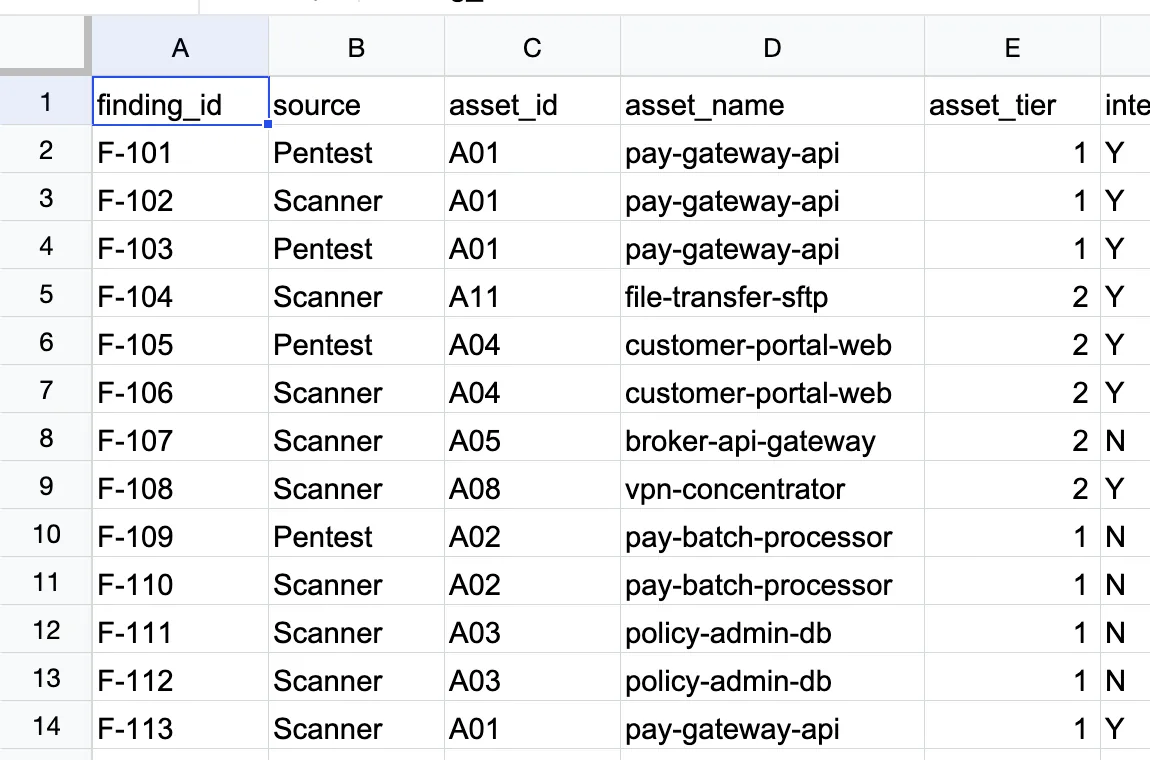
What a strong candidate did: Ranked findings by real exposure rather than scanner score, named the few that justify an exception to the freeze, and wrote the recommendation the CISO could sign.
A spreadsheet and a chat with the CFO
Audit window decision across ISO 27001, SOC 2 and GDPR
A customer renewal requires a SOC 2 Type II report by a fixed date, and the CFO wants the audit to start on time. Some controls are not ready.
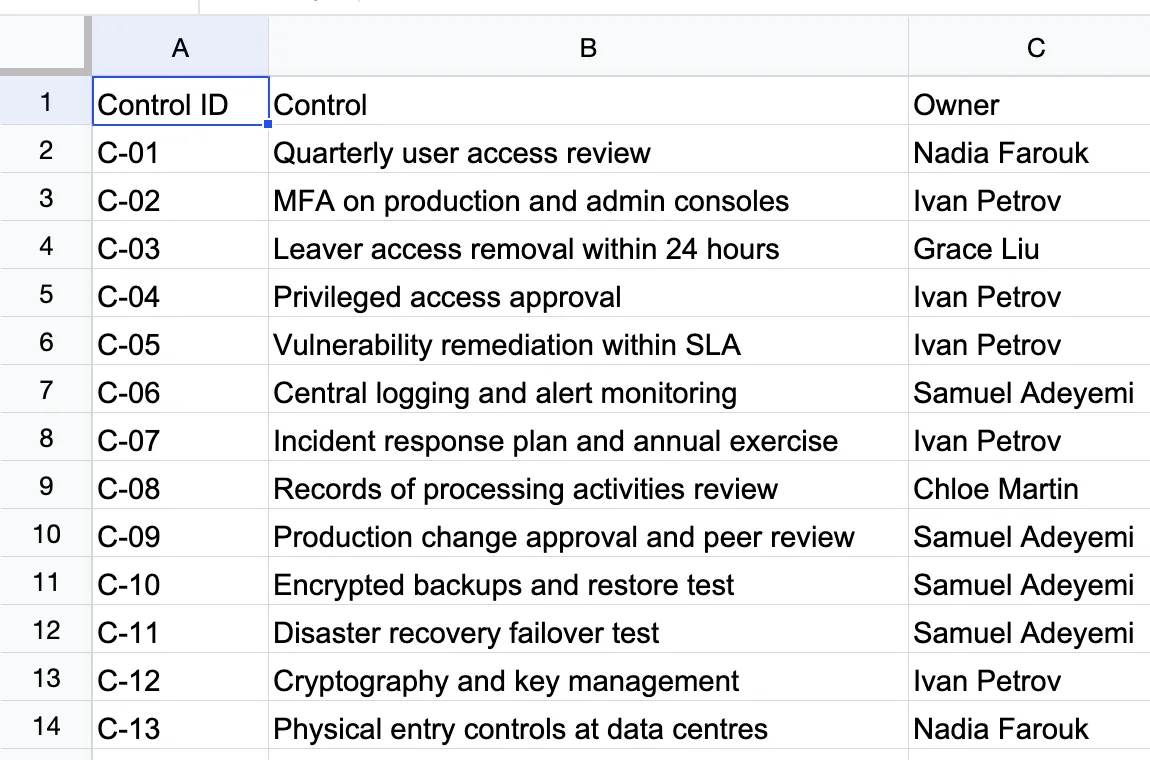
What a strong candidate did: Showed which gaps block the audit and which do not, proposed a start date that still meets the renewal, and held the line on the controls that cannot be skipped.
How the decision gets made
With Gateway, each security engineer candidate works through situations written from your job description, such as a merged list of scan and pen test findings under a payments change freeze, or an audit deadline with controls that are not ready. The work happens in a spreadsheet, a chat with an AI finance leader and a written recommendation, the forms a security engineer uses when a fix needs sign-off. Your security lead sees a score and written feedback for each skill, opens the candidate's ranking and reasoning read-only, and meets only the engineers who separated real exposure from scanner noise.
See your next security engineer at work before you meet them
Paste your job description and Gateway writes the assessment in about 5 to 10 minutes. Your team can edit every question before it goes out.
Questions
Can the tasks reflect our cloud provider and stack?
Yes. The assessment is written from your job description, so if the role mentions AWS, Kubernetes, Terraform or a particular CI system, the situations use them. Your team reads and edits every task before any candidate sees it.
How do we know a candidate did the work alone?
Monitoring is off by default and has four levels, from activity only to camera on, with a replay of the test. Gateway never labels a candidate as cheating; anything unusual goes to your team to review.
Our engineers use AI assistants for code. Can candidates?
If you choose an AI-assisted assessment, yes, and your team sees how each candidate used the assistant: what was asked, what was checked, and what was accepted without a second look. For a security hire, that last part tells you a great deal.
Does this replace the technical interview with our security team?
No. It decides who reaches that interview. Your security lead starts the conversation with the candidate's ranking and recommendation already open, and spends the hour on the decisions behind them instead of on basics.
Related