Hire a quality assurance analyst who finds bugs before customers do
A quality assurance analyst protects releases by testing the product the way real users will, finding the defects that matter, and reporting them so developers can fix them on the first read. Test case counts and tool names look alike across resumes, so the way to tell candidates apart is to watch each one investigate a real defect and write it up before your team spends time interviewing.
What the hiring manager needs from a quality assurance analyst
The product or engineering manager hiring a quality assurance analyst needs confidence on release day. That means someone who reads a requirement and sees the gaps in it, explores the product well beyond the happy path, and gives a clear go or no-go with reasons the release manager can repeat.
A feature with thin acceptance criteria
The story says "user can filter applicants by status" and nothing more. The analyst asks what should happen with no results, with several filters at once and with a status that was renamed last quarter, and gets the answers agreed before testing instead of arguing about them after release.
A bug developers cannot reproduce
Support reports that a search page sometimes shows the wrong results. The analyst finds the exact steps, the typing speed and the network condition that trigger it, and files a report with expected and actual behaviour that a developer can follow without a meeting.
A release with too little time to test everything
The release goes out tomorrow and a full regression pass would take longer than the time left. The analyst picks the areas most likely to break given what changed, tests those first, and tells the release manager plainly what was not covered.
Acceptance testing with business users
Operations staff try the new workflow before launch and report problems in their own words. The analyst turns vague complaints into reproducible defects, separates real bugs from change requests, and keeps the open list honest.
Where hiring a quality assurance analyst usually goes wrong
- Counting test cases
- A candidate who wrote thousands of test cases may have produced long documents nobody ran twice. The skill that matters is choosing the tests that catch the defects your users would actually hit.
- Interviewing on testing definitions
- Asking the difference between smoke and sanity testing checks vocabulary. It does not show whether the candidate notices that a list keeps showing stale results when someone types quickly.
- Never reading the candidate's bug reports
- Developers spend real time on every report an analyst files. A vague report ("search broken, please check") costs a round of questions; teams that never look at a candidate's writing find this out after the hire.
- Screening for scripting when the role is exploratory
- Many quality assurance analyst roles are mainly manual and exploratory. Filtering on automation skill can remove the curious, careful tester the product team actually needs.
Real tasks from a Gateway assessment
These come from a Gateway assessment for a full stack developer, with the employer’s name taken out. Gateway writes every assessment from your own job description, so the tasks your candidates get are built around your role.
Web code in the browser
Search results that don’t match the search box
QA reports that typing fast in an applicants page search leaves results that have nothing to do with the text, and sometimes the page says “Loading…” forever.
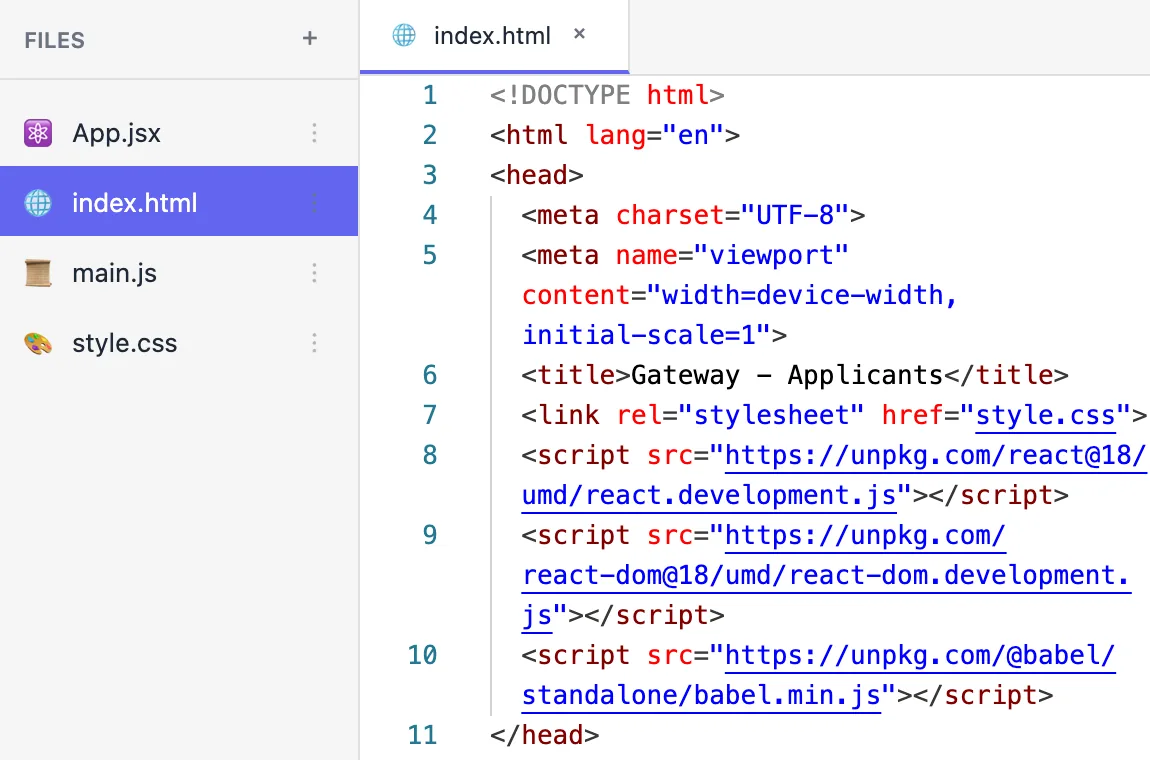
What a strong candidate did: Traced both bugs to responses arriving out of order and an unhandled failure, fixed them so the list always matches the box, and gave the page a clear error state.
Code, then a short note
Status webhooks: duplicate changes in staging
A partner job board posts application status events to a webhook. QA found some applications showing the same status change twice in their history. The candidate owns the endpoint and has to make it safe to ship.
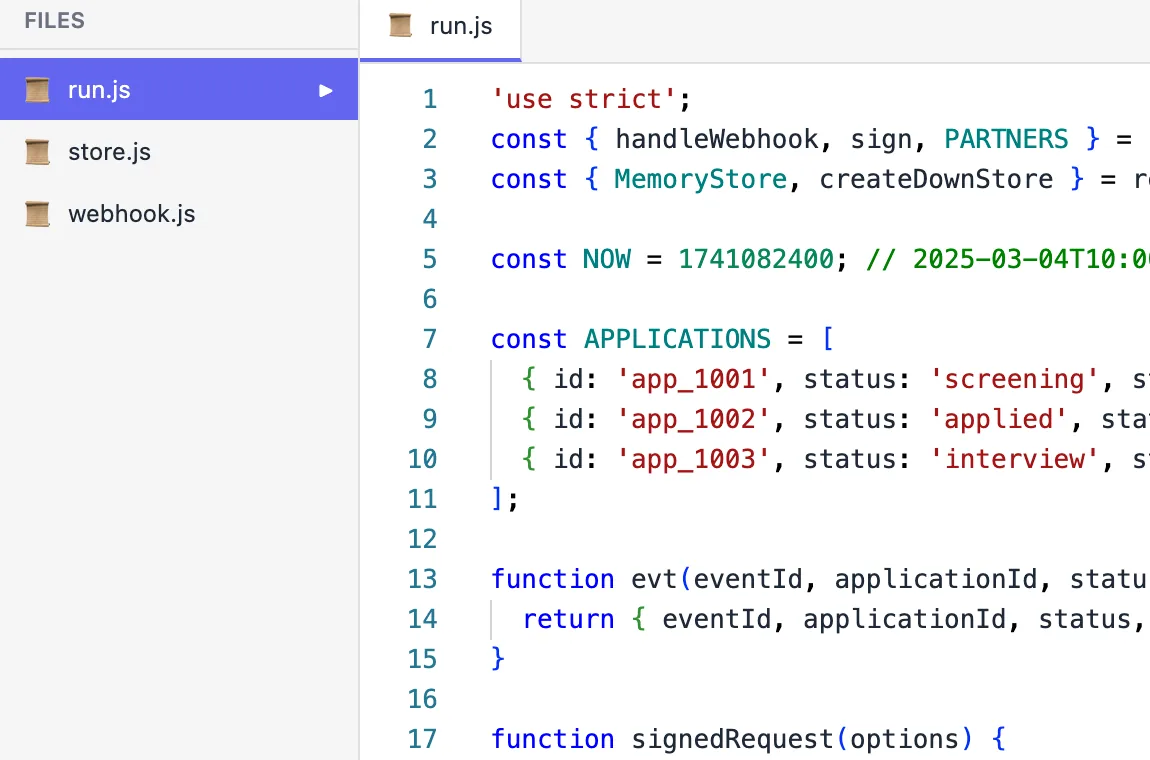
What a strong candidate did: Made each event count once even when the partner retries, rejected events that would move a status backwards, and added tests for the exact sequence QA reported.
How the decision gets made
With Gateway, each quality assurance analyst candidate works through situations written from your job description, such as a search page whose results stop matching the search box and sometimes load forever, or an application history that shows the same status change twice. The candidate investigates in the browser and writes up what was found and why, so the hiring manager sees both the investigation and the report a developer would receive. Every skill is scored with written feedback, the candidate's work opens read-only, and only analysts who found the real causes move on to interview.
See your next quality assurance analyst at work before you meet them
Paste your job description and Gateway writes the assessment in about 5 to 10 minutes. Your team can edit every question before it goes out.
Questions
Our analysts mostly test manually. Does the assessment require coding?
No. The assessment follows your job description. A manual testing role can be assessed through investigation in the browser, a written bug report and a test plan in a document, and your team edits every task before it goes out.
Can a candidate record a walkthrough of how a bug was found?
Yes. Candidates can submit a recorded walkthrough, which shows how the person explores a product and explains a defect out loud, much as it would be demonstrated to a developer.
We hire several analysts at a time. Is that manageable?
Yes. Add candidates from a spreadsheet, an ATS export or resumes; each gets one link and a deadline, and you review the people above your line.
Can a product manager review results without setting anything up?
Results can be shared with a hiring manager with a note, and any candidate's work opens read-only in the same tool the candidate used.
Related