Hire a QA engineer who keeps a fast team shipping safely
A QA engineer sits inside a development team and decides, feature by feature, what has to be tested, what should be automated and what is safe to release. Resumes list the same frameworks, so the way to tell candidates apart is to watch each one test a real API or screen, write the test that would have caught the bug, and explain the release risk before you interview.
What the hiring manager needs from a QA engineer
The engineering manager hiring a QA engineer is usually running sprints where testing gets squeezed into the last days and bugs still escape. The manager needs someone who joins planning, tests APIs as well as screens, adds automated checks to the pipeline and pushes back on a release when the evidence says so.
A webhook that records events twice
A partner retries its status events and the application history shows the same change twice. The QA engineer reproduces it with a scripted sequence of calls, writes a test that fails today, and works with the developer until it passes for the right reason.
Testing the API, beyond the screen
The front end hides validation gaps that the API still accepts. The QA engineer calls endpoints directly with bad inputs, missing fields and out-of-order requests, and finds defects no click-through test would ever reach.
A pull request that changes a slow query
A developer rewrites a dashboard query for speed. The QA engineer checks that results are identical before and after on realistic data, and asks how the change will be turned back if production shows something different.
Deciding what goes into the pipeline
The team wants more automated checks in CI without slowing every merge. The QA engineer picks the checks that protect revenue-critical paths, keeps them fast and reliable, and moves the rest to scheduled runs.
Where hiring a QA engineer usually goes wrong
- Hiring the wrong kind of QA
- QA engineer means different things across companies. If your team needs someone who writes API tests and works in the pipeline, a strong exploratory tester will struggle; if you need judgement more than code, a pure automation specialist may miss the obvious.
- Framework trivia
- Questions about the syntax of a particular test runner reward whoever used it last. What matters is whether the candidate can design a test that pins down a real defect in whatever tool your team uses.
- Skipping the conversation about release risk
- A QA engineer's most valuable output is often one sentence: this is safe to ship, or it is not, and here is why. Interview loops that test only hands-on skill never hear how a candidate makes that call.
- Ignoring how the candidate works with developers
- A QA engineer who files tickets and waits creates a queue. The hire you want reproduces, narrows down and pairs on the fix, which you can see only when the candidate works on a real defect.
Real tasks from a Gateway assessment
These come from a Gateway assessment for a full stack developer, with the employer’s name taken out. Gateway writes every assessment from your own job description, so the tasks your candidates get are built around your role.
Code, then a short note
Status webhooks: duplicate changes in staging
A partner job board posts application status events to a webhook. QA found some applications showing the same status change twice in their history. The candidate owns the endpoint and has to make it safe to ship.
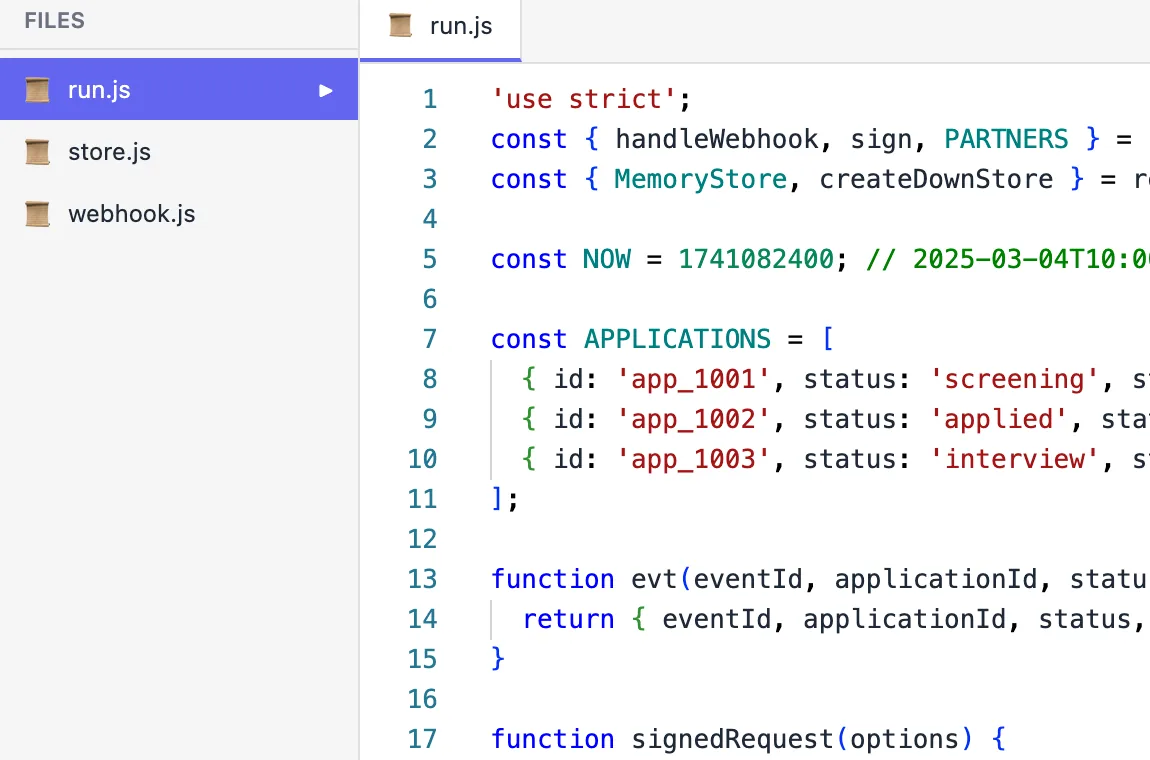
What a strong candidate did: Made each event count once even when the partner retries, rejected events that would move a status backwards, and added tests for the exact sequence QA reported.
Web code in the browser
Search results that don’t match the search box
QA reports that typing fast in an applicants page search leaves results that have nothing to do with the text, and sometimes the page says “Loading…” forever.
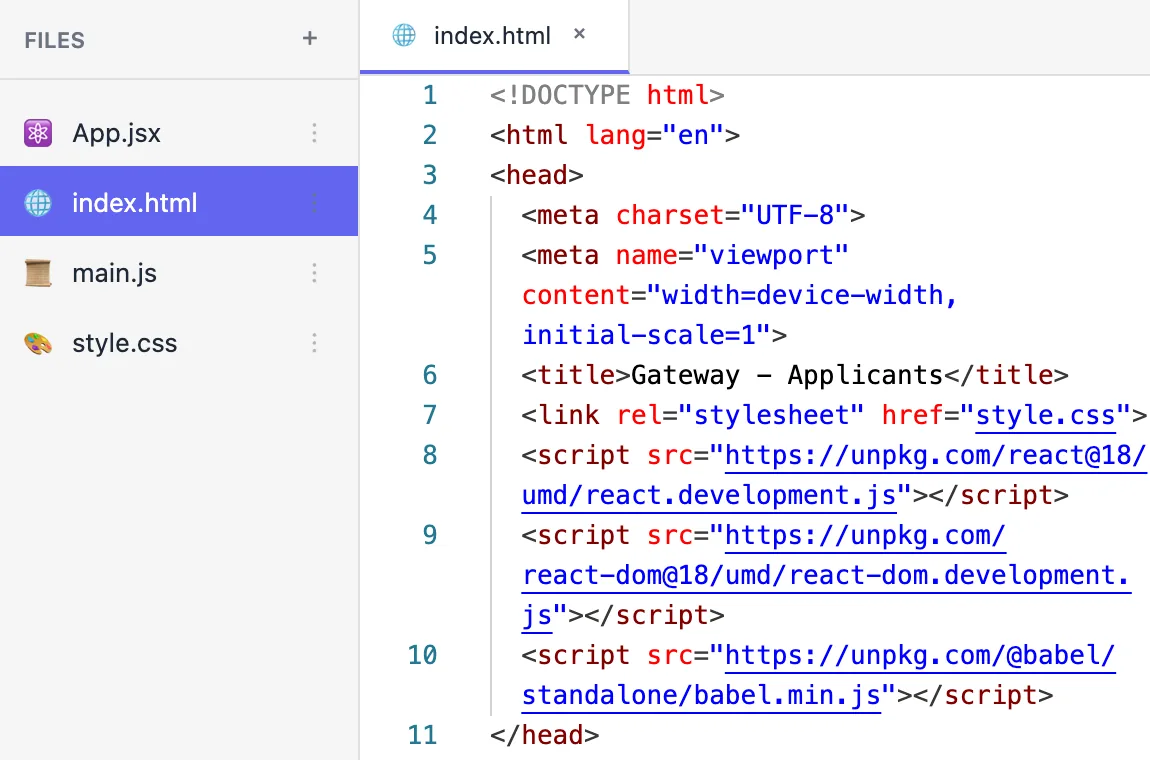
What a strong candidate did: Traced both bugs to responses arriving out of order and an unhandled failure, fixed them so the list always matches the box, and gave the page a clear error state.
SQL, then a written plan
A slow dashboard query and a safe rollout
A recruiter dashboard list has become slow on the production database. The candidate owns the query the API runs and has to speed it up without changing what recruiters see.
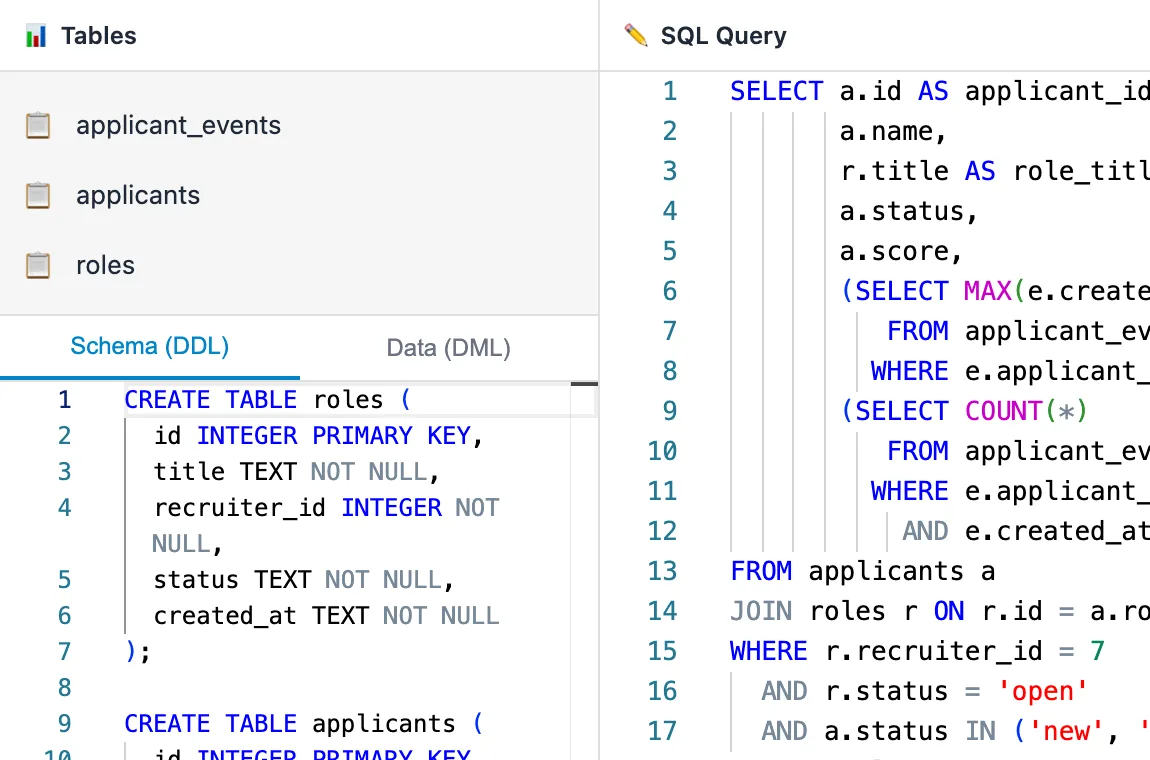
What a strong candidate did: Rewrote the query and proposed the index it needs, showed the results are identical, and planned a rollout that can be turned back in minutes if something looks wrong.
How the decision gets made
In Gateway, each QA engineer candidate works through situations written from your job description: a status webhook that records the same change twice, a search page whose results drift from the search box, and a slow query that must be sped up without changing what users see. Candidates work in code, web code in the browser and SQL, and finish each task with a short note. The engineering manager sees a score and written feedback for every skill, opens the tests and notes read-only, and spends interviews only on QA engineers who found the cause and proved the fix.
See your next QA engineer at work before you meet them
Paste your job description and Gateway writes the assessment in about 5 to 10 minutes. Your team can edit every question before it goes out.
Questions
Can the assessment test API testing skills?
Yes. If your job description covers APIs, the tasks include calling and testing endpoints in code. Your team can read and change every task before candidates receive it.
Can we test with our own framework, like Playwright, Cypress or REST Assured?
The assessment is written from your job description, so the tools it names shape the tasks. Web code tasks run in the browser with frontend frameworks ready to use.
Should candidates be allowed AI help?
That is your choice. In an AI-assisted assessment candidates can use an assistant, and your team sees how each one worked with it, including whether generated tests were actually checked before submission.
Does Gateway replace our pairing interview?
No. It decides who reaches that interview, and gives your engineers the candidate's tests and notes to discuss instead of starting cold.
Related